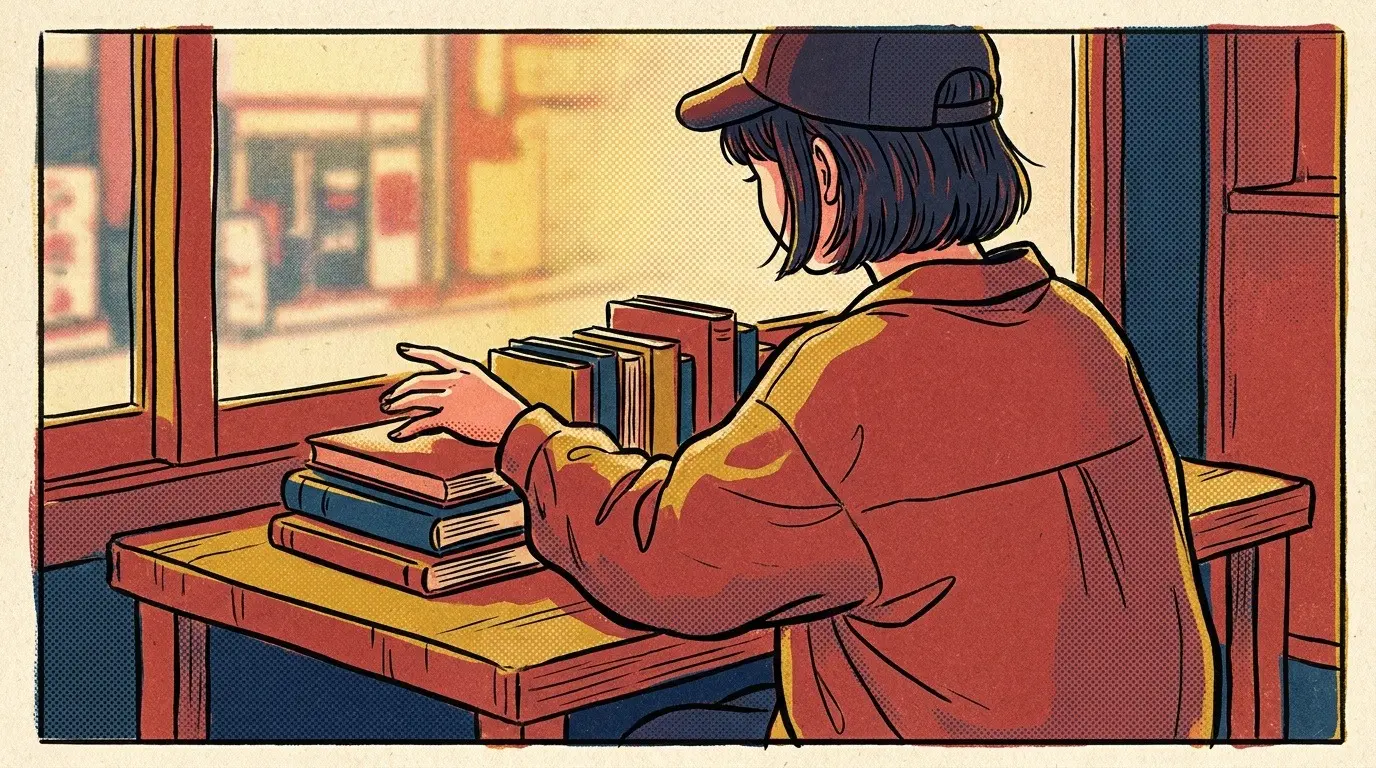
- The cover illustration is designed with the assumption that it will be chosen in less than a second in front of the shelf. The question is not about the skill level of the drawing, but rather, "What does it look like from a distance?"
- That's why the rough draft review process starts with a reduced view. It's not uncommon for a composition to look beautiful at full size but lose its main subject in the thumbnail.
- Book cover illustrations are not just pictures, but informational design. The final form isn't in my hands; it only becomes the face of the book when the designer adds the text.
- A trustworthy artist is not someone who can "draw in great detail," but someone who "can decide what not to draw." Don't place important information in places that will be hidden by the book's cover.
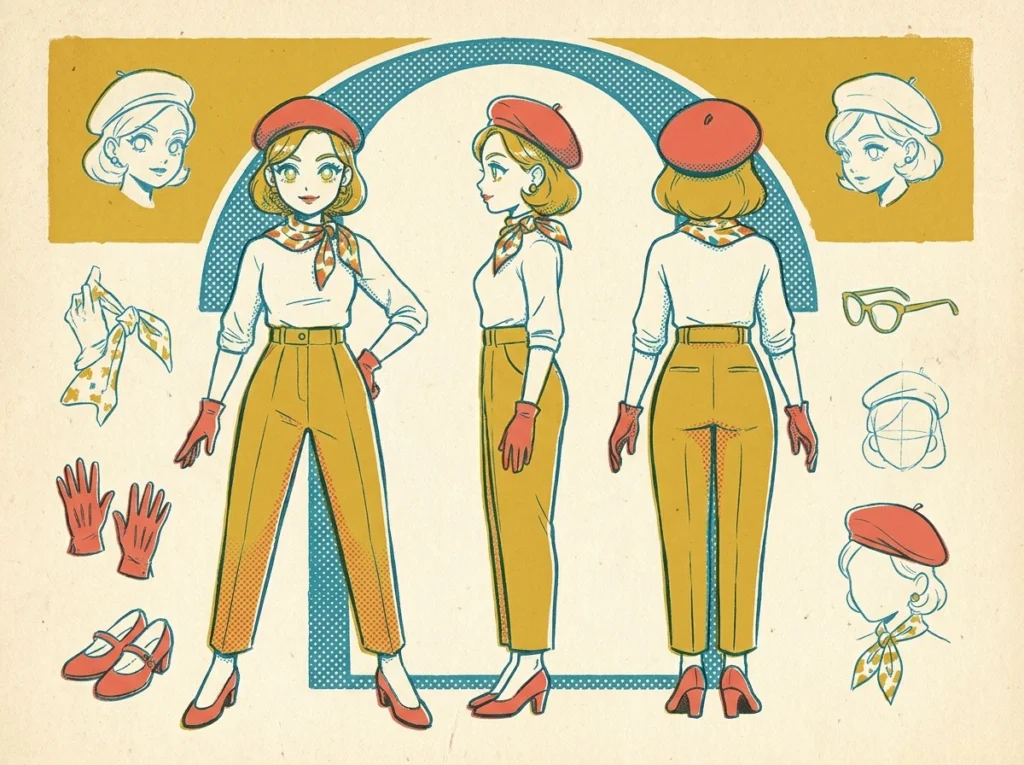
- In many cases, the process begins with a character that doesn't even exist yet, and the artist is provided not with a single drawing, but with blueprints (three-view drawings, facial expression variations, and color specifications).
- The deliverables come as a set. The requirements for the cover illustration, frontispiece, illustrations, and promotional materials differ for each component.
- The longer a series continues, the more skill you need to intentionally restrain your own changes.
People pass by the new releases section of bookstores with astonishing speed. Their gaze glides over the stacks like water, and any book that doesn't catch their eye simply doesn't exist in their world that day.
Light novel cover illustrations are pictures designed to capture a single moment. Among illustration work, there are few genres where "functionality as a product" and "artistic appeal" are so closely intertwined on the same surface. This time, I'd like to explore the work of cover illustration not as a matter of the picture itself, but as a matter of its structure .
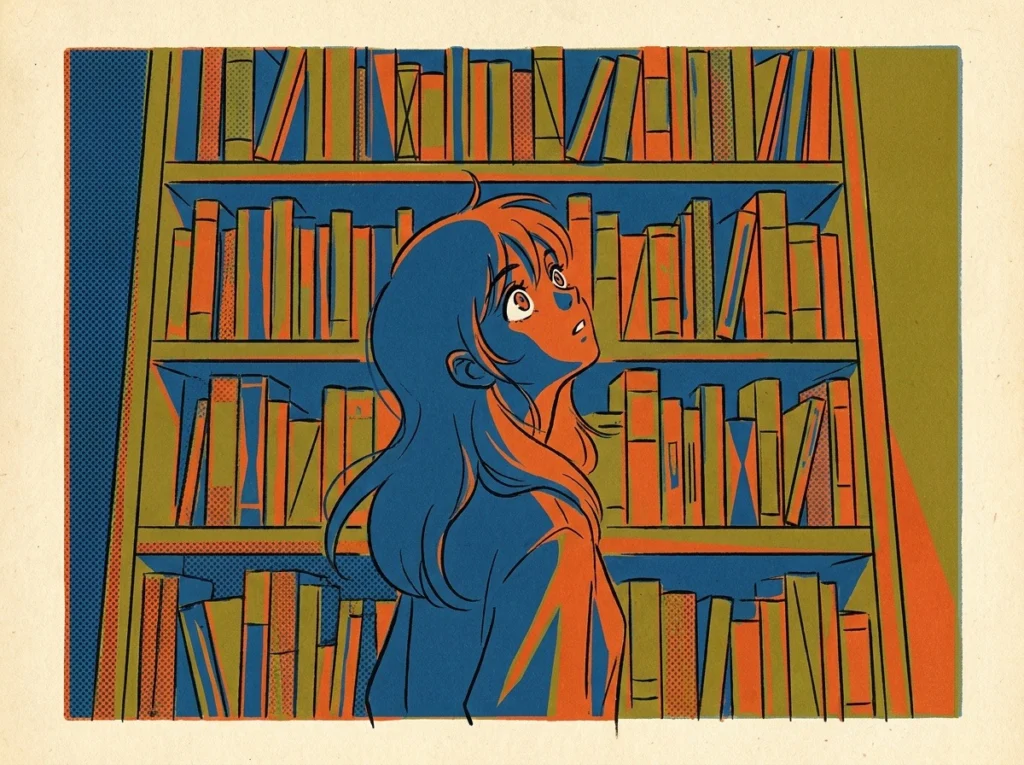
The premise is that it will be selected in 0.5 seconds.
From the moment a book comes into view on a shelf until you decide whether to reach for it or walk past it, it feels like less than a second. Cover illustrations are designed with this brevity in mind. That's why, in practice, the question isn't so much about the skill of the drawing, but rather, "What does it look like from a distance?"
That's why rough drafts often begin with reduced-size views. Even if an image looks beautiful at full size, it's not uncommon for the protagonist's face to become distorted and overwhelmed by the amount of detail in the background the moment it's turned into a thumbnail. Book images on online bookstores are even smaller than the actual book. Cover illustrations are honed as "pictures that won't be enlarged."
- Silhouettes that work from a distance—can the person's position be conveyed solely through their outline?
- Guide the viewer's gaze without hesitation—first the face, then the props in the hands, and finally the background.
- The margin for the title—a spatial design that incorporates the presence of text.
- A single strike of color—a color temperature unique to that book, unlike any other on the shelf.
These four conditions are all decided before you even draw the lines. The real challenge in book illustration begins before you even put pen to paper—before you even start framing the composition.
Book cover illustrations are not just "pictures," but information design.
In book design, text is always placed on top of the illustration: the title, author's name, the label's logo, and the dust jacket. In other words, the illustration is a picture that you don't have in your hands as a finished product. The designer adds the text, the printer adds the ink, and only then does it finally become the face of the book.
Those who are good at subtraction are strong.
A trusted illustrator for book covers is usually not someone who can "draw in great detail," but rather someone who "can decide what *not* to draw." If the bottom third is hidden by the dust jacket, then important information won't be placed there. If the title is in vertical text and appears on the right, then the upper right corner should be left blank. Illustrators who can spontaneously make these kinds of decisions are overwhelmingly easier for designers to work with.
Conversely, if a picture is densely detailed in every corner, there's no room for text, and as a result, the best part of the picture gets obscured by the band. This is usually where the unfortunate situation of a talented artist being less likely to be selected occurs.
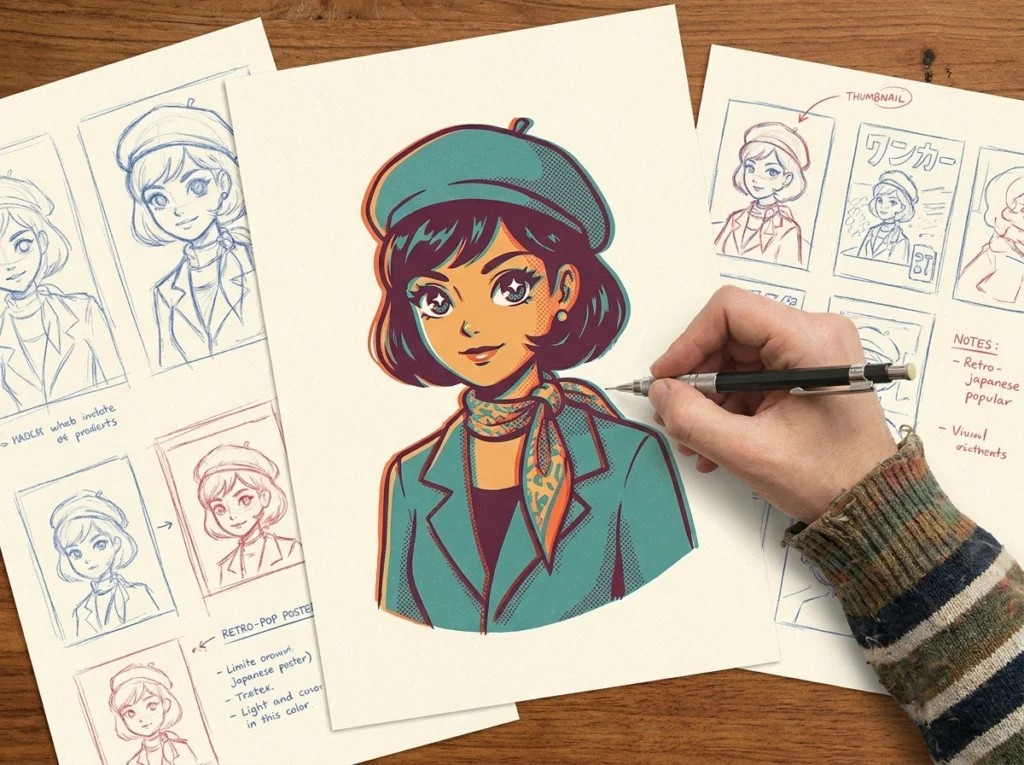
The structure involves being entrusted with character design from the start.
What fundamentally distinguishes book cover illustration from other illustration work is that, in many cases, it begins with a character that doesn't yet exist in this world . The manuscript only contains a few lines of description such as "black hair, unfriendly, uses a sword," and the image in the artist's mind. From there, I have to decide everything, from the parting of the hair to the way the shoelaces are tied.
At this stage, the artist provides not just a single drawing, but a blueprint . This includes three-view drawings, variations in facial expressions, details of equipment and accessories, and color specifications. What is finalized here will be referenced for subsequent illustrations, promotional materials, and in some cases, even for comic adaptations and film adaptations, sometimes for many years to come. Commissioning book cover illustrations is, in essence, "the job of creating the visual standard for that series."
Treating the ability to create a character from scratch not as a technique for creating a single illustration, but as an independent design domain—this way of thinking applies not only to books but also to other fields.OSERU IMG. Character DevelopmentThe reason I keep it separate from my illustration work is probably because it has the nature of "establishing standards."
Frontispieces, illustrations, promotional materials—book cover art doesn't work on its own.
Requests that end with "just one cover" are actually not that common. When a light novel is published, the deliverables that the author is involved with are generally a set.
| Deliverables | role | What is required |
|---|---|---|
| Cover illustration | A hit on the shelf | Strength from a distance, coexistence with text |
| frontispiece | The excitement before reading | A picture that gives a glimpse into the atmosphere of the main story. |
| Illustrations | My impressions while reading | The ability to recreate scenes and the lightness that doesn't slow down your reading speed. |
| Promotional materials | Exposure outside the shelf | Cropping resistance, ratio suitable for social media. |
Knowing this structure makes a big difference in how you plan your schedule. Illustrations are often finalized after the main text has been proofread, and they all come at once in the later stages. Promotional work, on the other hand, is needed from the time of the pre-release announcement. Cover illustration work isn't about a single deadline, but rather a job where multiple deadlines come in waves.
Another often overlooked aspect is what happens after delivery. The same image is used for social media announcements, bookstore displays, and ebook thumbnails. It's cropped vertically, horizontally, and even as a square. Whether or not you leave enough margin from the start to accommodate multiple aspect ratios completely changes the feel of the subsequent stages.
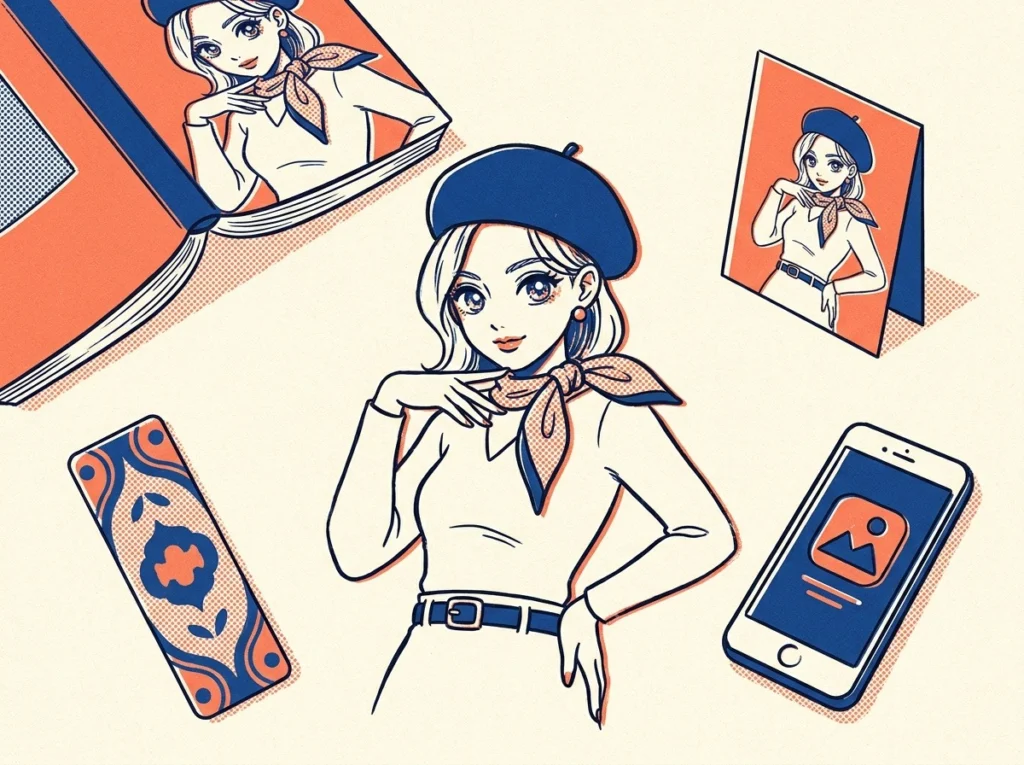
The editorial team is looking beyond just the technical skill of the artwork.
From the client's perspective, the selection criteria are more realistic than one might think. While drawing ability is a given, it's actually rare for that alone to be the deciding factor.
- Does it match the mood of the work?—It's difficult to add a cold tone to a lighthearted comedy.
- Can you create a distinct character?—Can we line up similar faces, or create symbols?
- Can it continue until the next volume?—The stamina and schedule to avoid burning out after just one book
- Can you understand each other?—Can you understand the intent behind the revisions and offer alternative solutions?
- Are the rights and other related matters properly organized?—Is it possible to request permission for secondary use?
The third and fifth points, in particular, don't show up in the portfolio. The problem of projects not progressing despite having flawless artwork often arises in these unseen areas. This is precisely where management, handling communication and contracts, becomes crucial.
To become the face of the series
Taking on the role of illustrating a book means taking on the responsibility of creating the visual memory of that work. Years later, readers usually remember not the details of the text, but the face they saw on the cover.
Art styles change. Skills improve, and tastes shift. But even so, the characters' faces shouldn't become completely different people in the middle of a series. Cover art is also a technique for intentionally holding back your own changes.
As the series progresses through three, five, and beyond, the artist will inevitably encounter "their past work." This is where the extent to which the initial character designs were articulated becomes crucial. The way the eyes are drawn, the number of strands of hair, the color codes of the clothing—those who have translated the intuitive aspects of their work into numbers and words are more likely to successfully complete a long-running series.

The same dynamics are at work outside of books as well.
What we've discussed so far isn't limited to light novels. Corporate anniversary magazines, recruitment brochures, service guidebooks—the structure that grabs your attention with the cover, carries information inside, and ultimately makes you think, "This is great," is almost identical to the design of book cover illustrations.
- The cover is chosen in an instant (recruitment brochures are displayed side-by-side with other companies' brochures on tables at joint company information sessions).
- Text will always be placed on top of the image (collaboration with a designer is a prerequisite).
- Once a visual is decided, it is used for a long time (anniversary history books remain on shelves for decades).
Therefore, illustrators who can create book covers are highly valuable in corporate projects. "They can create compositions with text in mind" and "they can provide designs that can withstand long-term use." These two skills are applicable across genres.
When you hear about a picture being chosen in 0.5 seconds, it sounds like it's all about quick reflexes. But what's actually working is the meticulous design built up to make that moment work—a silhouette that doesn't fall apart even when scaled down, white space for text, and the verbalization to hand over to your future self years from now.
Readers who stop in front of the shelf are unaware of the stacks of books. They reach out their hands without knowing. Perhaps that's where the satisfaction of working as a book illustrator lies.
- Why do you reduce the size of the rough draft of the cover illustration before checking it?
- The book images on online bookstores and how they appear on shelves are actually smaller in reality. Even if an image looks beautiful at its original size, it's not uncommon for the protagonist's face to become distorted and overwhelmed by the amount of detail in the background the moment it's converted to a thumbnail.
- Why is "over-detailed" illustration a problem in book cover art?
- A title, author's name, logo, and dust jacket are always placed on top of an illustration. An illustration with dense detail throughout leaves no room for text, and as a result, the best parts of the illustration are obscured by the dust jacket. An artist who can spontaneously decide what to leave out is easier for a designer to work with.
- If I commission an illustration for the book cover, will that also mean I'll be asking for character design?
- That's often the case. The manuscript only contains a few lines of description, and the character doesn't even exist yet. The process involves deciding everything from the parting of the hair to how the shoelaces are tied, and what the artist hands over isn't a single drawing, but a blueprint.
- Will the request be limited to just one cover page?
- There aren't many. Typically, the cover illustration (a striking image on the shelf), the frontispiece (excitement before reading), the illustrations inside (lightness that doesn't slow down the reading pace), and the promotional materials (suitable for cutting out and optimized for social media) all work together as a set.
- What criteria does the editorial department use when selecting artists?
- While drawing skill is a given, it's rarely the only factor that determines the outcome. What's being looked at is whether the style matches the tone of the work, whether the characters are well-developed, whether the artist has the stamina and schedule to continue the series, whether they can understand the intent behind revisions and offer alternatives, and whether the rights issues are properly handled.
* The illustrations featured in this article are original works created specifically for this media outlet. The copyrights to the works, characters, and product names mentioned in this article belong to their respective owners.
OSERU IMG.
You can consult with us about the content of this article when you're actually working on your project.
OSERU IMG. This is a creative studio comprised of illustrators, character designers, and motiongraphers.Search by style and track record, then contact us directly.Yes, we can. We welcome inquiries even if you're still in the "undecided" stage.


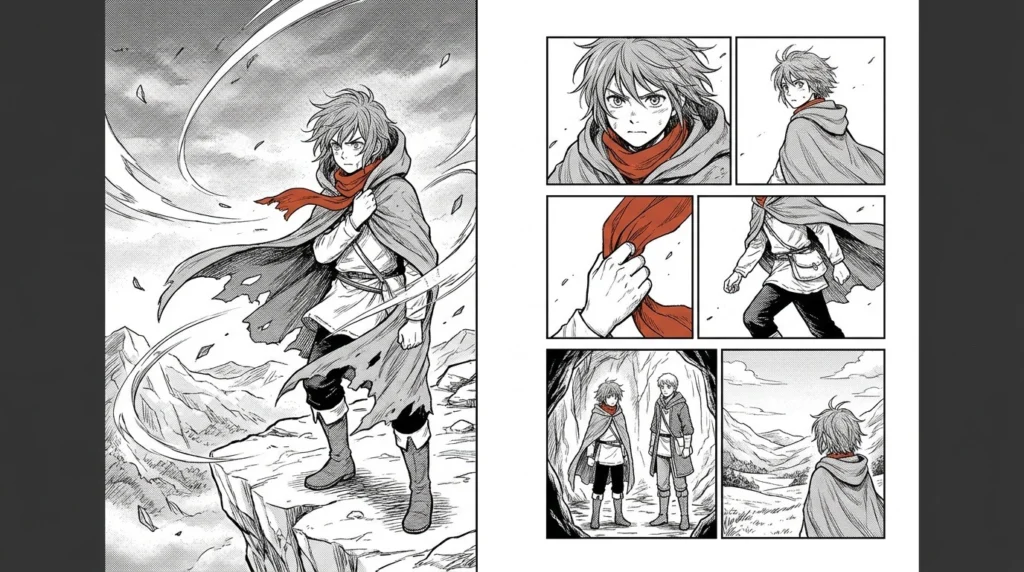
What's the difference between manga and illustrations? A single image tells a story, while an image tells a story over time—the boundary you need to know before commissioning.
Even though they're both "pictures," manga and illustrations are almost entirely different disciplines. Whether you tell a story with a single panel or over time, the editing techniques of panel layout, and the required level of character consistency—these are all crucial differences that both clients and artists should be aware of, and this article breaks them down from a practical perspective.
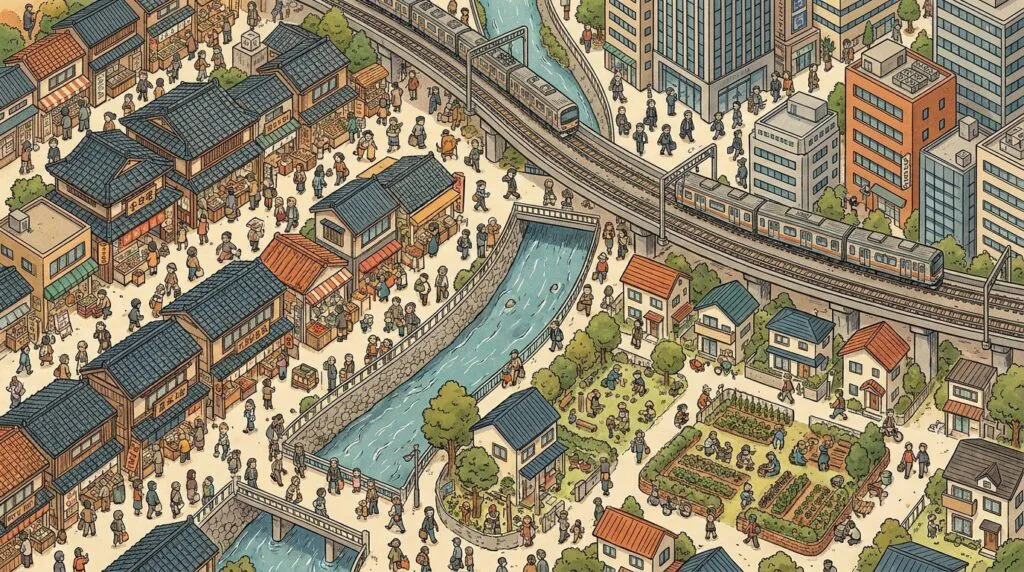
10 Places Where Illustrations Make a Great Impact: How to Use Photos vs. Illustrations, and Who to Commission
The reason for choosing illustrations over photographs is not based on intuition, but on logic. Diagrams, educational materials, government public relations, packaging, advertising, book illustrations, corporate characters, music videos, merchandise, murals—10 situations where illustrations are effective, organized by communication, sales, and connection.
How will the job of an illustrator change in the age of AI? A calm assessment of what is less likely to be replaced.
How will AI change the job of illustrators? From the true nature of "back and forth" work that is difficult to replace, to the conditions that clients should decide from the outset, and the concepts of credit and transparency. This is not a prediction, but a calm analysis of the issues that are currently being discussed.