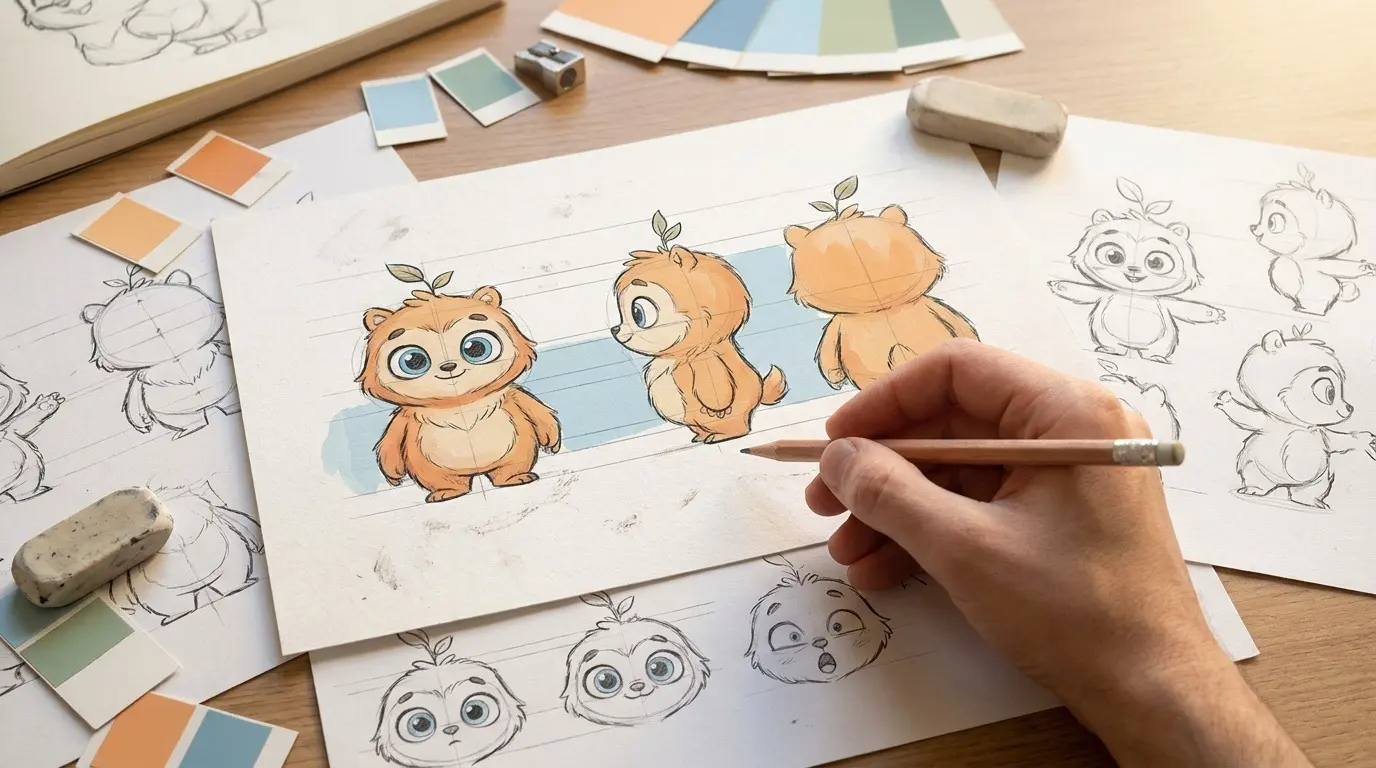
- Before commissioning a character design, there are three things to decide: where it will be used, who will continue to draw it, and the scope of the rights.
- If there's a possibility of it becoming a three-dimensional object (plush toy, badge, costume), then it's necessary to design it with the silhouette and structure in mind from the very beginning.
- If the company's designers are going to be the ones designing the future, they need to raise the level of detail in the regulations documents, otherwise the design will end up looking like a completely different character midway through implementation.
- The real work begins after the character is revealed. If you decide who will be using the character and how often before placing an order, the scope of necessary materials will naturally become clear.
- Consultations are possible even before the intended use is finalized, and in fact, it allows for a wider range of design options.
Character design is different from commissioning an illustration. What you receive is not just a single drawing, but a blueprint for future drawings . Character design includes everything from three-view drawings, facial expression variations, color specifications, and examples of what not to do—all the materials to ensure that the person using the character doesn't get confused.
Therefore, when choosing, I look at it more in terms of "Can this character still be relevant in 5 years?" rather than "Do I like this picture?". Here, I will introduce some creators who actually work on character design.
Three things to decide first when commissioning character design
The first thing to consider is where it will be used. Will it just be a web icon, or will it be made into a plush toy, a badge, or even a full-body costume? If there's a possibility of it becoming three-dimensional, you need to design it with the silhouette and structure in mind from the very beginning.
The second question is, who will continue to draw the characters? Will an in-house designer draw them, or will we commission the same artist each time? If it's the former, we'll need to increase the level of detail in the regulations, otherwise the characters will change every six months.
The third point is the scope of rights. Since characters are meant to be used for a long time, you need to decide from the beginning whether it's a transfer of ownership or a license to use the character, and whether it includes secondary use and merchandise development. If you proceed without clarifying this point, development will stall later on.
OSERU IMG. Illustrator who handles character design
Only those with publicly available work experience are listed here . Clicking on a name will show you examples of their work and their profile.
wakuta
Based on publicly available data:
wakuta View their profile and achievements
Hirochika Horiuchi
Based on publicly available data:
Hirochika Horiuchi View their profile and achievements
Kanda Done
Based on publicly available data:
Kanda Done View their profile and achievements
mamoru
Illustrator | Style tags: Many colors, comic-style lines, cute
Based on publicly available data:
mamoru View their profile and achievements
A.YAMI
Based on publicly available data:
A.YAMI View their profile and achievements
yube
Based on publicly available data:
yube View their profile and achievements
wataboku
Based on publicly available data:
wataboku View their profile and achievements
tatsuya
Based on publicly available data:
tatsuya View their profile and achievements
moomoo
Based on publicly available data:
moomoo View their profile and achievements
It's best to decide before making a request.
The real work begins after a character is released. If you decide who will manage the character and how often before placing an order, the scope of necessary materials will naturally become clear.
You can consult with us even if you haven't yet decided what you'll use it for. In fact, having a wider range of design options is possible before the intended use is finalized.
- What should I decide before commissioning a character design?
- There are three key factors to consider: where the artwork will be used (on the web only, or to extend to merchandise and costumes), who will continue to create the artwork in the future, and the scope of the rights. Once these three are decided, the required deliverables and the scope of the regulatory documents will also be determined.
- What precautions should you take when planning to turn something into a stuffed animal or costume?
- The silhouette and structure must be designed with three-dimensional representation in mind. A shape that works in two dimensions may break down when sewn or molded, so please inform us from the beginning that there is a possibility of it becoming three-dimensional.
- After the design has been created, is it possible to continue drawing it in-house?
- It's possible, but it requires detailed regulations (line thickness, color specifications, facial expression variations, and drawing techniques that are not allowed). If these are too vague, the character will gradually change over time.
- Can I consult with you even if the intended use hasn't been decided yet?
- Yes, it's possible. In some cases, it's even better to consult at an earlier stage, as it allows for a wider range of design options before the intended use is finalized.
* The illustrations featured in this article are original works created specifically for this media outlet. The copyrights to the works, characters, and product names mentioned in this article belong to their respective owners.
OSERU IMG.
You can consult with us about the content of this article when you're actually working on your project.
OSERU IMG. This is a creative studio comprised of illustrators, character designers, and motiongraphers.Search by style and track record, then contact us directly.Yes, we can. We welcome inquiries even if you're still in the "undecided" stage.

Why can't the going rate for illustration commissions be expressed in a single table? — Six factors that determine the estimate.
Why is it that when you look up the going rate for commissioning illustrations, all you get is "it depends on the conditions"? This guide will organize the six conditions that influence the estimate—purpose, scope of use, duration, and exclusivity—so you can understand the breakdown of the cost yourself. We've also summarized items that are likely to result in additional costs.
10 Places Where Illustrations Make a Great Impact: How to Use Photos vs. Illustrations, and Who to Commission
The reason for choosing illustrations over photographs is not based on intuition, but on logic. Diagrams, educational materials, government public relations, packaging, advertising, book illustrations, corporate characters, music videos, merchandise, murals—10 situations where illustrations are effective, organized by communication, sales, and connection.
Commissioning LINE sticker creation—things to decide beforehand, as they differ between personal and corporate use.
When commissioning an artist to create original LINE stickers, it's helpful to decide beforehand who will be the seller, what situations the stickers will be used in, and how the character rights will be handled, before even considering the artwork. We've outlined the differences between personal and corporate use, as well as the production process.