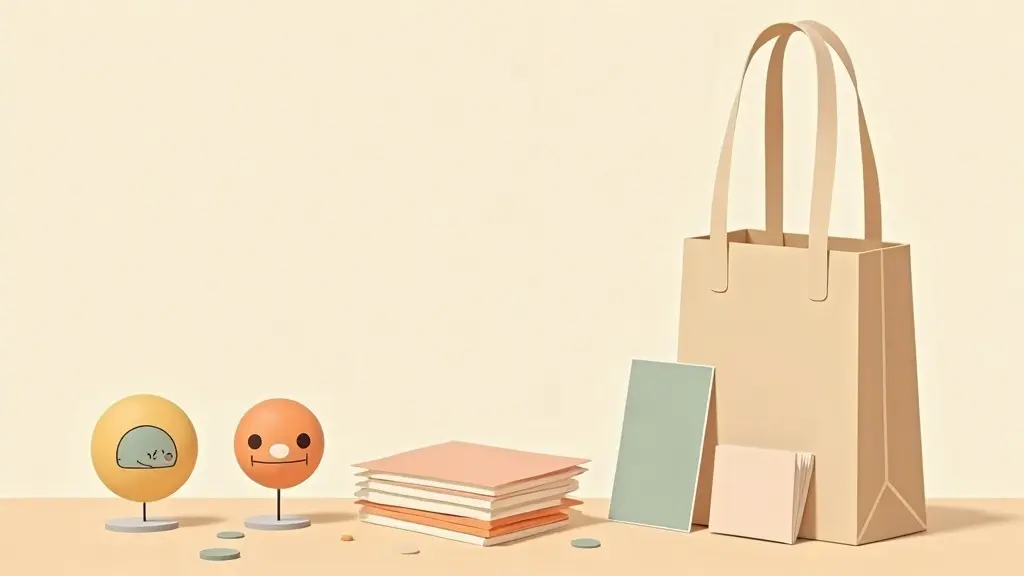
- The basic rule for creating illustrations for merchandise is to start drawing only after the type of merchandise and the manufacturer's submission requirements have been decided. Doing it in the reverse order often leads to redraws.
- Acrylic and transparent materials require a white plate, and die-cutting requires cut lines; these are all specific data requirements for merchandise. It's important to decide who will be responsible for creating them from the start.
- The colors you see on the screen may not be the same as the printed colors. Since this also varies depending on the material, we proceed with the understanding that color proofs and samples will be used for verification.
- For items used on small surfaces, ease of identification from a distance takes precedence over the thinness of lines or the level of detail.
- The scope of use will differ depending on whether you sell it or distribute it for free. If you use existing characters, you will also need to get permission from the rights holder.
The artwork for merchandise is often decided *before* it's drawn.
Acrylic stands, badges, stickers, T-shirts, tote bags. When commissioning illustrations for merchandise, many people start by thinking about "what kind of picture to make." However, in reality, when it comes to merchandise work, there are often more things that are decided before the content of the picture.
Merchandise has a shape, size, and printable area. Different materials produce different colors, and each manufacturer has its own set of accepted data formats. Trying to adapt to these limitations after the illustration is drawn can lead to rearranging the composition or even redrawing the image. It's not a matter of the artist's skill, but rather a matter of the order in which the requirements are communicated.
This article outlines practical steps to take when commissioning illustrations for merchandise, focusing on things the client should decide beforehand to expedite the process. Discussions about how package illustrations work in stores are covered in the "Package Illustrations" article , and a list of available artists is compiled in the "Package & Merchandise Illustrators" summary . This article focuses on the crucial step of "how to commission" the illustrations.
The first thing to decide is the type of merchandise and where it will be manufactured.
The starting point for a request is the type of merchandise to be made and where it will be produced. Even with the same character illustration, the requirements for a button badge and a T-shirt are completely different.
| Accessories | Conditions that affect the painting |
|---|---|
| Acrylic stand keychain | It is cut out along the outline. Because it is a transparent material, you need to decide whether or not to place a white layer underneath the color. |
| Button Badges | It is circular, with the edges curving to the sides. The main subject is placed in the center, and the outer perimeter is drawn with the understanding that it will be hidden. |
| sticker | Should you cut it along the shape, or into a square? If it's going to be used outdoors, consideration for fading is also a topic of discussion. |
| T-shirts and tote bags | The fabric color becomes the base color. The number of colors that can be used and how gradients are handled will vary depending on the printing method. |
| Clear files and paper goods | The large surface area allows for detailed viewing. The way white is handled changes depending on whether it's paper or a transparent material. |
If a manufacturer has been decided, please give the artist the submission guidelines that the company has published. Template data is often available, and having this will prevent most misunderstandings regarding size and margins. If a manufacturer has not yet been decided, you can start by deciding "what goods to make" and then confirm the manufacturer's requirements with the artist.
If you want to outsource the creation of the character itself, the situation becomes much larger. In that case, reading about the process of outsourcing character creation beforehand will make it easier to see the path to turning it into merchandise.
The submission data also needs to be decided by "who will create it".
In addition to the artwork itself, merchandise sometimes requires data for manufacturing. Typical examples include the following:
- White plate... Data indicating the area of white to be placed beneath the color when printing on transparent or colored materials.
- Cut line... A line used to cut out acrylic or stickers along a specific shape.
- Bleeding...the area where the image is extended beyond the finished size to prevent white edges from appearing due to cutting misalignment.
- How to separate layers... Separating them by part makes it easier to adjust the placement and colors later.
- Color mode... This determines which format the manufacturer accepts when sending the image for printing.
One often overlooked aspect is who will actually create these. Some artists only handle the drawing, while others also create the print-ready data. In some cases, the manufacturer will handle the creation. The problem isn't which is better, but rather that it's not decided beforehand. In the initial consultation, confirm whether the creation of print-ready data is included in the scope of work, and if not, decide who—within the company, a designer, or the manufacturer—will be responsible.
It's best to follow the manufacturer's specifications regarding resolution and size. It's more efficient and reliable for the client to obtain and provide the manufacturer's specifications rather than leaving it up to the artist.
We will proceed with the understanding that the colors "will not appear exactly as they do on the screen."
The most common source of confusion when ordering merchandise is color differences. Screens use light to produce color, while printing uses ink. Therefore, some of the vibrant colors seen on a screen cannot be reproduced exactly in print. This is especially true for bright colors close to fluorescent colors and for fine gradations in dark areas.
Furthermore, even with the same data, the way colors appear will vary depending on the material. Paper, acrylic, fabric, and metal all have different base colors and textures, so the same red color will give a different impression. In the case of fabric, the color of the fabric may show through.
Therefore, for products where color is important, it's safest to incorporate a color verification process from the very beginning.
- Whether or not to obtain color proofs or samples is decided at the time of ordering.
- If the character's colors are already decided, provide those specifications to both the artist and the manufacturer.
- Instead of saying "I want it to match the screen color," tell them "which color you want to prioritize."
Rather than striving for a perfect color match, it's more reliable to decide what elements need to be preserved to make the character look like the intended character. Is it the skin tone, the hair color, or the brand's colors? Having clear priorities makes it easier for both the artist and the manufacturer to make decisions. The concept of color itself is also discussed in the article on illustrations and color .
The smaller the area, the more important "ease of distinguishing from a distance" becomes.
Small items like pin badges and keychains are often held and viewed up close, but they are also frequently attached to bags and seen from a distance. Thin lines and fine details become illegible when reduced in size. For items used on a small surface area, the clarity of the outlines and the contrast in brightness between the main subject and the background are more important than the amount of detail.
Conversely, on larger items like clear files or the backs of T-shirts, every detail is visible. This is why using the same image on both small and large items often results in problems in one or the other.
If you're creating multiple items, it's more practical to decide on one main item and have the artist create artwork based on that. For the other items, you can discuss whether you can adapt them by adjusting the cropping and layout, or whether you'll need to create separate, stylized illustrations. Showing the artist a list of the items you want to create from the start will allow them to consider which illustration is best suited for which purpose while they're drawing.
The process differs depending on whether it's small-batch production or mass production.
The process for producing merchandise varies depending on the quantity being made. The effort required for verification and the arrangements to be made will differ depending on whether you're distributing a small number of items at an event or selling them continuously in stores or online.
| Perspective | When making a small number | If you sell on a continuous basis |
|---|---|---|
| 製造先 | We often choose manufacturers that can handle small-lot production. | I choose based on prioritizing reproducibility and stable quality. |
| Color confirmation | Sometimes we proceed by simply checking with a sample. | Color proofing is performed to determine the standard color. |
| Data Management | It's fine if it can be used in that episode. | To prepare for reproduction, we will decide on a storage location for the final data. |
| 取り決め | Write down the items to be used and the distribution area. | I will write about the sales period, re-production, and the development of additional merchandise. |
Especially when selling on an ongoing basis, it's best to discuss how to handle reproductions and additional product releases from the beginning to avoid last-minute panic. It's natural to want to add new types of merchandise as sales increase, but this often falls outside the scope of what was initially decided.
Whether or not it is sold will change how the rights are determined.
When commissioning merchandise, defining the scope of use is just as important as the content of the artwork. One key dividing line is whether or not it will be sold. Novelties distributed for free within the company or at events are generally treated differently from products that are sold with a price tag.
Here are some points I would like to include when making a request:
- Types of goods to make... things to make this time, and things to make in the future.
- Whether or not it will be sold... will it be distributed for free or sold? If sold, where will it be sold?
- Duration... Should we set a deadline or not?
- Scope of modification... How much can be done, such as cropping, color adjustment, and layout changes?
- Credits... whether or not to include the artist's name on the product or packaging.
When creating merchandise using existing characters or works, an additional level of verification is necessary. This is because the rights holder of the character and the artist who draws the illustration may be different people. The extent of permission required varies from case to case. The basic concepts of rights are explained in the section on how far copyright in illustrations is transferred , so please read that as well.
Things to include in the request letter
If we were to summarize the content up to this point into the first letter, it would look like this:
Subject: Inquiry regarding illustration production for merchandise (◯◯ / Merchandise for sale)
Mr./Ms. ◯◯
This is my first time contacting you. My name is □□ from △△. I saw your (artwork title) and felt that the stylized lines and bright colors were very close to the atmosphere of the merchandise I would like to create, so I contacted you.
We would like to request one illustration for use on acrylic stands and can badges featuring our original character. The illustration will primarily be used on the acrylic stands, with the face area cut out for the can badges. We have already decided on a manufacturer, and we have attached the submission guide. We would also like to discuss whether you can create the white ink and cut lines. The goods will be sold at events and online. We would like to decide on the scope of use, budget, and deadline based on your availability. We would appreciate a reply by [Month] [Day].
The structure of the request itself is explained in detail in the example illustration request and template . For merchandise, you would add "the merchandise to be made and the manufacturer," "who will be responsible for submitting the print data," and "whether or not it will be sold." The entire ordering process is summarized in the complete guide to ordering illustrations .
6 things to review before sending
- Did you write down the types of goods you'll be making...? Which goods will you mainly use?
- Can you provide the manufacturer's submission guidelines? If not, tell them you will provide them as soon as they are finalized.
- Who decided who would create the print-ready data? ...White plate, cut lines, bleed.
- Have you decided on the color priorities...? Which colors should you stick to make it look like that character?
- Did you specify whether it would be for sale or not? The terms and conditions differ depending on whether it's a free distribution or a sale.
- Did it convey the potential for future expansion...? Possibilities for reproduction and new merchandise.
Merchandise is something that remains in someone's possession and is seen in their daily life. That's why the time spent deciding how to create and deliver the artwork is just as valuable as the time spent deciding on the content of the artwork itself. If the conditions are met beforehand, the artist can concentrate on creating the artwork that looks best within those constraints.
Please note that the points discussed here are general considerations that clients should keep in mind. Submission requirements vary by manufacturer, so be sure to check each company's specifications. Also, if you are unsure about contracts or rights agreements, please consult a specialist.
- What's the difference between illustrations for merchandise and regular illustrations?
- The difference lies in the fact that the conditions for production are decided before the artwork itself. The shape and size of the merchandise, the printable area, the materials, and the data format required by the manufacturer all affect the composition and use of color that can be drawn. Deciding on the merchandise and the manufacturer before making a request can reduce the need for redraws.
- Can the white ink and cut lines be created by an illustrator?
- The approach varies depending on the artist. Some artists only handle the drawing process, while others also handle the creation of the print-ready data. In some cases, the manufacturer will handle the creation, so it's best to decide who will create the print-ready data during the initial consultation and clearly state this as part of the scope of work to avoid misunderstandings.
- Why are the colors of the finished product different from the colors I see on the screen?
- Screens produce color using light, while printing uses ink, so the range of colors that can be reproduced differs. Furthermore, the way colors appear also changes depending on the material. For goods where color is important, be sure to incorporate color proofing and sample checking from the beginning.
- Is it okay if I later turn the illustration you drew into merchandise and sell it?
- It depends on whether the initially agreed-upon scope of use includes sales. If you intend to sell artwork that was commissioned for personal enjoyment or free distribution, you will generally need to consult with the artist again. If you anticipate selling the artwork, it's best to inform them at the time of the commission to ensure a smooth process.
- Can one illustration be used for multiple pieces of merchandise?
- It depends on the agreement. Listing the types of goods you plan to use within the scope of use will help avoid problems. However, since different goods require different compositions and margins, using the same image for everything might disrupt the overall look. Decide on one main item to use and discuss whether the others can be handled by cropping or adjusting the placement.
* The illustrations featured in this article are original works created specifically for this media outlet. The copyrights to the works, characters, and product names mentioned in this article belong to their respective owners.
OSERU IMG.
You can consult with us about the content of this article when you're actually working on your project.
OSERU IMG. This is a creative studio comprised of illustrators, character designers, and motiongraphers.Search by style and track record, then contact us directly.Yes, we can. We welcome inquiries even if you're still in the "undecided" stage.

Commissioning LINE sticker creation—things to decide beforehand, as they differ between personal and corporate use.
When commissioning an artist to create original LINE stickers, it's helpful to decide beforehand who will be the seller, what situations the stickers will be used in, and how the character rights will be handled, before even considering the artwork. We've outlined the differences between personal and corporate use, as well as the production process.
Outsourcing manga production—the process and cost-increasing conditions for advertising and business manga.
When outsourcing comics for advertising, service introductions, recruitment, or internal company presentations, it's helpful to narrow down the main message to be conveyed and decide who will create the scenario and storyboards before the artwork begins. We've outlined the division of labor, how to review storyboards, and the conditions that affect costs.
The Complete Guide to Commissioning Illustrations: From Defining Your Purpose to Scope of Use, Number of Revisions, and Budget
Why does "it's not what I expected" happen? A practical guide to commissioning illustrations for work. We've covered everything from articulating your purpose, intended use and size, how to provide references, the difference between copyright and usage permission, the number of revisions, budget considerations, and the differences between going through management and direct requests.