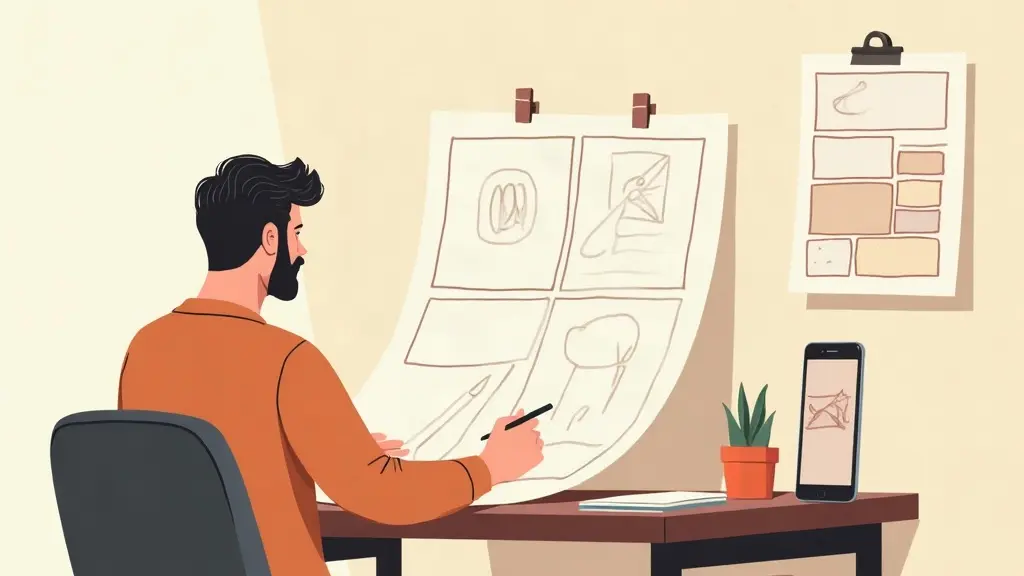
- When outsourcing manga production, it's crucial to first narrow down the message you want to convey to a single point, and to decide who will create the scenario and storyboards, before the artwork is even done.
- Manga production is divided into several stages: composition and scenario, storyboarding (panel layout and rough drafts), drawing, finishing, and text insertion. The scope of work varies depending on the client.
- Establishing the content and flow at the storyboard stage can prevent major redraws once the drawing process begins.
- The cost varies greatly depending on factors such as the number of pages and panels, whether it's in color or black and white, whether it includes a scenario, whether new characters are created, and the scope of use.
- Comics used for advertising must comply with laws and regulations regarding display and the standards of the publication medium. If you are unsure about the appropriateness of the content, consult a specialist.
Comics are used as a "tool for communication."
Comics explaining how to use a service, advertising comics that convey the appeal of a product, comics that show a typical day at work on a recruitment site, and comics that clearly explain internal company procedures—comics have become widely used by companies and organizations not only as entertainment, but also as a tool to convey things that are difficult to communicate .
Comics are chosen as a communication tool because they make it easier to keep readers engaged until the end, even for content that might be skimmed over in text alone, by conveying the characters' feelings and the flow of events. On the other hand, unlike drawing a single illustration, creating a comic involves many processes, including story construction, panel layout, drawing, and text insertion . When outsourcing, understanding the structure of these processes will clarify both the content of your request and how to interpret the estimate.
This article outlines the things that companies and organizations should decide beforehand when outsourcing the production of comics, such as advertising comics or business comics. The difference between comics and illustrations themselves is covered in the article on the difference between comics and illustrations .
Main uses of manga
Companies and organizations use comics in a wide variety of situations. The required length and style of drawing vary depending on the purpose.
| Use | Main publication locations | It will become important |
|---|---|---|
| Advertisement comic | Web ads, social media, product pages | The key is to grab attention in the first few frames and to adhere to advertising rules. |
| Service/Product Description | Website, brochure | To explain how to use it and how it works accurately and in a step-by-step manner. |
| Recruitment and Company Introduction | Recruitment website, company brochure | The reality and atmosphere of the work are conveyed without misunderstanding. |
| Internal explanations and training | Manuals, company newsletters | To make procedures and points to note easy to remember. |
| Serialized on social media | Official account | Characters and formats that can be drawn consistently, and update pace. |
Regardless of the purpose, the first thing you should do is decide what one thing you want readers to remember after finishing the comic . If you have multiple things you want to convey, the story will become scattered, and the number of pages and costs will increase. The basic idea is to focus on conveying one thing in each comic and put other information outside of the comic.
The process and division of labor in manga production
Manga are created through a series of steps. Since the specific tasks each outsourcing company handles vary, it's essential to understand the process from the outset.
- Structure and Scenario...Based on what I want to convey, I construct the flow of the story and the dialogue in written form.
- name...creating a blueprint for the manga, roughly sketching out the panel layout, character placement, and dialogue.
- Character Design...If you're creating new characters, this is where you finalize their designs.
- Paint...Following the storyboard, I draw the line art and then finish it with tones and colors.
- Lettering...Insert dialogue and explanatory text using fonts.
- Adjustments for delivery and publication....Prepare the data in the appropriate size and format for the publication site.
When choosing a service provider, you can find various options, including manga artists who only handle the artwork, manga artists who handle everything from scenario writing to artwork, and production companies that combine scenario writers, manga artists, and designers to manage the entire project. Whether you create the scenario yourself or outsource it will significantly impact the scope of the request and the cost. Be sure to clearly communicate which stages of the process you want handled during your initial consultation.
Things to be prepared by the ordering party
To ensure the manga production process goes smoothly, there are some things that the client should prepare in advance.
- What I want to convey...One sentence to help readers remember what they've read
- reader...Who is this manga for? What age group is it aimed at? What level of knowledge does it have? Where will it be read?
- Factual evidence...Service mechanisms, product features, and correct spelling of numbers and proper nouns.
- Expressions that should not be used...Company rules, industry regulations, phrases to avoid
- Publication location and format...Is it a page-based comic, or a format to be read vertically on a smartphone? What size is it published in?
- Verification system...Who will review the storyboards and the final draft and make the final decision?
Factual documentation is especially important . While manga artists are experts in creating manga, they don't necessarily possess the expertise of the company or industry they're commissioning. The client is responsible for ensuring the accuracy of the content, and providing comprehensive documentation greatly impacts the quality of the final product.
Decide during the storyboarding stage—it's hard to go back once you start drawing.
The most crucial stage in manga production is the storyboarding (name) stage . In storyboarding, you can check the flow of the story, the order of the panels, the dialogue, and the accuracy of the information. On the other hand, changing the story flow after starting the drawing process means redrawing many panels, which is both time-consuming and expensive.
When verifying a name, we look at the following points:
- Can the first few panels make the reader want to continue reading?
- Is what you want to convey coming across naturally within the flow of the conversation?
- Are the lines too long? Are there too many technical terms?
- Check if there are any errors in the numbers, proper nouns, or service descriptions.
- Are there any expressions that require confirmation from relevant departments within the company?
If internal review is required, it's crucial to share the draft with everyone involved at the storyboard stage. Receiving feedback after the finished manga has been seen can lead to significant rework. The idea of creating a space for stopping at the rough draft stage is also covered in our complete guide to commissioning illustrations .
Page-based comics and vertically-readable comics
There are two main types of manga formats: those that are read page by page , like books or pamphlets , and those that are read by vertical scrolling on smartphones . The way you create the storyboards (names) will differ depending on which format you choose to publish your manga in.
| 形式 | Suitable places to post | Characteristics of the manufacturing method |
|---|---|---|
| Page comic | Brochures, booklets, and web publications on a page-by-page basis | You can arrange panels within a page or spread, and also use the effect of turning pages. |
| A manga that you read vertically. | Web ads for smartphones, social media, and vertical pages | Read the panels in order, arranged vertically. Use the spaces between the panels to create pauses. |
If you want to use the same content in both formats, rearranging a comic created in one format into the other will require adjusting the size and order of the panels. Decide on one main format and let them know at the beginning of your request whether you need to adapt it to other formats. If you are planning to serialize it on social media, deciding on the length of each installment and the update frequency will make it easier to continue.
Conditions under which costs change
The cost of creating a manga varies significantly depending on the conditions, even more so than for a typical illustration. The main factors that influence the price are as follows:
| Condition | Reasons that affect costs |
|---|---|
| Number of pages / Number of panels | The amount you draw directly translates to the amount of work involved. |
| Color or black and white? | Whether or not a coloring step is added. |
| Does it include a scenario? | Whether the client will be responsible for creating the structure and scenario. |
| Should we create a new character? | The process of designing the characters is added. |
| Detailed background drawing | When depicting real-world locations such as workplaces or shops, the amount of reference material needed increases. |
| Publication location and scope of use | The wider the range of uses, such as web advertising, print materials, and social media, the more agreements will be required. |
| Number of revisions | How many revisions are allowed between the storyboard and the final draft? |
| Schedule | Completing the project in a short timeframe places a heavy burden on the client. |
When comparing quotes, the key is to write down these conditions and request the same conditions from multiple service providers . Simply comparing the price per page can lead to significant differences in the actual total cost, depending on whether the scenario and revisions are included. A comprehensive overview of how to think about costs is summarized in the section on how to think about the market rate for illustration requests .
Points to note and rights agreements regarding the use of manga in advertisements.
When using manga for advertising, it's crucial to pay attention to the rules regarding the representation of products and services . Because manga takes the form of a story, it's easy to exaggerate effects and benefits through the dialogue and experiences of the characters. It is the responsibility of the client to ensure that the advertisement complies with advertising laws and the review criteria of the publication medium. If you are unsure about the appropriateness of the representation, consult with an expert or the media's standards. General information about advertising illustrations is also covered in the article on advertising and graphic illustrations .
Rights agreements are also important. In manga, characters are often used for other purposes after the finished work is completed. Do you plan to continue the series? Will you use the characters in advertisements, merchandise, or as social media icons? Clearly communicate your intended uses from the beginning and agree on whether to transfer copyright or the scope of permission for use. For information on how to handle characters, refer to the article on outsourcing character creation , and for basic concepts of rights, refer to the illustration copyright guide .
Checklist before making a request
- Have you written a single sentence summarizing what you want readers to remember after finishing the book?
- Did you decide on the readers, the publication location, and whether it would be a page-based comic or a vertically-readable comic?
- Have you decided whether to create the scenario yourselves or outsource it?
- Did you compile factual information and a list of expressions that should not be used?
- Who decided who would review the storyboards and the final draft, and who would make the final decision?
- Have you written down any plans to use the characters outside of manga?
- If used for advertising, is there a system in place to check the display rules?
Please note that the information presented here represents general principles. If you are unsure about advertising practices or contractual agreements, please consult a professional.
- Can I commission a manga production even if I don't have a script?
- You can commission this. It's common to leave the scriptwriting to writers or production companies. In that case, providing the client with a list of what you want to convey, the target audience, factual and numerical data to include, and any expressions that should not be used will help prevent discrepancies in content.
- What is a name?
- A storyboard is essentially a blueprint for a manga, containing rough sketches of panel layouts, character placement, and dialogue. Checking the flow of the story and the accuracy of the information at the storyboard stage can prevent major redraws once you start drawing.
- What is the average cost of creating a manga?
- It's difficult to give a uniform price, as it varies greatly depending on factors such as the number of pages and panels, whether it's in color or black and white, whether it includes a scenario, whether new characters are created, the publication medium and scope of use, and the number of revisions. Please write down your requirements and get quotes for the same conditions to compare them.
- Are there any precautions to take when using comics in advertisements?
- When using it as an advertisement, you must comply with laws and regulations regarding the display of products and services, as well as the review criteria of the publication medium. Particular care is needed when using expressions that claim effects or benefits, and when handling testimonials. If you are unsure, consult with an expert or check the publication medium's standards.
- What is the difference between web comics that are read vertically and comics that are printed on pages?
- While multi-page comics use a spread or page-by-page panel layout, comics read on smartphones by vertical scrolling are structured with the assumption that the panels will be read sequentially in a vertical arrangement. The way you create the storyboards will differ depending on which format the comic will be published in, so be sure to mention this at the beginning of your request.
* The illustrations featured in this article are original works created specifically for this media outlet. The copyrights to the works, characters, and product names mentioned in this article belong to their respective owners.
OSERU IMG.
You can consult with us about the content of this article when you're actually working on your project.
OSERU IMG. This is a creative studio comprised of illustrators, character designers, and motiongraphers.Search by style and track record, then contact us directly.Yes, we can. We welcome inquiries even if you're still in the "undecided" stage.

Why can't the going rate for illustration commissions be expressed in a single table? — Six factors that determine the estimate.
Why is it that when you look up the going rate for commissioning illustrations, all you get is "it depends on the conditions"? This guide will organize the six conditions that influence the estimate—purpose, scope of use, duration, and exclusivity—so you can understand the breakdown of the cost yourself. We've also summarized items that are likely to result in additional costs.

Commissioning Illustrations for a Fee: The Process and Etiquette for a Smooth Process When Asking an Artist Individually
When commissioning an artist to create artwork of your favorite character, your own character, or a social media icon, it's essential to first read the commission details and confirm the intended use and payment procedures to avoid misunderstandings. This guide outlines the commission process, payment, usage, and etiquette while waiting.
The Complete Guide to Commissioning Illustrations: From Defining Your Purpose to Scope of Use, Number of Revisions, and Budget
Why does "it's not what I expected" happen? A practical guide to commissioning illustrations for work. We've covered everything from articulating your purpose, intended use and size, how to provide references, the difference between copyright and usage permission, the number of revisions, budget considerations, and the differences between going through management and direct requests.