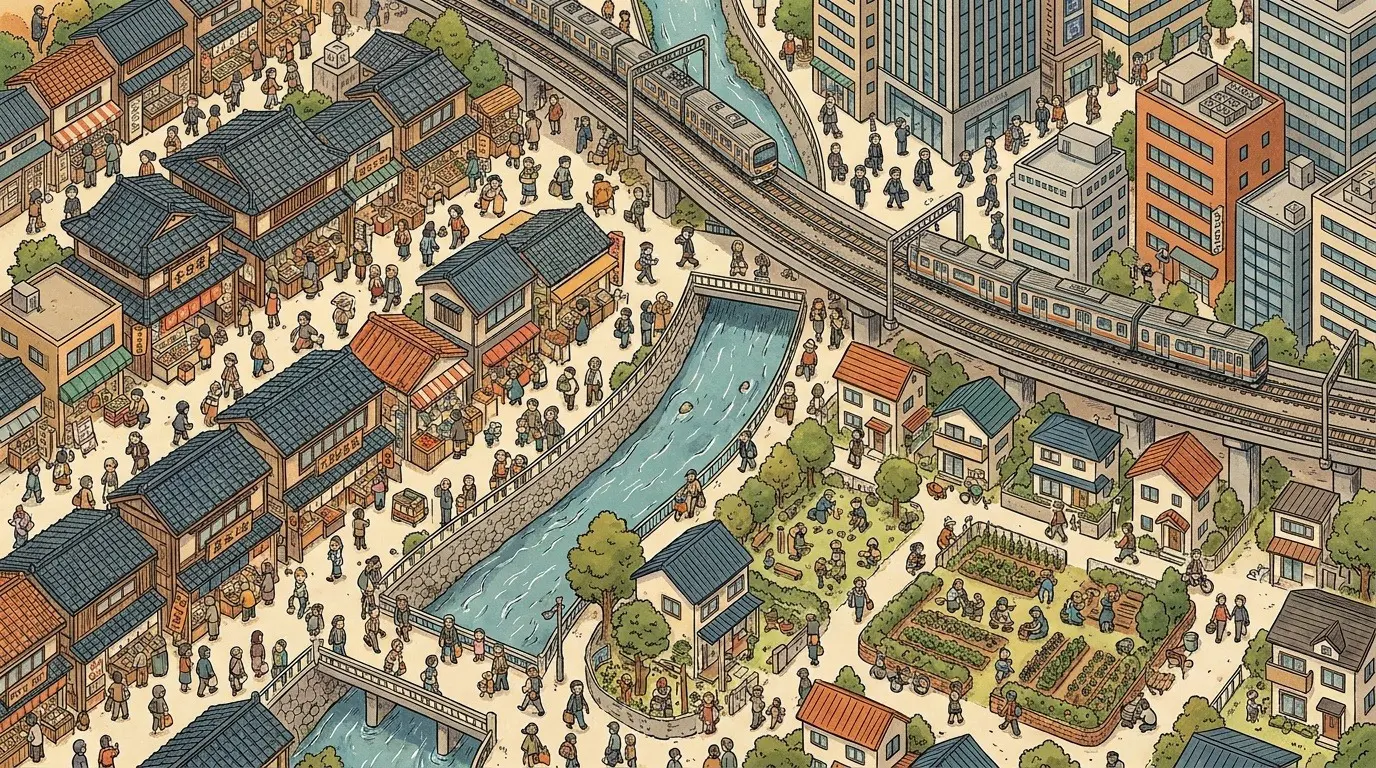
- Photographs of weapons serve as proof of their existence, proving their very existence; illustrations of weapons are edited to make them recognizable. You can draw only what you want to show in a large size and erase what's unnecessary.
- Abstracted images can become "someone who is nobody in particular," so they are not bound by the attributes of a specific model.
- The uses can be divided into three categories: communication (handing it over without misunderstanding), selling (a 0.5-second opportunity), and connecting (not letting it end after just one time).
- The evaluation criteria for communication-based work is not "Is it beautiful?" but "Did it convey the message without error?" Skill lies more in information design than in drawing ability.
- For projects involving connections (such as corporate or local government mascots), the artwork becomes an asset. During the design phase, consider whether the artwork will still be reproducible in 10 years.
- There is no single definition of a "good illustrator." All that exists is "someone who excels in this particular application."
- Three things to decide before placing an order: where to place it and its lifespan, the reader's situation (whether they will be sitting and reading it or just passing by), and the goal verb (I want them to understand it/I want them to buy it/I want them to like it).
There are times when you jot down "Use an illustration here instead of a photo" on a rough draft of a project proposal. But when asked for the reason, you might find yourself surprisingly at a loss for words. Often, you just decide based on a gut feeling. However, there's a good reason why illustrations are effective in certain situations. This article organizes these situations into 10 categories and looks at everything from the principles of using illustrations appropriately to tips for ordering them. Communicating, selling, and connecting—if you roughly categorize them into these three categories, you'll be able to find the right approach the next time you're unsure.
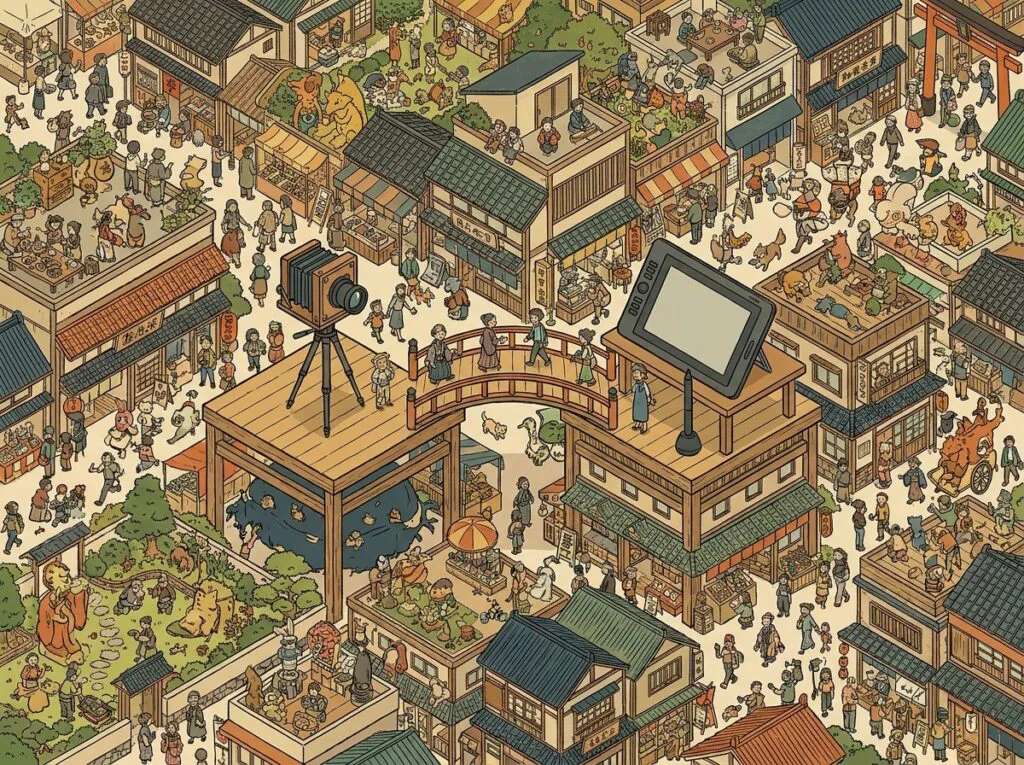
Principle: Photos are "present," illustrations are "understandable."
A photograph of a weapon is proof of its existence. This product is really this color, and this store really exists here. The power to instantly guarantee facts is something that a picture cannot replicate.
In contrast, the weapon of illustration is editing. You can draw only what you want to show in large detail, erase what's unnecessary, and depict cross-sections, the future, and even the inner workings of the heart. You can point the lens at subjects that a camera cannot. In addition, abstracted images can become "someone who is nobody in particular." Because they are not tied to the age or attributes of a specific model, it is easier for the reader to relate to them.
The criteria for making a decision can be summarized here. If you want people to believe in reality, use a photograph; if you want to design understanding and emotion, use an illustration . If you're unsure, ask yourself, "Do I want to subtract or add information from this picture?" Work that requires subtraction is generally the domain of illustration.
There's another point that's surprisingly often overlooked: the ease of revision. Photography is constrained by both the weather and the subject, and reshooting requires the same amount of preparation. Illustrations take time, but even if there are corrections, they can be made on the same desk. For projects that start without fully finalized specifications, it's not uncommon for illustrations to end up being faster.
Communication-related: To hand over without being misunderstood.
First, let's consider images as a means of conveying information. The evaluation criterion here is not "Is it beautiful?" but "Did it convey the message without error?"
- 01 Diagrams and InfographicsThis involves translating invisible structures, such as the flow of money, the inner workings of systems, or the mechanisms of the human body, into spatial representations. Skill here lies more in information design than in drawing ability. Those who can create a "viewing order" using only line thickness and white space are the strongest.
- 02 Educational Materials and Learning ContentThe more child-friendly the artwork, the more difficult it becomes. It demands both fun and accuracy, while maintaining consistency across dozens or even hundreds of pieces. Rather than a single masterpiece, what's needed is someone who can create a consistent series.
- 03 Government and Public RelationsDisaster prevention, health checkup information, waste sorting guidelines. It's a job to transform papers that are assumed not to be read into papers that people will actually read. Since a variety of people appear, consideration for expression is also included in the design. Soft illustrations serve as an entry point to hard information.
What these three have in common is a refreshing lack of emphasis on the illustrations themselves. After finishing them, the reader is left with only the impression that "it was easy to understand," and the illustrations themselves are not remembered. That is success. For artists who want to showcase their own unique style, this is the area that requires the most patience.
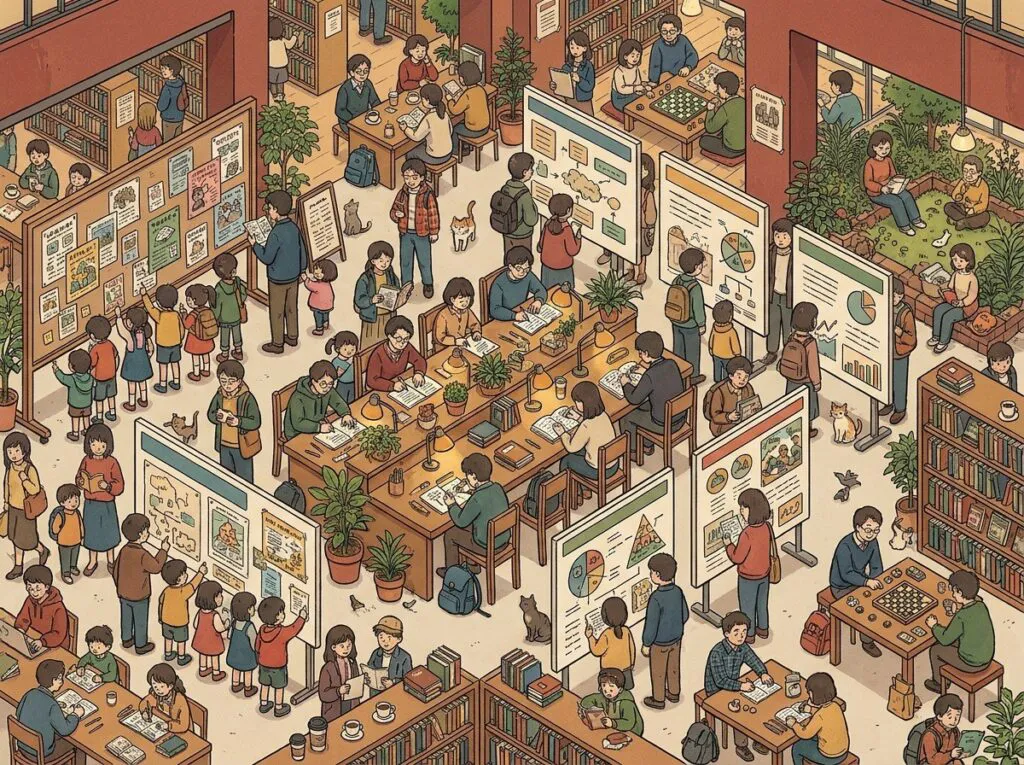
Sales-related: Bring it to a 0.5-second battle.
Whether it's on a shelf or on a timeline, the amount of time people spend looking at a single image is surprisingly short. Illustrations designed for sales are devices that make people think, "This is relevant to me," in that single moment.
- 04 PackageFor products where the contents are hidden, the illustration becomes a preview of the flavor. Hand-drawn brushstrokes reflect the maker's personality, while geometric illustrations speak of consistent quality. The difference between this product and the one next to it on the shelf directly influences the role of the illustration.
- 05 Advertising Key VisualExaggerations that might look overdone in photographs work well in illustrations. Because you can build a world from scratch, you can choose settings that wouldn't be possible with live-action filming.
- 06 Book and magazine cover illustrationsWithout explaining the contents, the reader is given only the impression after reading. It's not a summary of the plot, but a preview of the emotional impact. The key is whether you can leave enough space for the text to be added.
- 07 Main visual for the website and landing page/It allows us to translate the abstract concept of "service" into a picture. This is where it differs from generic materials, and these unique pictures accumulate as "the essence of this company."
When it comes to selling, strength is more important than density. Silhouettes that don't break down when scaled down, and colors that don't blend together even from a distance. Often, an image that seems underwhelming at its original size works perfectly at the actual size of the display.
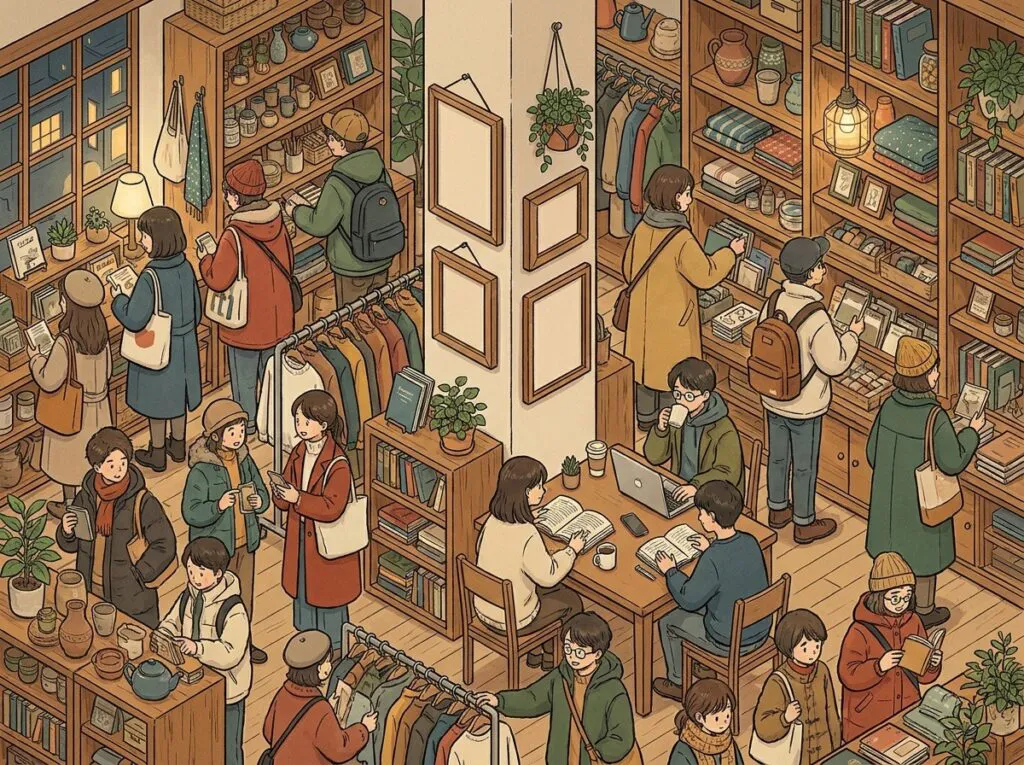
Connecting: Not just a one-time thing.
The third group is a realm where paintings become "relationships" rather than "works of art." They don't end with a single piece, but develop over time.
- 08 Corporate and Local Government CharactersWhat fundamentally differentiates it from a one-off painting is that it becomes an asset. Over the years, its expressions increase, its costumes change with the seasons, and the relationship develops. I want to consider "will I still be able to paint this in 10 years?" during the design phase.
- 09 Music Video AnimationWhen images start to move, it becomes a battle of rhythm rather than information density. It's best to think of the appeal of still images and the satisfying feeling of animation as requiring different talents.
- 10. Goods, murals, and spatial decorationsIt leaves the screen and is placed in the palm of your hand and in the city. Because of the constraints of printing and installation, the consultation with the materials itself becomes part of the production process.
A single illustration is finished upon delivery. A character design begins after delivery. Whether or not this difference is understood from the start makes a huge difference in the landscape three years later.
This group is closer to collaborative development than a simple order. Therefore, compatibility and stamina, more than technology, determine its long-term value. Choosing based solely on short-term estimates usually leads to burnout in the second year.
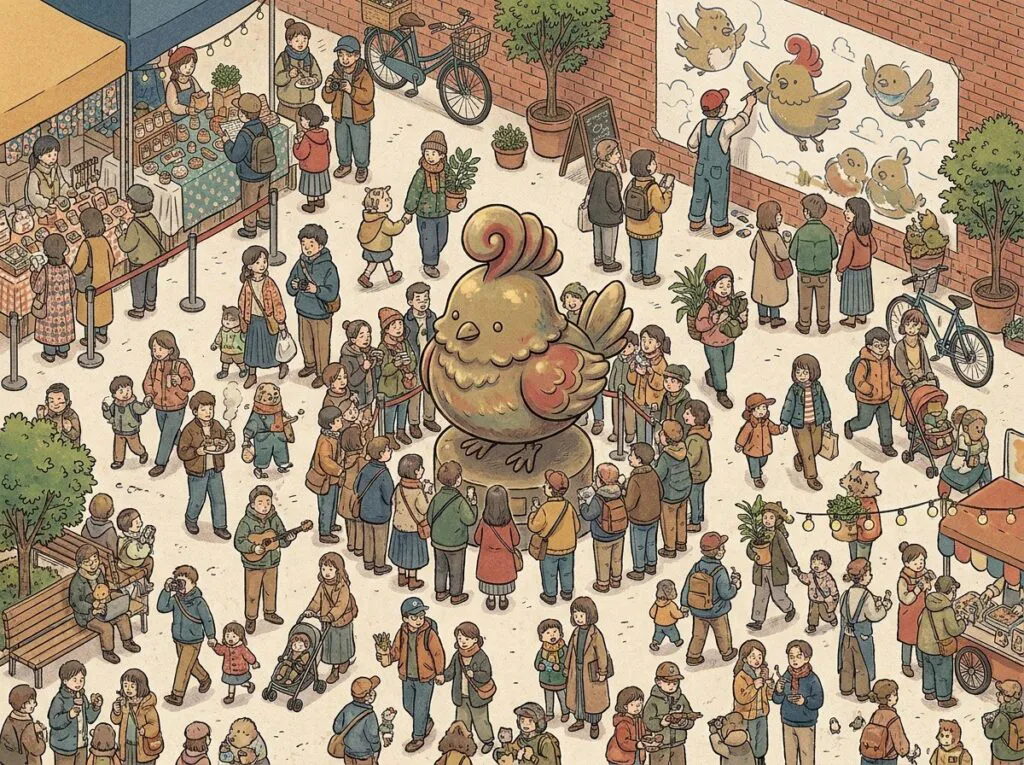
The type of artist you should choose changes depending on the purpose.
This is the biggest pitfall. There is no general definition of a "good illustrator." There is only "someone who is strong in this particular application."
| Use | What works is | A difficult request to coordinate |
|---|---|---|
| Illustrations and teaching materials | Information organization skills and stable mass production | A world where one point is everything. |
| Advertisements and book illustrations | The strength to create air with just one sheet | Hundreds of unification tasks |
| character | Structural design and development capabilities | Disposable single-cut |
| Music Videos / Anime | Design and timing of movement | High-resolution still images only |
When looking at a portfolio, I want to see "what muscles this person has developed" before I even consider my preference for their art style. The types of work they've done, the number of pieces they've completed, the years they've been doing it—there's more information there than just their style.OSERU IMG. List of creatorsWhen you read author profiles like this, paying attention to the types of achievements they have, they take on a completely different picture.
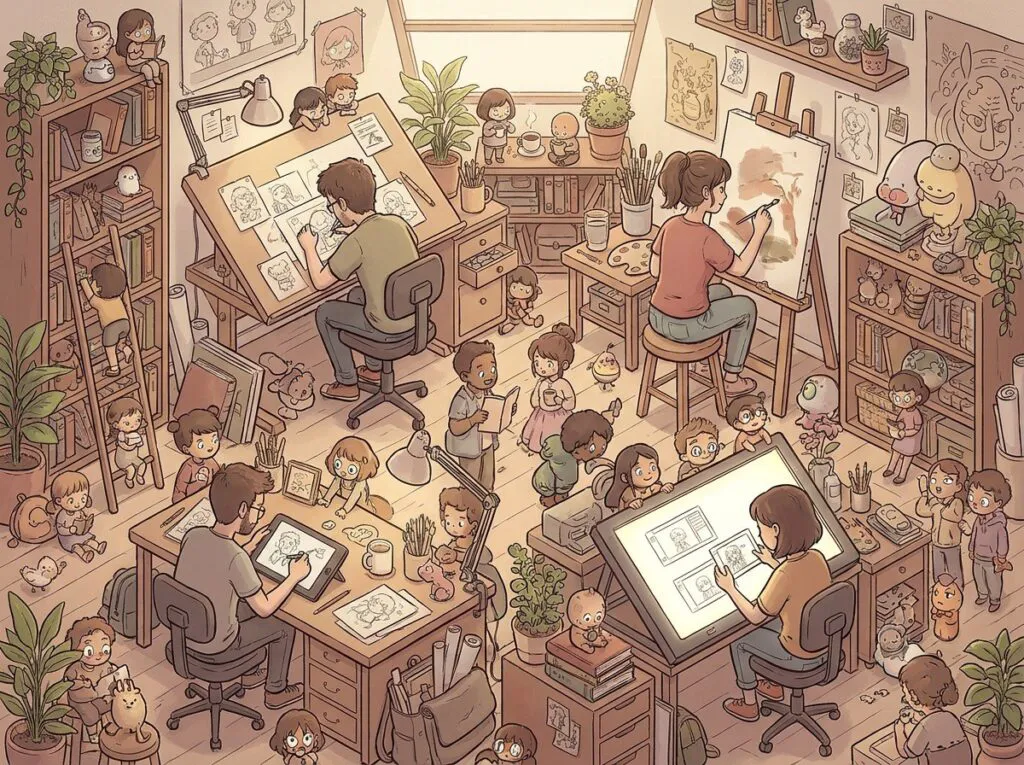
Three things to decide before placing an order
- Location and lifespanIs it a one-time social media post, or a face you'll use for five years? The longer the lifespan, the more important it is to secure the scope and expandability of your rights upfront.
- Reader's stateWill you be sitting down to read, or just passing by? The former relies on the amount of information, while the latter relies on the impact of a single, powerful impression.
- The verb for goalDo you want them to understand, buy, or like you? Once you decide on the verb, the type of work you do—communicating, selling, or connecting—will naturally become clear.
If you write these three things, one line each, before attending the briefing, the clarity of the meeting will noticeably improve. Conversely, if you leave these vague and simply say, "Please draw something nice," you'll only end up with more and more revisions. It's the client's job to decide, and that's the one thing we can't do for them.
Illustrations are not mere decoration; they are a design element for communication. If you look at ten different examples, you'll see that the reason for each illustration is different. The next time you write "illustrate here," if you include the reason behind it, the illustration you receive will surely be different.
- How should I differentiate between using photographs and illustrations?
- Photographs are powerful tools for proving existence. They can instantly guarantee that a product is truly this color, or that a store truly exists here. Illustrations, on the other hand, are powerful tools for editing. You can enlarge only what you want to show, erase what's unnecessary, and depict cross-sections, the future, and even the inner workings of the heart. Illustrations are what you can point at subjects that a camera cannot.
- In what situations are illustrations most suitable?
- The article categorizes content into three types: communication-oriented (diagrams, infographics, educational materials), sales-oriented (packaging, advertising key visuals), and connection-oriented (corporate/local government characters, music videos, animations). Each category has different evaluation criteria.
- Do you choose a different illustrator depending on the purpose?
- It changes. For illustrations and educational materials, it's information organization skills and consistent mass production; for advertisements and book illustrations, it's the strength to create an atmosphere with a single image; for characters, it's skeletal design and development skills; and for music videos and animation, it's movement design and timing. There is no general answer to what makes a "good illustrator"; there are just people who are strong in this particular application.
- What should be decided before placing an order?
- There are three things to consider: where it will be placed and its lifespan (a one-time social media post or a face that will be used for five years), the reader's state (will they be sitting and reading it or just passing by), and the goal verb (do you want them to understand, buy it, or like it?). Once the verb is decided, you can determine where your work lies in—communicating, selling, or connecting.
* The illustrations featured in this article are original works created specifically for this media outlet. The copyrights to the works, characters, and product names mentioned in this article belong to their respective owners.
OSERU IMG.
You can consult with us about the content of this article when you're actually working on your project.
OSERU IMG. This is a creative studio comprised of illustrators, character designers, and motiongraphers.Search by style and track record, then contact us directly.Yes, we can. We welcome inquiries even if you're still in the "undecided" stage.



The Making of Illustrated Music Videos and Lyric Videos: The Entire Process and How to Read the Credits
From storyboarding, layering, rigging, lyric motion, and compositing, this guide traces every step of the process in creating an illustrated music video or lyric video, even explaining how to interpret the end credits as a purchase order.

A 0.5-second battle on the shelf. A single label determines the character of the product; it's the blueprint for the package illustration.
To ensure a product is chosen in 0.5 seconds on a shelf, what should be discarded and what should be retained in the packaging illustration? From printing constraints and coexistence with legal labeling to designing a series, this book traces the process of creating a single image that defines the product's character, step by step.
How will the job of an illustrator change in the age of AI? A calm assessment of what is less likely to be replaced.
How will AI change the job of illustrators? From the true nature of "back and forth" work that is difficult to replace, to the conditions that clients should decide from the outset, and the concepts of credit and transparency. This is not a prediction, but a calm analysis of the issues that are currently being discussed.