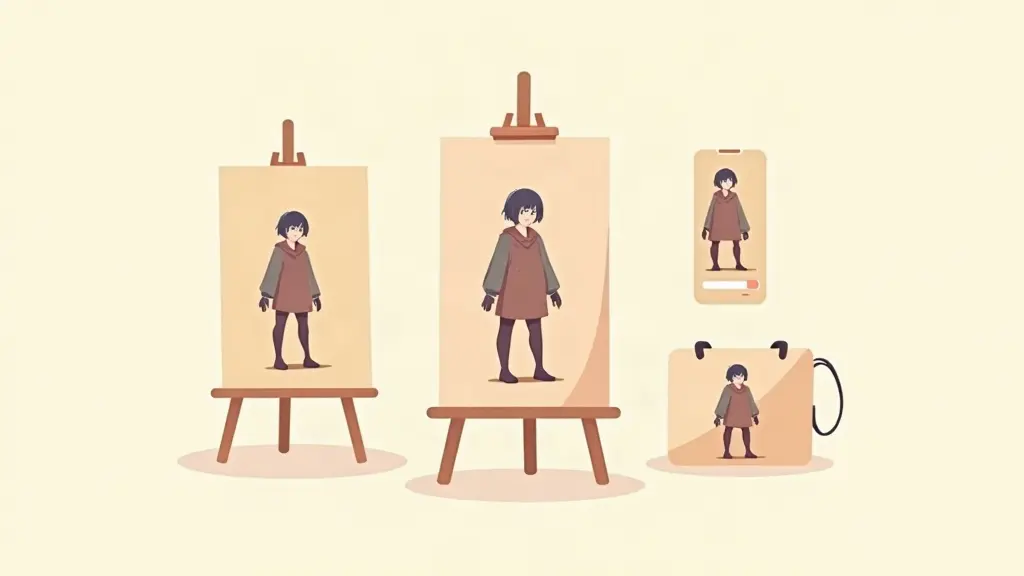
- A key visual is the central image used across various media as the "face" of a work or campaign.
- The term "main visual" often refers to a large image placed at the top of a webpage, while "key visual" generally refers to an image used in a wider area. However, the terminology used in practice can vary.
- A good key visual conveys the concept in a single image, works even when the aspect ratio or cropping is changed, and has enough space to add text.
- Before creating the content, deciding on a list of media outlets, the text elements to include, the release schedule, and the scope and duration of use will reduce the need for rework later on.
- The cost and duration will vary greatly depending on the amount of detail, the scope of application, and the intended use, so please confirm the details with a quote after standardizing the conditions.
A key visual is the image that serves as the "face" of a work or campaign.
A key visual is the central visual image for a work, campaign, event, or other project . The term comes directly from the English "key visual," and is sometimes abbreviated as "KV." Examples include a single image released before an anime airs, a poster announcing a live performance or festival, a campaign advertisement for a new product, or the image that graces the top of a game's official website. These images appear in various forms, from posters and websites to social media announcements, train station advertisements, and even merchandise packaging.
The role of a key visual is to instantly convey to the viewer "what this is about" and to leave a lasting impression. By repeatedly seeing the same image, the impression of the work or campaign accumulates in the viewer's mind. Therefore, if you think of a key visual not as just a single image, but as an image designed with the intention of being used in a series of campaigns , you will see what you need to consider when creating it.
This article will explain the meaning of "key visual," its difference from "main visual," the criteria for a good key visual, and things to decide before commissioning one. Information specifically about commissioning key visuals for events and live performances is also covered in our article on illustrators who can create key visuals for events and live performances .
Differences from the main visual
A term very similar to "key visual" is "main visual." The two terms are often confused, and even in practice, the terminology can vary, but generally, they are used differently as follows:
| word | Mainly refers to | Scope of use |
|---|---|---|
| Key visual | The central image that represents the entire work or campaign. | Used across multiple media, including posters, websites, social media, advertisements, and merchandise. |
| Main visual | Images that are placed prominently at the top of a webpage. | Mainly specific pages on a website |
For example, on the official website of a new anime, the main visual on the top page is sometimes created based on the key visual. In this case, the key visual is the "original image," and the main visual is the image that has been adapted to fit the web screen. On the other hand, in the field of web production, the large image at the very top of the page is sometimes also called the "key visual."
More important than finding the "correct" wording is clearly communicating "where and in what form the image will be used" when making a request . If you simply say, "I'd like a key visual," the recipient might imagine a single image at the top of a website, or a central image to be used across various media. Providing a list of uses rather than just words reduces the likelihood of such misunderstandings.
Scenes in which the key visual is used
Key visuals are used in a variety of fields. The role they play differs slightly depending on the field.
- Anime and movies...to convey the worldview of the work before it is broadcast or released. Often, this is done in stages, such as in the first and second installments.
- Games...Used on the official website, store introduction pages, advertisements, etc., to convey the atmosphere of the work and its characters in a single image.
- Live events and festivals...Unifying the event's impression from the announcement posters, ticket pages, venue decorations, and merchandise.
- Vtuber/Streamer Activities...Used to announce milestones such as commemorative broadcasts, new costume announcements, and anniversary events.
- Corporate campaigns and products...Use the same image in advertisements, in stores, on the web, and on social media to maintain a consistent campaign image.
What's common across all fields is that a single image is reused in multiple places . That's why anticipating the various uses during the creation stage greatly influences the quality of the key visual.
Three conditions for a good key visual
While visual appeal is certainly important, key visuals also have other requirements. Here are three representative ones.
The concept is conveyed in just one image.
When people see a key visual, they often judge it solely by the image before reading the description. Who is the main character? What kind of atmosphere does the work have? Is it a lighthearted story or a sad one? The first condition is to narrow down what you want to convey to one thing and ensure that it is conveyed in a single image. If you try to cram in too many elements, it will end up conveying nothing at all.
It works even if the form is changed.
The same image can be used for vertical posters, horizontal web banners, square social media posts, and small icons. It's important that the main subject remains visible and the overall impression is maintained even when the aspect ratio changes or parts of the image are cropped. Therefore, techniques such as drawing a wide background or separating characters and elements into different layers are often employed.
There is space to place text.
The key visual will contain a lot of text, including the title logo, tagline, date, venue name, and distribution channels. If you try to add the text after you've finished drawing, you might not have enough space, and the text might end up covering important parts of the image. Ideally, you should share what kind of text will be included and how much of it there will be before you start drawing.
Five things you should decide before you start building
Before commissioning the creation of a key visual, deciding the following points beforehand will expedite the process and reduce the need for revisions.
| Decide | Specific content |
|---|---|
| Purpose and target audience | What do you want people to know? Who do you want to reach? How do you want viewers to feel? |
| List of media outlets | Posters, websites, social media, advertisements, merchandise, venue decorations, etc. Also includes aspect ratios for each medium. |
| Text elements to insert | Title, tagline, date, credits, disclaimer, etc. |
| Release schedule | When will it be released? Will it be released in stages, like a first and second release? |
| Scope and duration of use | Which media outlets will use it, in which regions, and until when? What are the plans for its use in merchandise and sales items? |
Of these, the most common source of trouble later on is the list of media to be used and the scope of use . Initially, the plan might be limited to promotional posters and the web, but later, it's common to want to use it on merchandise or large billboards. Writing down future possibilities from the beginning allows you to reflect them in the composition design and cost estimate. The concept of scope of use is summarized in the illustration copyright guide , and the method for determining costs is summarized in the guide on market rates for illustration commissions .
Production process: Determine the composition with a rough sketch, then add details.
The creation of key visuals generally proceeds as follows, although there may be slight differences depending on the client and field.
- Consultation...Share the purpose, target audience, distribution channels, text elements, and schedule.
- Concept and rough sketches...We came up with several compositional ideas and confirmed the placement of the main subject and the location of the text.
- Line art and coloring (final version)...drawing according to a predetermined composition.
- Matching the design...Add logos and text, and create layouts for each medium.
- Delivery and deployment...Extract the necessary data for each medium and release it in order.
When the illustrator and the designer responsible for text and layout are different people, allowing both to review the composition at the rough draft stage can prevent problems such as text not fitting or not being cut out early on. The key to creating a key visual is to design the image from the beginning as one that will accommodate text, rather than adding text to the finished illustration later.
The timeframe varies greatly depending on the amount of detail, the number of people involved, and the number of review sessions. If there is a set release date, please work backward from that date and make your request with ample time to account for the time required for internal and relevant party review.
Key visuals for Vtubers and individual activities
Key visuals aren't just for corporations or large-scale projects. Vtubers and streamers create promotional images for commemorative streams, new costume reveals, and anniversary projects. Even for individual activities, the basic principles are the same. At the beginning of the request, you should specify where the announcement will be made, what text to include, and whether the image will be used for thumbnails or merchandise.
In particular, if you plan to use the illustrations for revenue-generating live streams or merchandise for sale, it is important to clearly define the scope of use at the time of the request. For requests regarding character designs and illustrations for Vtuber activities, please also refer to our article on requesting illustrations for Vtubers .
Summary — The key visual is commissioned as an "unfolding picture".
A key visual is an image that appears in various forms in different locations, serving as the face of a work or campaign. Therefore, in addition to its beauty as a single image, it must also be effective when transformed and coexist harmoniously with text . If the client provides clear information from the outset regarding the purpose, target audience, textual elements, schedule, and scope of use, the artist can focus on creating the most impactful image within those constraints.
The overall process for ordering illustrations is outlined in the Complete Guide to Ordering Illustrations , and the items to include in your initial contact are summarized in the Sample Illustration Request and Template . Please note that the information presented here represents general considerations. If you are unsure about rights or contractual arrangements, please consult a professional.
- What is the difference between a key visual and a main visual?
- Generally, a main visual refers to a large image placed at the top of a page, such as the homepage of a website, while a key visual usually refers to a central image used across multiple media, such as posters, websites, social media, and merchandise. However, the terminology can vary depending on the context, so it's best to specify exactly "where and in what form the image will be used" when making a request.
- What do you call a key visual in English?
- This term is a direct translation of the English "key visual," and is often abbreviated as "KV." In the fields of film and games, the same type of artwork is sometimes called "key art."
- Does the key visual have to be an illustration?
- No. Key visuals are also created using photographs, graphics, and 3DCG. When characters are the main focus, such as in anime, games, or VTuber activities, they are often depicted as illustrations, while when products or people are the main focus, photographs are sometimes chosen.
- When requesting a key visual, what should I communicate first?
- Before discussing the content of the illustration, it's helpful to communicate what the key visual is for, who the target audience is, which media it will be distributed across, what text will be included, and when it will be released. This makes it easier for the artist to consider the composition. It's recommended to have a list of distribution channels ready as early as possible.
- What is the going rate for producing a key visual?
- It's difficult to give a uniform price, as it varies greatly depending on the amount of detail, the number of characters, whether or not there's a background, the range of media to be used, and the usage period. Please write down your requirements and then request quotes under the same conditions to compare them.
- Is it okay to use the key visual that has already been created for merchandise and advertising later on?
- It depends on the scope of use initially agreed upon. If you wish to expand the scope of use, do not use it without permission; consult with the artist or rights holder and make additional arrangements as necessary. Writing down potential future uses at the initial stage will make subsequent consultations smoother.
* The illustrations featured in this article are original works created specifically for this media outlet. The copyrights to the works, characters, and product names mentioned in this article belong to their respective owners.
OSERU IMG.
You can consult with us about the content of this article when you're actually working on your project.
OSERU IMG. This is a creative studio comprised of illustrators, character designers, and motiongraphers.Search by style and track record, then contact us directly.Yes, we can. We welcome inquiries even if you're still in the "undecided" stage.
Commissioning a key visual for a VTuber—things to decide beforehand for debut, new outfit, and anniversary announcements.
Key visuals for VTuber debuts, new costume reveals, and anniversary streams are commissioned as "a single image that will be used in various ways," separate from the character illustrations. Before drawing, we need to decide on the intended use, text elements, and release date, as well as confirm the character rights and organize the process.
What are character portraits? — How specifications vary between TRPGs, visual novels, and social games, and key points to consider when making a request.
A character portrait is an image depicting a character standing, displayed separately from the background in dialogue or game screens. This guide outlines the specifications, which vary depending on the application (e.g., TRPGs, visual novels, social games), and outlines important points to consider when commissioning character portraits.
How to interpret illustration roughs—things to check upon arrival and how to return them.
When you commission an illustration, you'll receive a "rough sketch" before the final version is complete. This rough sketch is a preliminary drawing to determine the composition and pose, and it's not the stage for reviewing details or colors. This guide outlines what to check upon receiving the rough sketch, how to apply it to your actual intended use, how to summarize internal confirmations, and how to respond.