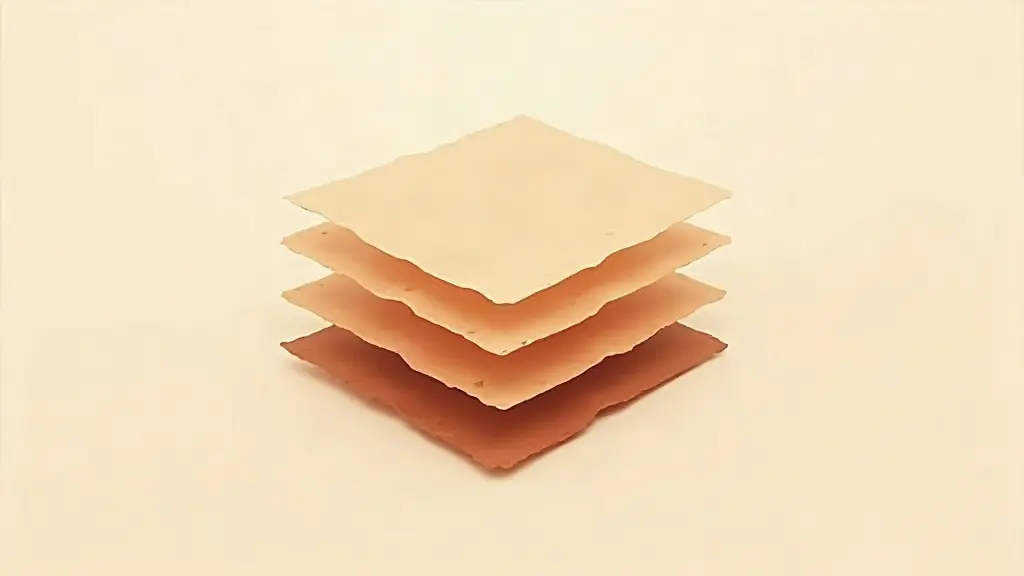
- Simply saying "I'd like a standing illustration" isn't enough to complete a request. The content of the work changes completely depending on whether it's a still image, an animated model, or 3D reference material.
- The items to fill in during the initial contact are: purpose, character settings, variations, whether layer separation is necessary, deadline, budget, and scope of rights.
- Instead of leaving undecided items blank, write "Undecided." This is far more helpful than leaving them blank.
- Instead of basing the facial expression variations on scores, I work backward from "things that frequently happen in my streams." If it's mainly chatting, I focus on smiles and normal expressions; if it's gaming, I focus on surprise, anxiety, and frustration.
- If animation is the goal, it's crucial to clearly define who will determine the criteria for layer separation. Having different people as the illustrator and modeler can lead to redraws after delivery.
- Even after payment is made, copyright does not automatically transfer to the client. In most cases, the artist retains the rights and uses the work within a defined scope.
- The method that minimizes setbacks is to secure the modeler first. By receiving the specifications for the divisions before commissioning the illustrations, redraws can be avoided.
When starting out as a Vtuber, or when you want to update the artwork for an existing character, the first hurdle you'll face is "I don't know what to ask for or how to ask for it." Even if you have experience commissioning illustrations, creating artwork for a Vtuber is a different matter.
The difference boils down to one point: the painting is created to be animated, not just for display . A painting intended for movement cannot simply stand as a single image when completed. It needs to include details that won't be visible on the screen, such as a torso drawn beneath the arms or a frame behind the bangs.
I'll leave the background story of why the design turned out that way to the article I wrote about the invention of character portraits . Here, I'll just list the things that the client should decide in advance , in the order in which the discussions should begin.
A request for "one character illustration" is not sufficient.
If you simply tell an artist, "I'd like a standing illustration," you'll almost certainly get a question in return. This isn't because they're trying to trouble you, but because they can't determine whether they can take on the job based on just that one sentence.
Even with the same "single character illustration," the drawing process changes completely depending on whether it's to be used as a still image on the streaming screen, to be used as a model by moving parts, or to be used as 3D reference material. If it's a still image, you only need to finish the visible parts, but if it's intended to be animated, you have to draw even the hidden parts and deliver them separately as parts. The amount of work varies even with the same style of drawing.
Moreover, most of the information needed to make that decision resides solely in the mind of the client. What kind of broadcast will it be? When do they want to start? Is there a possibility of creating merchandise in the future? In reality, there is very little that the artist can decide on their own.
Items to decide before approaching someone
Including this information in your initial message will visibly reduce the amount of back-and-forth communication. For items that haven't been decided, simply write "Undecided." Writing "Undecided" is far more helpful than leaving it blank.
| Item | What message to convey | Things that happen when things aren't decided |
|---|---|---|
| Use | Will it be used as a still image, as an animated model, or should 3D be considered as well? | The drawing method itself cannot be decided, so an estimate cannot be provided. |
| Character settings | Gender, perceived age, personality, worldview, and specific details you'd like to emphasize (hairstyle, eyes, accessories, etc.) | The direction of the rough draft is unclear, leading to frequent revisions. |
| Design decision-making power | Should we draw based on this proposal, or should we leave the design to you? | It unintentionally becomes a "leave it to them" situation, which deviates from expectations. |
| Range of difference | How many facial expression variations should be prepared? Are costume variations necessary? | It was added later, and the delivery date and conditions had to be revised. |
| Modeling | Should I ask the artist to do the modeling as well, or should I hand it over to a different modeler? | The format of the delivery data has not been decided. |
| Form of activity | Is it an individual project, one affiliated with an agency, or a corporate project? | The handling of rights is being addressed after the fact, and the discussion is back to square one. |
| Desired time | The planned debut date, or the idea of "not rushing." | Unable to secure the schedule |
If you're unsure how to write your first email, we've compiled a general template and example request email . The table above contains items specific to VTubers that you should add to that template.
The choice of facial expression variations should be based on "what will happen during the stream," rather than simply "how many variations there are."
Trying to decide on the difference points first usually leads to getting lost. More isn't always better; there's no point in creating differences you won't use because you won't have a chance to switch to them. The order of thinking should be reversed: start with what happens frequently in your own streams .
- If the conversation is mainly casual, the most effective approach is to alternate between smiling and maintaining a neutral expression. More important than subtle emotions is the range of your mouth movements and the way you narrow your eyes.
- For game streaming, you need a wide range of facial expressions, such as surprise, anxiety, and frustration.
- If you're going to stream your singing, the shape of your mouth and how you look with your eyes closed are important.
- If there are many collaborations, you'll want to see angles other than a frontal view, or shots where the gaze is turned to the side.
When using still images, variations are simply single images that are switched between . The situation changes slightly when creating models intended for animation; since the eyes and mouth can be moved within a set range, you may not need to prepare as many variations as for still images. Instead, you'll need to separate the model into parts for animation. Deciding which approach to take beforehand will help avoid unnecessary orders.
Regarding costume variations, it's more practical not to try to have everything from the start. It's less wasteful to add costumes as you go along, once you realize you've encountered a problem in a particular situation, rather than accumulating unused costumes.
If animation is planned, specify the layer separation first.
For drawings intended for animation, the content of the final data is just as important as the finished product. Even if it looks ideal, a single, integrated data file won't function as a model.
The important thing here is to clearly define who will decide the criteria for layer separation . If the illustrator and the modeler are different people, and there are no established criteria, a back-and-forth situation will occur where the modeler requests revisions after delivery, and the illustrator has to redraw everything. This is a classic stumbling block where no one is at fault, yet everyone suffers.
| setup | things to do | Words to confirm |
|---|---|---|
| ① Decide on the modeler first. | Consult before commissioning the artwork, or at least at the same time. | Who should I ask to do the modeling? |
| ② Get instructions on how to divide it. | The modeler will provide instructions and specifications for the parts to be divided. | Could you please specify how you want the layers separated? |
| ③ Give the artist the specifications. | Share the specifications at the request stage. | Could you draw it according to these specifications? |
| ④ Have them take a look at it midway through. | Have the modeler check it once at the line art or coloring stage. | Could you please check if this is okay? |
| ⑤ Check the format and deliver. | Standardize file format, resolution, and layer naming conventions. | What format should the delivery be? |
When an artist handles everything from illustration to modeling, this process is completed entirely within their purview. This reduces the workload compared to a division of labor, making the process smoother. On the other hand, if you want to choose the art style and model movement preferences separately, a division of labor offers more flexibility. Neither approach is inherently superior; it depends on your priorities.
It's cheaper to discuss rights before you start.
VTuber artwork isn't a one-time thing. It's used not only in streams, but also as thumbnails, social media icons, and, if the activity continues, for merchandise and corporate projects. Having to ask "Is it okay to use this?" every time is a burden for both parties.
In illustration transactions, copyright does not automatically transfer to the client even after payment is made. In most cases, the artist retains the rights, and permission is granted to use the illustration within a defined scope. For more details, please see the section on the difference between usage permission and copyright transfer . Here, we will only list the points that are likely to cause problems in VTuber activities.
| scene | Things to decide in advance |
|---|---|
| Use on streaming and social media | Does this include use as an icon, header, thumbnail, or on the streaming screen? |
| Monetization | Are you planning to use this for live streams that generate advertising revenue or donations? |
| Merchandise and goods | Is there a possibility of turning it into merchandise in the future? How will it be handled if that happens? |
| Corporate projects and advertisements | How to handle appearances in advertisements for third-party products or services |
| Modification | Is it okay to ask someone else to add or redraw the differences? |
| Fan art | How should we handle fan-made derivative works? Should we issue guidelines? |
| Credit notation | Where and how will the name appear? The wording used should also be decided. |
Of these, monetization and merchandise are prime examples of issues that tend to cause problems later on. It's quite common for Vtubers to start out as a hobby but then start generating revenue as they continue, and if commercial aspects aren't discussed from the beginning, negotiations will have to start all over again each time. It's better to let people know upfront that there's a possibility of generating revenue, as this will ultimately save both parties trouble.
Please note that the points mentioned here are general considerations that clients should keep in mind. Actual contract details will vary depending on individual circumstances, so if the contract involves an office or is a large transaction, it is recommended to consult with a legal professional.
Which should I look for first: an illustrator or a modeler?
There's no single right order to follow, but the approach that minimizes backtracking is to secure the modeler first . Modelers have requirements for how the illustration should be created, often in the form of division specifications. By receiving these requirements first and then commissioning the illustration, you can avoid the need for redraws.
Conversely, if there's a specific artist you absolutely want to work with, securing their schedule first should be your priority. This is because popular artists tend to have their schedules booked far in advance. In this case, you should confirm with the artist early on whether they can draw with modeling in mind and whether they can accommodate specific divisions.
Regarding where to look for a VTuber, there are several options, such as contacting people directly on social media, using crowdsourcing services, or consulting with production companies, each with its own advantages and disadvantages. If you want to entrust everything, including project management and rights management, or if you are launching a VTuber as a company, consulting with a production company that has a single point of contact is the best option.
Situations where progress is likely to stumble
Finally, here are some common pitfalls. All of these can be prevented with a simple word of advice beforehand.
| stumbling | Why does it happen? | How to prevent it |
|---|---|---|
| Will not make it in time for the debut date | Modeling begins only after the illustration is complete, so the processes are connected in a sequential manner. | Work backward from the modeling period and consult with us with some leeway. |
| The delivered data cannot be used for the model. | No layer separation specification has been passed. | Share the modeler's specifications beforehand. |
| I later realized the difference was insufficient. | I can't read the facial expressions needed before starting the stream. | Ask about the procedure for requesting additional items at the beginning. |
| Verification is required for monetization. | We didn't discuss commercial use at the beginning. | I'll mention it at the possibility stage. |
| I often want to make major changes after the rough draft. | We proceeded without finalizing the character settings. | Please write down the requirements before making a request. |
| I asked someone with a similar style, but it was different. | You can't really tell the breadth of an artist's style without looking at the number of works they've produced. | Look at multiple works by that person and choose one that you find satisfying, considering the range of their work. |
The same applies to the budget; the requirements for VTuber illustrations vary greatly depending on their purpose and scope of use. How to read an estimate is explained in the article summarizing the conditions for determining an estimate , and the overall flow of ordering is described in the complete guide to ordering illustrations .
The more you decide beforehand, the faster the picture will take shape.
The reason why ordering illustrations for Vtubers can seem difficult isn't because there are too many decisions to make, but because people don't know what decisions need to be made . If you can see the items to be decided, it becomes a matter of simply filling them in one by one.
And it's not a problem in itself that some items are left blank. If you write "This is undecided" or "I'd like to discuss this," the other person can think about it together. The problem arises when the fact that something is undecided isn't communicated.
Characters can be people you'll be working with for years to come. Think of taking some time to lay out the conditions at the beginning as preparation to make the years ahead easier.
- Why isn't "Please draw one character illustration" enough?
- That one comment isn't enough to determine whether it's acceptable or not. The content of the drawing work changes completely depending on whether it's to be placed on the streaming screen as a still image, to be used as a model by moving parts, or to be used as 3D reference material. If it's a still image, you only need to finish the visible parts, but if it's going to be animated, you'll need to finish the hidden parts as well.
- What should I do if there are items that haven't been decided yet?
- Please write "Undecided." It's far more helpful than leaving it blank. The problem isn't that it's undecided, but that the other person can't see that it's undecided.
- How many facial expression variations should I prepare?
- Starting with scores will lead you astray. Work backward from what frequently happens in your own streams. If your streams are mainly chat, you'll be switching between smiling and normal expressions frequently, so the range of how you open your mouth and narrow your eyes will be effective. If you're doing game streams, you'll need a range of expressions to show surprise, anxiety, and frustration. You won't have the opportunity to switch between expressions you don't use.
- Should I look for an illustrator or a modeler first?
- The approach that minimizes setbacks is to secure the modeler first. Modelers have requirements for how the illustration should be created in the form of divisions, so if you commission the illustration after receiving those requirements, redraws will be avoided. However, if there is a specific artist you absolutely want to draw the illustration, securing their schedule first should take priority.
- Why do accidents happen that cause people to miss their debut date?
- The modeling process begins only after the artwork is complete, so the steps are sequential. Please work backward from the completion date, including the modeling time, and discuss it with us with some leeway.
* The illustrations featured in this article are original works created specifically for this media outlet. The copyrights to the works, characters, and product names mentioned in this article belong to their respective owners.
OSERU IMG.
You can consult with us about the content of this article when you're actually working on your project.
OSERU IMG. This is a creative studio comprised of illustrators, character designers, and motiongraphers.Search by style and track record, then contact us directly.Yes, we can. We welcome inquiries even if you're still in the "undecided" stage.
Behind the scenes of live performance CG: From setlist finalization to the one-take show, several months
From the final setlist to the actual performance, several months pass. This documentary follows the behind-the-scenes production flow of live CG production, including the division of labor for each song, the differences between background visuals and lyric motion, constraints on stage positioning and lighting, the quirks of the venue's LEDs, and the final refinements during rehearsals.
What are character portraits? — How specifications vary between TRPGs, visual novels, and social games, and key points to consider when making a request.
A character portrait is an image depicting a character standing, displayed separately from the background in dialogue or game screens. This guide outlines the specifications, which vary depending on the application (e.g., TRPGs, visual novels, social games), and outlines important points to consider when commissioning character portraits.
Why do images convey meaning when they move? – An introduction to motion graphics: learning about easing and timing.
"Can this image be animated?" — Why does movement in a still image convey meaning? From the difference between motion graphics and animation, to the true nature of easing, designing 6-second/15-second/30-second timeframes, and the difference between vertical and horizontal orientations. An introduction to motion graphics that clients should know.