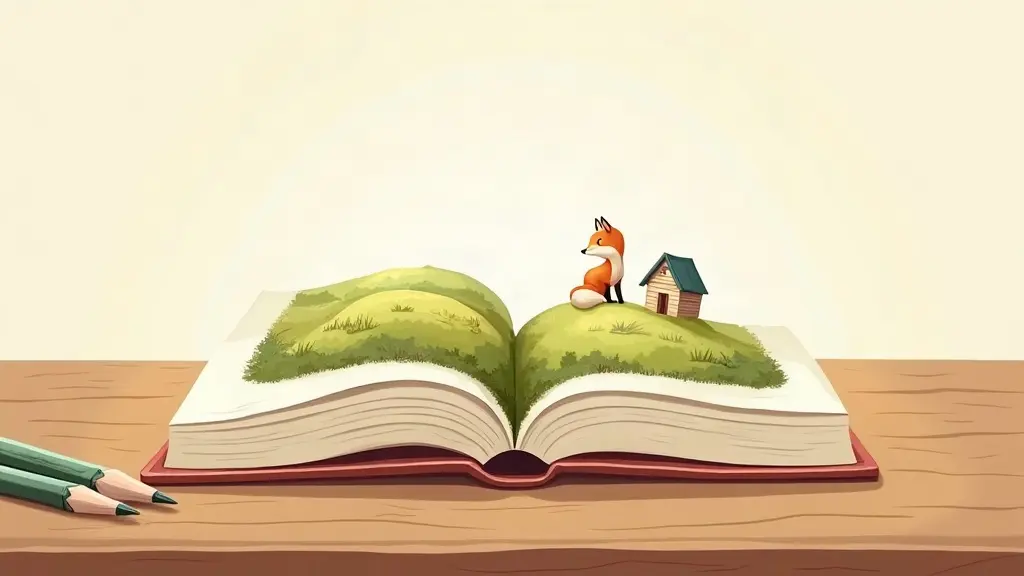
- Unlike illustrations that supplement text, picture book illustrations are drawn so that the story progresses even without visuals. The request is not for "a few pictures," but for "the entire flow of the book."
- Before making a request, it's helpful to decide who will read it, what it's for, the number of pages and format, who will write the text, and where it will be distributed.
- At the rough draft stage, the most important step is to look at a dummy layout (a rough draft following the page layout) with all the pages laid out to confirm the flow of turning the pages.
- If the author of the text and the author of the illustrations are different people, their respective rights and how the works will be used (e.g., read-aloud videos, merchandise, translations, reprints) should be agreed upon in writing.
- The cost and timeframe vary greatly depending on the number of pages, the amount of detail, the art materials used, and the printing specifications, so it's best to standardize the conditions and get a quote.
A book to commemorate a child's birth or school entrance; a book to give to employees and business partners on a company's anniversary; a book distributed by a local government to convey disaster prevention or local history. Picture books are a medium that can convey things that are difficult to express through words alone, in a gentle way and in a way that can be kept for a long time.
However, when commissioning an artist to illustrate a picture book, it's easy to think, "I just need them to draw a few illustrations." In reality, illustrations for picture books have a different role than illustrations for other books. This article summarizes what you should decide beforehand, how to proceed, and how to confirm rights when commissioning illustrations for a picture book.
The illustrations in picture books are not just "illustrations"—the pictures carry the story.
Illustrations in novels and essays are images placed to complement the text, which is the primary focus of the book. The concept of illustrations is explained in more detail in the article " What are Illustrations?" .
In contrast, picture books are books where the illustrations are the main focus, and the text accompanies them . Readers, especially children who cannot yet read, follow the story while looking at the pictures. The pictures tell what is not written in the text, and the text tells what is not depicted in the pictures. This division of roles makes up an entire book.
Therefore, when we commission illustrations for a picture book, we're not asking for "a few illustrations," but rather the entire flow of the story, the way the narrative unfolds as you turn the pages . We ask the artist to consider everything from which scene to place on which page, where to create the surprise on a two-page spread, and what to see the moment you turn the page.
| Points to compare | Illustrations | Picture book illustrations |
|---|---|---|
| Main Character | article | Illustrations (with accompanying text) |
| How to think about the number of sheets | Select a few scenes | Every page is composed of illustrations. |
| Design units | Each sheet | The flow of double-page spreads and page turning |
| Reader's way of reading | Read the text and supplement it with pictures. | Listen to and read text while looking at pictures. |
The purpose of creating a picture book and the situations in which you might commission one.
The process of commissioning a picture book varies depending on the purpose. It's helpful to first clarify which scenes are most relevant to your project, as this will make it easier to consult with the author.
- A commemorative book for family or personal use....A gift featuring children and family as the main characters. Printed in small quantities, meant to be read by close friends and family.
- Picture books for corporate and organizational anniversaries and brands...to convey the story of our founding and the worldview of our products to our employees, business partners, and customers.
- Picture books for public awareness and guidance by local governments and facilities...to present information on disaster prevention, traffic safety, local history, and how to use facilities in a way that is understandable to children.
- Picture books intended for self-publishing or sale...It will be sold in bookstores and online. Distribution methods, as well as sequels and merchandise development, are all being considered.
A personal commemorative book and a book distributed widely by a local government differ in terms of the number of readers, the distribution period, and the required verification procedures. Deciding who will read the book, where, and for how long is essential as it forms the basis for determining the scope of use and estimating costs.
Things to decide before making a request
Before contacting the writer, write down the following points in your own words. It's okay if not everything is decided, but if you're clear about what's undecided, we can decide things together during the consultation.
Readers and Purpose
The age of the child reading it, whether an adult is reading it aloud, or whether an adult is reading it themselves—the amount of information in the illustrations, the size of the text, and the pace of the story will all change depending on the reader. Additionally, writing a sentence describing what you want the reader to feel when they finish reading will give the author a clue when considering the direction of the illustrations.
Who writes the text?
Will you write the text yourself, ask an author to write and illustrate both, or hire a different writer? The scope of work cannot be determined until this is decided. Even if you write the text yourself, in picture books, the parts that are meant to be illustrated are often omitted from the text, so leaving room for adjustments to the text during the illustration composition stage will result in a better final product.
Number of pages and format
Picture books often have fixed page counts due to the folding and binding process, and the cost of paper and printing varies depending on the format (size and shape of the book). If you plan to print your book, be sure to check the specifications with the printing company or publisher before you start drawing . Changing the format after you've finished drawing could require you to revise the entire composition.
Painting style and materials
Do you prefer the hand-drawn feel of watercolors or colored pencils, or the vibrant colors of digital art? Choosing a style from the artist's past works that evokes a certain "atmosphere" will reduce misunderstandings compared to simply describing it in words. You can also refer to illustration style guides to help organize your preferred style . If you're creating a hand-drawn original, decide how the original artwork will be handled (will it be returned, or who will keep it).
How to distribute and how to use them
Will you be printing and distributing it, publishing it as an ebook, or selling it? Furthermore, are there any plans to use it for purposes other than the book itself, such as read-aloud videos, exhibitions, merchandise, or translated versions? These directly affect rights and costs, so please mention them during the initial consultation.
How to proceed—confirm the "page-turning flow" using a dummy page.
The creation of a picture book generally proceeds in the following order. The specific steps may vary depending on the author and the nature of the request, but understanding the general flow will help you know what to check and where.
- Consultation and interview...We will share the purpose, target audience, whether or not there is text, the number of pages and format, and the intended use, and then confirm whether they will accept the request.
- Estimate and agreement...The scope of work, the number of revisions, the delivered data, how the original artwork will be handled, the scope of use, and the terms of payment will be written down.
- Table layout and dummy...We'll decide which scene goes on which page (layout), and then have them create a dummy version of the complete page drafts arranged in the shape of a book.
- Review and revision of the rough draft....While flipping through the dummy pages, I checked the flow, the placement of the text, and the expressions and movements.
- Final painting (finished product)...Draw all pages using a fixed composition. We'll also decide beforehand whether to share progress updates.
- Typesetting and submission...Arrange the text and prepare it for printing. If someone else is in charge of the design, share it from the dummy stage.
The most important step in this process is checking the dummy version . You can't judge the quality of a picture book just by looking at each individual illustration. You need to actually turn the pages to check if the story flows naturally, if the same composition is repeated and becomes monotonous, if there are surprises on the next page, and if the text doesn't cover important parts of the illustrations. It's least burdensome to communicate any corrections at the dummy stage , as major changes after the final illustrations have been created take more time and money.
The time required varies greatly depending on the number of pages, the amount of detail, the art materials used, and the time needed for review. If you have a specific date in mind for giving or distributing the book, work backward from that date and discuss the process with plenty of time to spare, including the time needed for printing and binding.
Things to be careful about when printing and data
The colors you see on a screen won't be the same as the colors printed on paper. This is especially true for pale watercolors and bright, almost fluorescent colors, which can easily change in appearance during printing. When printing picture books, it's a good idea to check the following points.
- Format of submitted data...Share the data format, resolution, and color settings required by the printing company with the artist.
- Bleed and binding position...Draw the picture all the way to the edge of the page so that it won't get cut off, and don't place faces or important things near the binding.
- margin for placing text...Please leave space for the text during the composition stage.
- Color confirmation...If possible, do a test print on paper similar to the final product to check the colors.
- How the electronic version looks...When creating an e-book, check the composition assuming that some devices may not allow a two-page spread to fit on a single screen.
Specific values and settings vary depending on the printing company, so be sure to check the submission guidelines of the company you are using. The concept of data for print materials is also discussed in the article on requesting illustrations for merchandise .
Rights and scope of use—including uses other than books.
While picture books are read as a whole, with text and illustrations working together, rights can arise for both the writer and the illustrator . When different people are responsible for the text and illustrations, it is essential to establish clear rules regarding who holds the rights to which parts and how they may be used.
| Confirm | Examples of things to decide |
|---|---|
| Scope of use | How far can it go: printing and distributing, selling, or turning it into an e-book? |
| Reprint and revision | How to handle increasing the number of copies or revising the content. |
| Secondary use | Read-aloud videos, exhibits, merchandise, reprints on the web and in brochures, translated versions |
| Author's name | How should my name appear on the colophon and cover? |
| Handling of original artwork | In the case of hand-drawn artwork, should the original artwork be returned, or who should keep it? |
| Use by the author | When is it okay for the author to introduce it as their own work? |
One particularly easily overlooked aspect is read-aloud videos . While it's common to want to record a completed picture book and share it online, if the agreement only covered the use of the book itself, separate permission may be required for video use. For picture books published by companies or local governments, potential uses such as screenings at events or partial reproductions in brochures are also possible, so it's best to communicate all anticipated uses from the outset.
The basics of illustration copyright are summarized in the illustration copyright guide . The information presented here is general in nature; if you are unsure about the specifics of your contract, please consult a professional.
Checklist before making a request
Finally, here's a summary of things you should check before contacting the author.
- Have you articulated who this book is for, and what you want them to feel after finishing it?
- Have you decided whether you will write the text yourself, commission a writer, or ask someone else to do it?
- Have you checked the specifications of the printing company or publisher regarding the number of pages and format?
- Are you able to select examples of artwork that closely match your desired style from the artist's past works?
- Will you print, sell ebooks, or sell copies? What is your estimated print run?
- Have you listed any uses for the book other than reading it, such as read-aloud videos, exhibitions, merchandise, or translations?
- Who decided, and when, to perform the dummy verification?
- Did you plan the schedule, including the printing and binding period, by working backward from the date of giving or distributing the gifts?
The cost varies greatly depending on the number of pages, the amount of detail, the art materials used, the number of revisions, the scope of use, and whether or not printing is required; there is no fixed price. The general idea is the same as the going rate for commissioning illustrations , and how to choose a service provider is explained in the section on how to choose a place to commission illustrations .
Summary—Designing the flow of a book together with the author.
Commissioning illustrations for a picture book isn't just about asking for a few pictures; it's about designing the flow of the book together with the author, where the story unfolds with each turn of the page. By first establishing the target audience and purpose, the division of writing responsibilities, the number of pages and format, and how the book will be distributed and used, and then thoroughly checking the flow during the dummy stage, you can create a book that will leave a lasting impression on those who pick it up.
The entire process for ordering illustrations is explained in the complete guide to ordering illustrations , and the initial contact message is introduced in the illustration request template .
- What is the difference between illustrations and illustrations in a picture book?
- Illustrations are pictures added to books where the text is the main focus, to complement the scenes. In picture books, the pictures are the main focus, and the text is secondary to the illustrations. Therefore, the illustrations in a picture book need to be designed with the flow of turning the pages and the composition of the double-page spreads in mind.
- Can I request your services even if the document isn't written yet?
- We can discuss it, but we can't determine an estimate or structure until the division of labor between writing and illustrations is decided. At the very least, having a summary of who the book is for, what message you want to convey, and an outline will make the process much easier.
- Can I freely decide the number of pages and size of the picture book?
- Due to binding constraints, there are often fixed page counts, and the cost of paper and printing varies depending on the format. If you plan to print, please check the specifications with the printing company or publisher before you start drawing.
- Is it okay to publish a video of me reading the completed picture book?
- If video use is not agreed upon at the time of the request, separate permission from the author may be required. For uses other than the book, such as read-aloud videos, merchandise, translations, or reprints, be sure to communicate and agree on these at the beginning.
- How much does it cost to produce a picture book?
- There is no fixed price, as it varies greatly depending on the number of pages, the amount of detail, the art materials used, the number of revisions, the scope of use, and whether or not printing is required. Please clarify your requirements and request quotes from multiple artists and production companies to confirm the details.
* The illustrations featured in this article are original works created specifically for this media outlet. The copyrights to the works, characters, and product names mentioned in this article belong to their respective owners.
OSERU IMG.
You can consult with us about the content of this article when you're actually working on your project.
OSERU IMG. This is a creative studio comprised of illustrators, character designers, and motiongraphers.Search by style and track record, then contact us directly.Yes, we can. We welcome inquiries even if you're still in the "undecided" stage.
Commissioning illustrations for a VTuber—deciding on the format (standing illustration, variations, and model data) beforehand.
When commissioning artwork for a VTuber, simply asking for a single standing illustration isn't enough to move the project forward. We've organized the items that the client should decide on beforehand, from how to handle facial expression variations, layering for animation, division of labor between the artist and modeler, to how to determine rights with monetization and merchandise in mind.
Copyright for AI illustrations should be considered in three stages: learning, generation, and use.
The question, "Whose property is an AI-generated image?" appears to be a single question, but it actually involves three separate questions: learning, generation, and use. By referring to Article 30-4 of the Copyright Act, we will distinguish between what is written in the law and what is left to individual judgment.
Commissioning a key visual for a VTuber—things to decide beforehand for debut, new outfit, and anniversary announcements.
Key visuals for VTuber debuts, new costume reveals, and anniversary streams are commissioned as "a single image that will be used in various ways," separate from the character illustrations. Before drawing, we need to decide on the intended use, text elements, and release date, as well as confirm the character rights and organize the process.