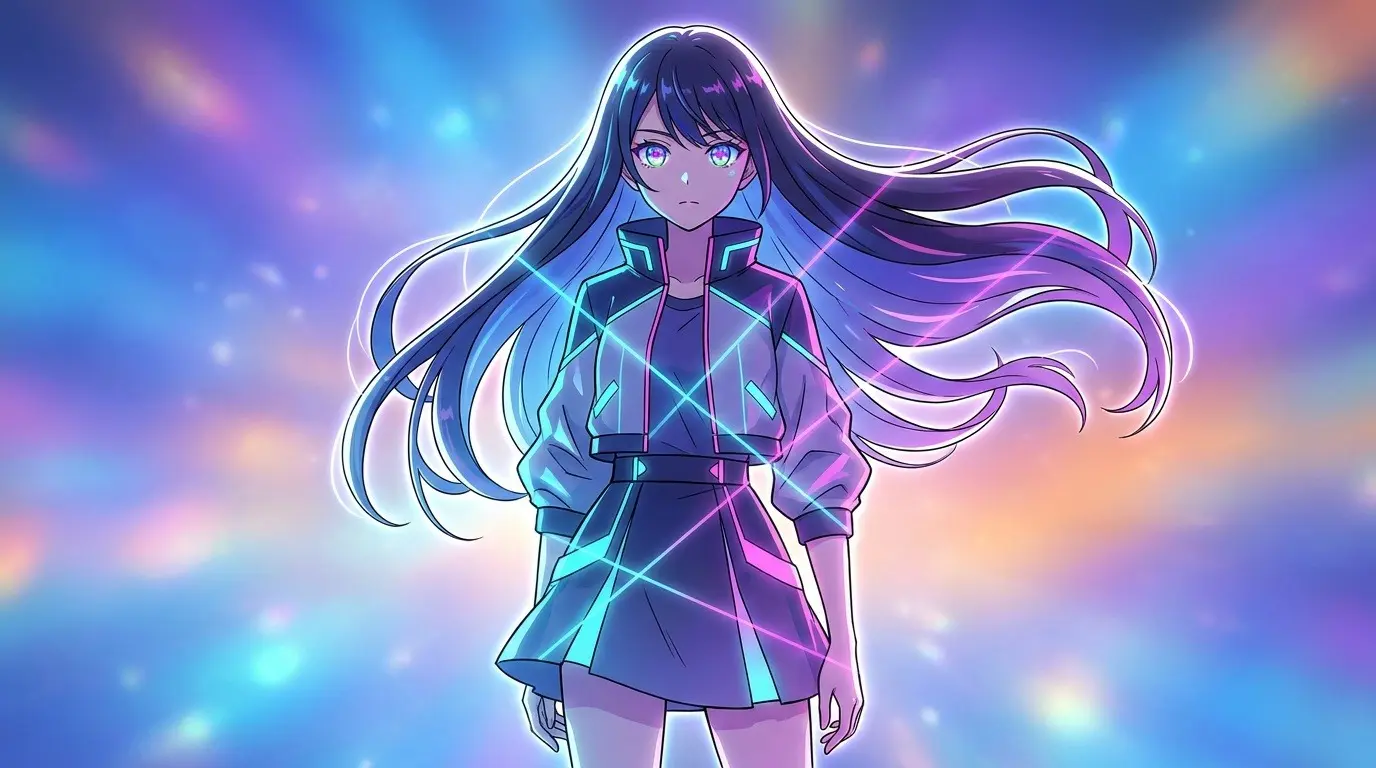
- Character portraits are no longer just single images, but "equipment." The condition of being on screen for hundreds of hours during a live stream changes the demands on the artwork.
- Because the character portraits are fixed, even slight variations carry a great deal of information. Deviations become expressions because there is a standard.
- Assuming you're using Live2D, it's essential to "draw the parts that aren't visible." This means filling in the forehead hidden by the bangs, as well as the underside of the overlapping hair.
- Layer division is calculated backward from the range of motion. Hair is divided into strands, based on the unit of movement.
- A characteristic of this field is that the design and animation are separate tasks, and conflicts often arise regarding the amount of information, the density of decoration, poses, and the texture of the paintwork.
- "Commemorative illustrations," where a single illustration is commissioned for each anniversary or new costume release, represent a unique demand in the history of commercial illustration.
- If we assume that the design will be drawn by fans, then "ease of drawing" becomes an important criterion for evaluating the design.
Anyone working in illustration has undoubtedly heard the term "standing illustration" much more frequently in recent years. It depicts a character's entire body, slightly angled, looking straight ahead. There is no background. There is basically only one facial expression. This is placed on the left edge of the screen, with the character speaking next to it. With the emergence of virtual streamers, a third format has been born for illustrations—one that is neither "pictures to be seen" nor "pictures to be read." These are pictures drawn with the intention of being animated .
This article won't focus on specific streamers or agencies. Instead, I want to discuss the structure of how the virtual framework has impacted the work of illustration. The division of labor, the way lines are drawn, the design of the relationship with fans—all of these changes are relevant even to illustrators outside the virtual world.
Character portraits are not "pictures" but "equipment."
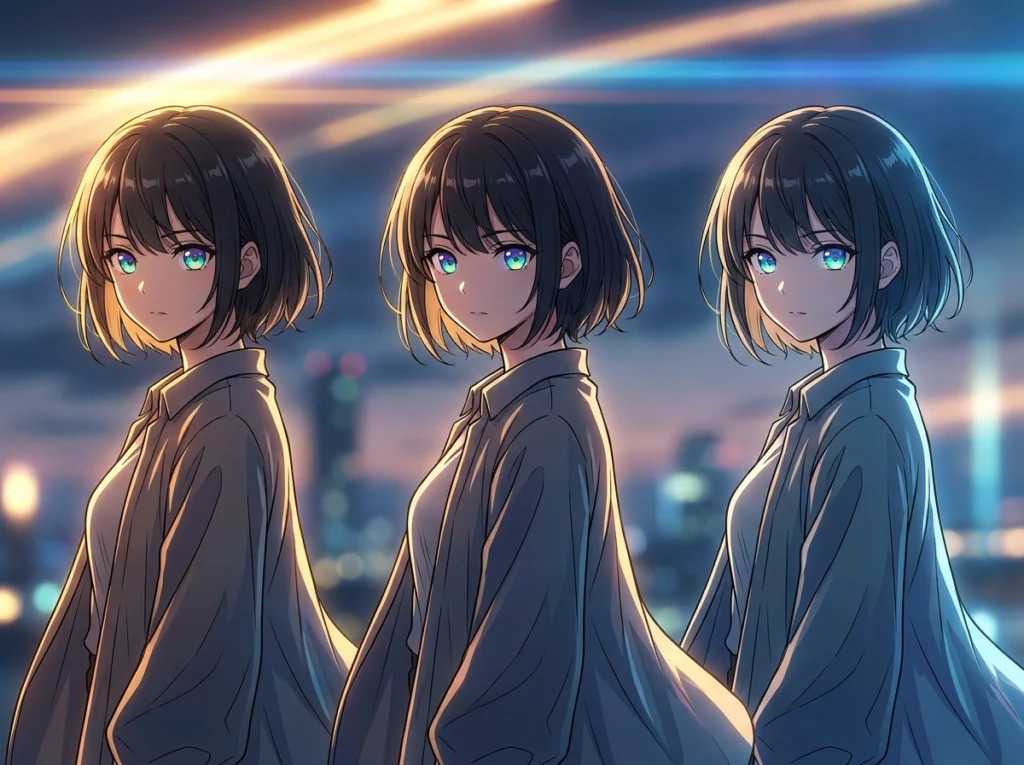
First, let's clarify the premise. For a virtual character, a character portrait serves a completely different purpose than a single illustration in an art book. It remains on screen for tens or even hundreds of hours during a live stream. Viewers will see the same pose, the same clothes, and the same hairstyle countless times.
This condition of "being continuously viewed" completely changes the demands placed on the artwork. A single illustration is a success if it captures the viewer's attention in an instant. A strong pose, dramatic lighting, and eye-tracking are key. However, with a standing pose, the opposite is true; not becoming boring is more important than surprising the viewer . Overly flashy decorations become noise after several hours, and extreme poses get in the way of conversation. On the other hand, if it's too plain, the necessity of that character disappears.
Therefore, designing character portraits is similar to designing clothes. It's like creating a coat that you can wear every day without getting tired of it. The details are meticulous, yet from a distance, the silhouette alone is enough to identify the character. You discover something new when you get closer, but it remains quiet when you step back. Whether or not you can achieve this duality is what separates good character portraits from bad ones.
Viewers are looking at the "difference".
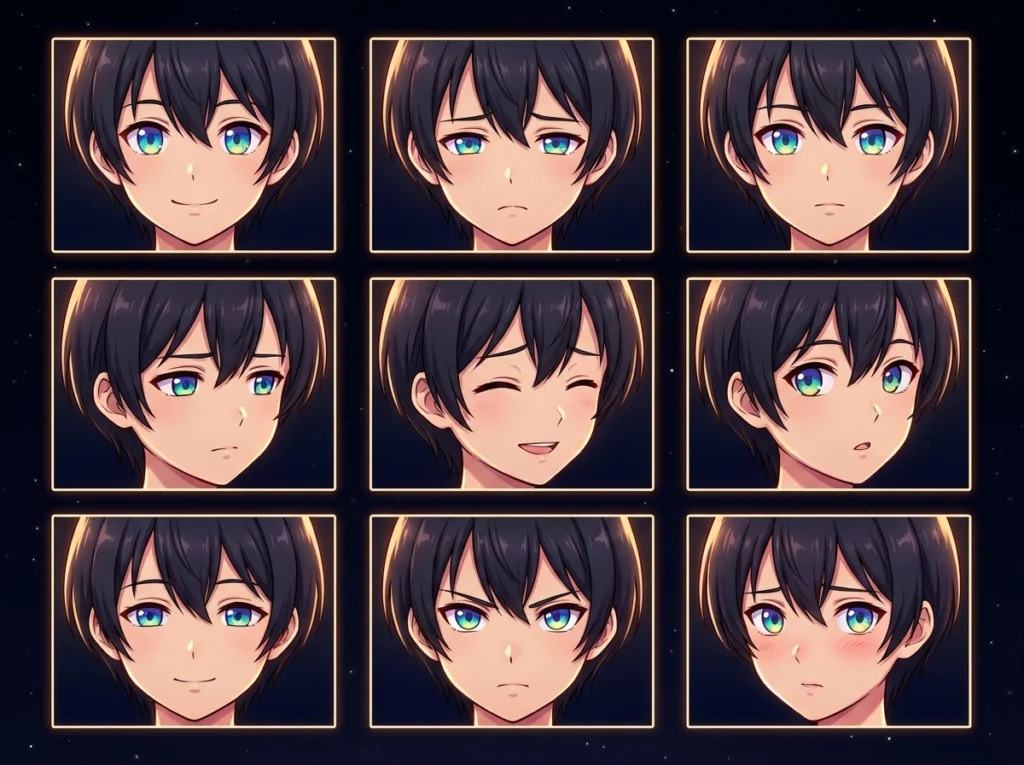
Another interesting aspect is that because the character's standing pose is fixed, even slight changes carry an unusually large amount of information . The bangs, which normally don't move, flutter gently. The eyes narrow slightly. The blush on the cheeks increases. These subtle differences, which would normally be overlooked in everyday life, come across as clear "expressions" thanks to the fixed standard.
From an illustrator's perspective, this is a redefinition of the information architecture of an illustration itself. Instead of creating a complete picture within a single frame, it establishes a baseline state and tells a story through the differences from that point . It's similar to the panel layout in manga, but because the timeline is on the viewer's side, the design becomes even more uncertain.
When you draw with "Live2D in mind," the way you create the artwork changes.
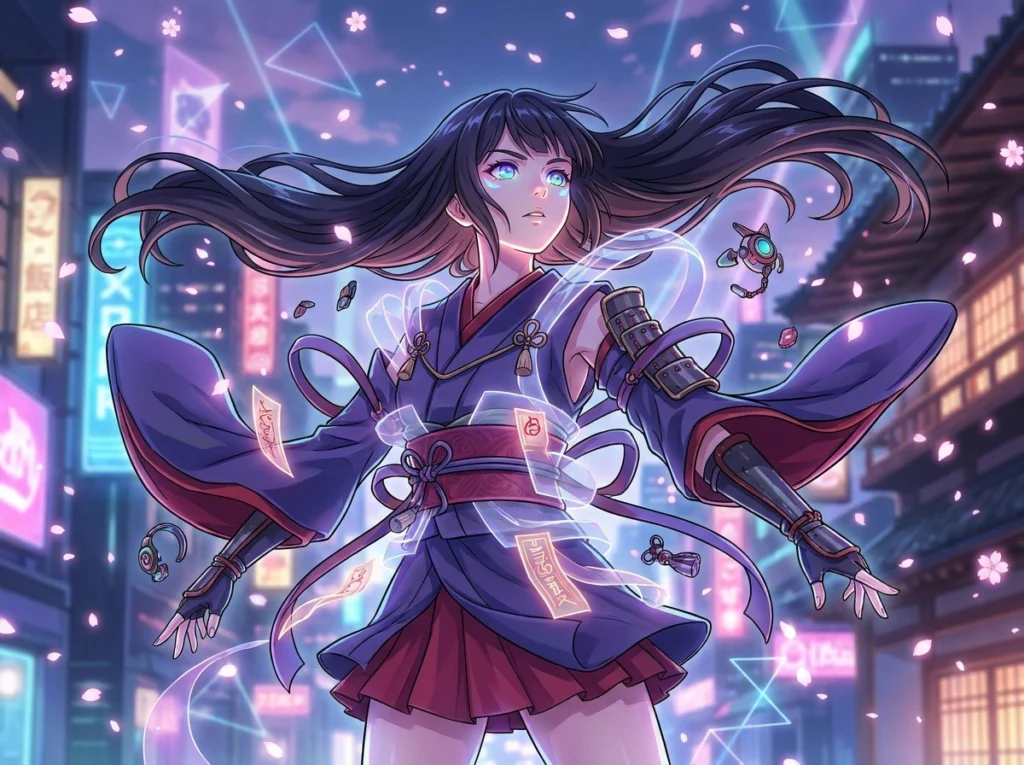
A widely used method for animating character sprites is to apply deformations to layered 2D illustrations to create a pseudo-3D effect. Based on this premise, the illustrator's workflow changes considerably.
The biggest difference is that the idea of "drawing what's not visible" becomes essential. In a normal illustration, you don't need to draw the forehead hidden by the bangs. You don't need to color the torso hidden by the arms, or the parts where parts overlap, if they're not visible. But that changes when you consider movement. When the face tilts slightly, or the hair moves, the hidden areas become exposed. It wouldn't work if those areas were just white holes.
The philosophy behind the divisions
Here's a quick rundown of some key points to consider when splitting layers. Keep in mind that these are general guidelines, and the optimal solution will vary depending on the project and the modeler's approach.
- Calculate backward from the range of motion. — First, decide how each part moves, and then divide it at the joints corresponding to those parts.
- Drawing details on hidden parts — Also, paint the lower part of the overlapping area to the extent that it becomes visible when it moves.
- Hair in strands — Instead of treating it as a single block, separating it into units of vibration makes it easier to add expression.
- Don't rely too much on symmetry. — Parts that were simply reversed tend to look unnatural when animated.
- Separation of lines and fills — There is also the option of handling them separately to prevent line widths from becoming distorted during deformation.
- Independence of accessories — Decorations that move or sway should be placed on a separate layer from the start.
The difficulty here lies in the fact that dividing it too much or too little can both be problematic . Dividing it finely increases the freedom of movement, but the data size increases, and the modeling effort also increases. Dividing it coarsely makes it lighter, but the range of expression is narrowed. This balance cannot be decided by the artist alone. That's why we move on to the next topic.
Division of labor between character designers and modelers
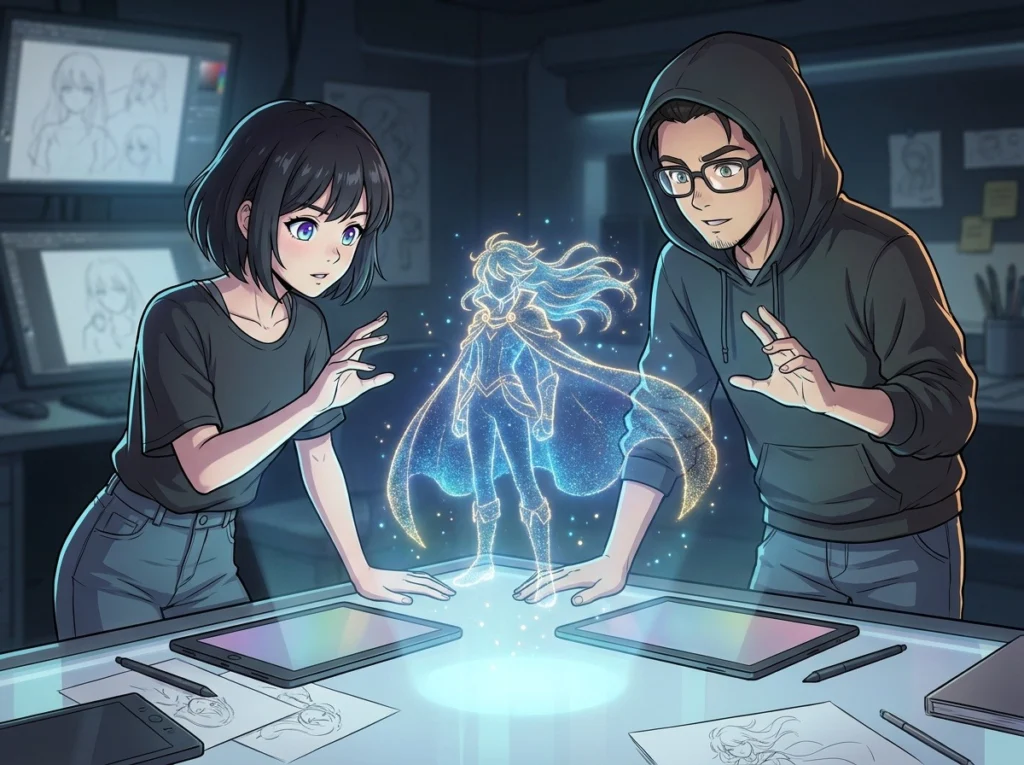
One of the most distinctive ways in which roles have become established in the virtual world is the separation of "designers" and "animators ." Illustrators design and draw characters, while modelers translate those designs into rigs to make them move. While some individuals handle both roles, specialization is becoming increasingly common in this field.
This division of labor is similar to the relationship between keyframes and in-between animators, or between concept artists and technical artists in games. The only difference is that the final product is not a "work of art," but a "vessel for personality ." Once a model is created, it continues to be used as long as the character is active. Modifications and updates are made while the character is still alive.
Where do misunderstandings occur?
Friction is inevitable because the two are different people. The commonly discussed scenario can be summarized as follows:
| Issues | Interests from the design side | Modeling-related interests |
| The amount of information in hair | I want to express individuality through my silhouette. | The calculation and division costs for shaking will increase. |
| Density of decoration | Elements that describe the character's worldview | The risk of failure during deformation increases. |
| Pause | I want to show it from an attractive angle. | The closer to the front, the more stable the movement. |
| Paint texture | I want to create thickness and gloss. | Seams tend to appear at layer boundaries. |
The important thing is that this isn't about one side being right or wrong. The core of the process is the conversation about deciding "how far to stick to this line and where to compromise ." The lines that cannot be compromised are usually the parts that directly relate to character identification: silhouette, color combinations, eye design. Conversely, some decorative elements that don't make a difference from a distance can be sacrificed for stability of movement.
To successfully navigate these negotiations, the artist needs to have some understanding of the principles of movement, and the animator needs to be able to grasp the character designer's intentions.Someone who has their own specialty and understands the neighboring language.However, they are truly invaluable in the field. From the perspective of someone managing illustrators and motiongraphers, the rarity of these "boundary-crossing talents" is becoming clearer year by year.OSERU IMG. List of affiliated creators).
A new demand for illustrations: commemorative illustrations.
Another significant change brought about by virtual culture in the illustration industry is the custom of "commissioning illustrations for special occasions ." For anniversaries of activity, milestones in subscriber counts, birthdays, the unveiling of new costumes, and the completion of projects, a single illustration is commissioned and released each time.
I think this is a rather unique demand in the history of commercial illustration. Traditionally, illustrations were commissioned in conjunction with some product or announcement: book covers, game characters, advertising visuals. But with commemorative illustrations, the picture itself becomes the event . Even if there is nothing to sell or a product to convey, the picture is drawn and functions as a celebration.
The design philosophy of a celebratory painting
Commemorative illustrations have design considerations that differ from those of typical commercial illustrations.
- "What anniversary is it?" becomes the theme of the painting. — Numbers and the passage of time need to be incorporated as visual information.
- Distance from the character's standing pose — How far should you deviate from the image you normally see? If you deviate too much, they become a completely different person; if you get too close, they lose their specialness.
- shared assumptions — It flows through social media timelines and is judged by its thumbnail. Resistance to scaling down becomes crucial.
- Context within the community — Fans appreciate it when symbols associated with the character (favorite food, catchphrase, symbolic motif) are included in a way that only those familiar with the character will recognize.
The fourth point is particularly difficult, yet interesting. It involves using insider symbols without making them incomprehensible to anyone outside the group . Those in the know will recognize them, while those unfamiliar will simply see them as elements that enrich the image. Commemorative illustrations that successfully employ this two-layered structure will reach beyond the community.
Fan art and "design for coexistence"
Another characteristic of the virtual world is that fan-made derivative works are anticipated from the outset . Hashtags are provided, guidelines are published, and the artwork created is introduced by the original creator. Instead of a one-way "showing," the artwork is exchanged back and forth.
This also influences character design. If the design is intended to be drawn, then "ease of drawing" becomes an important evaluation criterion.
- It consists of few distinctive elements (hairstyle, color, one symbolic item).
- The identity won't break even if it's simplified.
- The proportions are designed to look good when stylized.
- The structure of the clothing is easy to understand, and the artist can fill in the gaps through inference.
Conversely, overly intricate designs raise the bar for derivative works. Characters with complex decorations that are difficult to draw without reference materials are less likely to be depicted. This indicates that the definition of "good design" is expanding from the perfection of a single image to the design of an ecosystem . Designers now have to consider not only the quality of a single image, but also how many thousands of times that character might be drawn in the future.
Of course, this isn't about simplifying everything. If you only focus on ease of drawing, it becomes mediocre. Ultimately, this comes down to a design decision to narrow down the core identifying elements and leave everything else soft . If the core is strong, the periphery can be left to interpretation.
Things that have repercussions beyond the virtual world
What I've written so far might seem specific to the context of virtual streaming. But in reality, the ideas honed in this field are quietly spreading beyond it.
Corporate mascots now have short animated videos posted on social media. App characters now subtly sway on the standby screen. Characters in game UIs are no longer single images but are implemented as models with separate parts. The assumption that "animation is not special" is gradually becoming the standard.
This changes the skill set required of illustrators. Can they deliver artwork in a movable form? Can they communicate with the animation team? Can they draw while imagining how the artwork will look when it moves? These are abilities separate from drawing skill, but they will be increasingly valued in the future.
Ultimately, what role does the painting play?
In the world of virtual characters, the illustration is both the container, the first impression, and the common language of the community. While the way the person behind the character speaks and their personality are undoubtedly the core of their appeal, the initial entry point to that appeal is almost certainly the illustration.
What's interesting is the paradox that movement gains meaning precisely because the image is fixed . Because there's a standard form, deviations from it become expression. The static image, by remaining unchanged, serves as the foundation for discussing change. The role of motionless images has been rediscovered through movement.
For illustrators, this might not be so much a change in the nature of their work, but rather a shift in previously overlooked aspects of the functions of art . A picture that is complete within a single frame, and a picture that functions over time. It's not a matter of which is superior, but rather that the options have increased. Even that alone is a positive change for those who create art.
- What's the difference between a character portrait and a regular single illustration?
- The viewing time is different. A single illustration wins if it captures the viewer's attention in an instant, but a standing illustration is viewed countless times by viewers, with the same pose, the same clothes, and the same hairstyle. This condition of "continuous viewing" changes the requirements placed on the illustration.
- How does the workflow change when drawing with Live2D in mind?
- The most important thing is to "draw the parts that aren't visible." Normally, you don't need to draw the forehead hidden by the bangs or the torso hidden by the arms, but you need to fill in the areas that will be visible when the character moves.
- How should I organize the layers?
- We work backward from the range of motion. First, decide how each part moves, and then divide the model at the joints. Draw in the overlapping areas as well, including the parts that will be visible when the model moves. Dividing the hair into strands rather than a single mass makes it easier to create expressions. The optimal solution will vary depending on the project and the modeler's approach.
- Where are the most common points of conflict between designers and modelers?
- The details of the hair (whether it's the individuality of the silhouette or the calculation and division costs of the movement), the density of the decorations (whether it's the worldview or the risk of breakdown during deformation), the pose (whether it's an attractive angle or the stability of the movement), and the texture of the paintwork (whether it's the thickness and gloss or the seams at the layer boundaries).
- How does a commemorative illustration differ from a regular order?
- The passage of time itself, such as "how many years it's been," becomes the subject of the illustration. There are different considerations compared to typical commercial illustrations, such as the sense of distance to take from the usual standing illustration, the tolerance for scaling down as judged by SNS thumbnails, and the context within the community.
* The illustrations featured in this article are original works created specifically for this media outlet. The copyrights to the works, characters, and product names mentioned in this article belong to their respective owners.
OSERU IMG.
You can consult with us about the content of this article when you're actually working on your project.
OSERU IMG. This is a creative studio comprised of illustrators, character designers, and motiongraphers.Search by style and track record, then contact us directly.Yes, we can. We welcome inquiries even if you're still in the "undecided" stage.
10 Places Where Illustrations Make a Great Impact: How to Use Photos vs. Illustrations, and Who to Commission
The reason for choosing illustrations over photographs is not based on intuition, but on logic. Diagrams, educational materials, government public relations, packaging, advertising, book illustrations, corporate characters, music videos, merchandise, murals—10 situations where illustrations are effective, organized by communication, sales, and connection.
The Making of Illustrated Music Videos and Lyric Videos: The Entire Process and How to Read the Credits
From storyboarding, layering, rigging, lyric motion, and compositing, this guide traces every step of the process in creating an illustrated music video or lyric video, even explaining how to interpret the end credits as a purchase order.
Behind the scenes of live performance CG: From setlist finalization to the one-take show, several months
From the final setlist to the actual performance, several months pass. This documentary follows the behind-the-scenes production flow of live CG production, including the division of labor for each song, the differences between background visuals and lyric motion, constraints on stage positioning and lighting, the quirks of the venue's LEDs, and the final refinements during rehearsals.