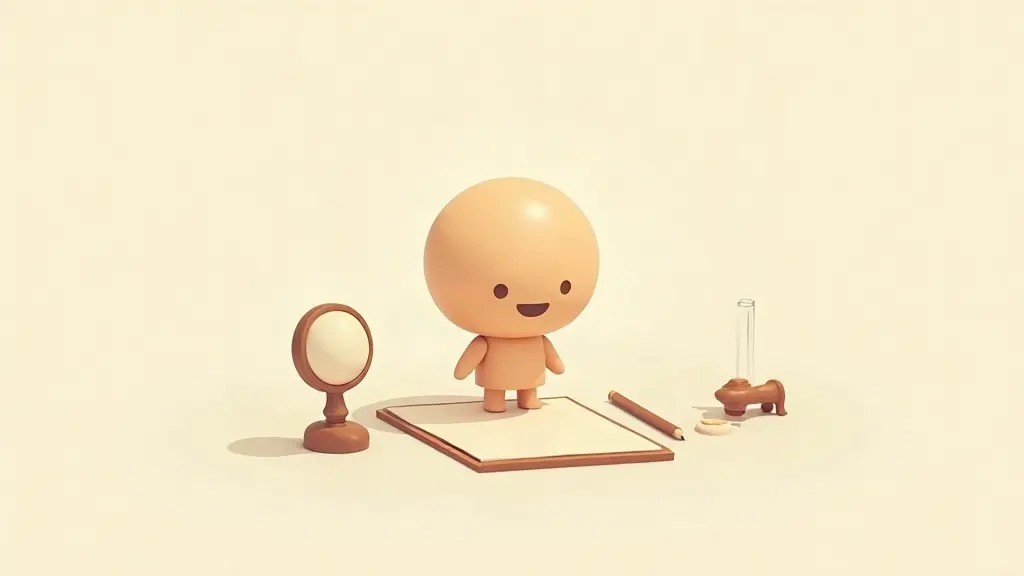
- SD illustrations are stylized drawings that emphasize a character's features by reducing their body proportions. The balance between cuteness and detail changes depending on how the proportions are determined.
- Before making a request, decide where you'll be using the artwork (merchandise, stamps, icons, live streams, web, etc.) so that the proportions, poses, and delivery format will naturally fall into place.
- If you share with the artist beforehand which features of the original character to keep and which to omit, the character will still look the same even when placed side by side with other illustrations.
- If there's a possibility of adding different facial expressions or poses later, be sure to mention that plan when you first make the request.
- When commissioning illustrations of characters other than your own (such as characters belonging to your company, corporate characters, or characters from copyrighted works), be sure to check the rights holder's permission and guidelines beforehand.
Small characters to put on acrylic stands and stickers, mascots that move at the edge of the streaming screen, SNS icons, chat stamps—as the opportunities to use characters increase, you'll want "smaller, cuter redrawn versions" of them, separate from the original artwork. That's where SD illustrations come in.
SD illustrations are often thought of as simply "a scaled-down version of the original character," but in reality, the final result varies greatly depending on how much they are scaled down, what is kept and what is omitted, and where they will be used. This article summarizes what you should decide beforehand when commissioning an SD illustration, the process, and how to confirm rights.
What are SD illustrations? — The degree of deformation changes the impression.
SD stands for "Super Deformed," and refers to a style of drawing where the character's proportions are shortened and their face and features are exaggerated. They are also sometimes called chibi characters or mini characters, and there is no strict distinction between the two terms.
When making a request, the most important thing is not the name, but how much you want it to be stylized . The shorter the proportions, the rounder and cuter the impression, but you won't be able to draw in fine details. The taller the proportions, the closer the impression will be to the original character, and you can draw in clothes and accessories, but they tend to get distorted when used on a small scale.
| Degree of stylization | Appearance | Examples of suitable uses |
|---|---|---|
| Strong (large head, very small body) | It's round and looks like a mascot. Its expression is very clear. | Small icons, stamps, and stickers for everyday use. |
| Medium | It retains both cuteness and the original character's essence. | Acrylic stand, can badge, streaming screen |
| Weak (closer to the original body proportions) | It closely resembles the original drawing, and allows for detailed rendering of clothing and accessories. | Web guide, brochure explainer |
There's no single "correct" degree, and each artist has their own preferred style. Rather than explaining it in words, the most reliable way to find common ground is to show an example from the artist's past works that illustrates "about this level."
First, decide on its purpose—the proportions and pose will be determined by its intended use.
The requirements for SD illustrations vary greatly depending on their intended use. Before making a request, be sure to write down where you plan to use them.
| use | Things to confirm beforehand |
|---|---|
| Merchandise (acrylic stands, can badges, stickers, etc.) | Please specify the shape and size of the merchandise, the format of the submitted data, and whether the background should be transparent. |
| Chat stamps | The official guidelines of the distribution platform specify the image requirements, the required number of images, and whether to include text. |
| SNS | Will the face still fit even if it's cropped into a circle? Will it be recognizable even if it's displayed small? |
| Streaming screen / Vtuber mascot | Should it be animated, and if so, should the parts be drawn separately? |
| Guide for the Web and brochures | The number of scenes in which explanations are given, the pointing and guiding poses, and how they are combined with the background. |
Once the intended use is decided, the proportions, poses, number of expressions, and the format of the delivered data will naturally fall into place. Conversely, if you commission an illustration without deciding on its intended use, you're more likely to encounter situations where redraws are necessary, such as "the face was too small for an icon" or "the background was distracting for merchandise."
The process for submitting data for use in merchandise is explained in detail in the sections for requesting illustrations for merchandise , for stamps in the section for requesting LINE stamps , and for icons in the section for requesting SNS icons .
Decide which "features to keep" from the original character.
The most difficult thing about SD illustrations is making sure the character still looks the same even when their proportions are reduced . When the body is smaller, the amount of detail you can include decreases. If you don't decide beforehand which features to keep and which to omit, the SD illustration will end up being unrecognizable when placed next to the original.
Before making a request, if you explain the character's characteristics in the following way, the artist will be able to draw them without any hesitation.
- Features that must be preserved...The silhouette of the hairstyle, the color and shape of the eyes, the trademark accessories, the color scheme, etc., all of which make it instantly recognizable as that character.
- Features that can be simplified...Details like the intricate patterns on the clothes, the number of accessories, and the individual strands of hair would be lost if the image were made smaller.
- Features that can be omitted...setting the background, decorations in hard-to-see places, etc.
If you have the original character designs or illustrations, be sure to share them. Having examples of side and back views, as well as facial expressions, will improve the accuracy of the SD (super deformed) version. The design philosophy for developing characters in multiple art styles is discussed in "Corporate Character Design Techniques," and the concept of character illustrations is explained in " What are Character Illustrations?" .
When creating chibi-style (SD) versions of multiple characters, it's important to ensure that everyone's proportions and drawing style are consistent. If you commission each character at different times, their proportions and line thickness will gradually deviate. It's best to instruct the artist to use the first character as a baseline and have the rest drawn to match that baseline.
How to request poses, facial expressions, and accessories.
SD illustrations often feature a single character used in various situations. Therefore, anticipating what additional elements might be added later during the initial request will reduce the overall workload.
- Pause...Should they just stand there, or should they move, such as waving, sitting, or pointing? Write down the poses needed for each situation.
- Facial Expression Differences...Smiling, surprised, troubled, etc. - the same pose but with only the facial expression changed. A large number of these are often needed for live streams and stamps.
- Accessories...Character belongings, seasonal items, items related to products or services. If you want to replace them later, have them drawn as separate parts.
- back ground...Should I request that the image be delivered with a transparent background, or should I add a simple background? For merchandise and icons, transparency is often easier to work with.
The process for adding facial expressions and accessories will differ depending on whether they are planned from the beginning or requested later. If there is a possibility of adding them later, inform the artist of this plan from the start and ask them to save the parts separately to make the additional work easier. If you plan to animate the character during a live stream, you will need to separate the parts for animation, so be sure to inform the artist at the time of the request. The approach to data required for commissioning Vtuber illustrations is explained in the section on commissioning Vtuber illustrations .
How to proceed from request to delivery
The process for commissioning SD illustrations generally follows these steps. However, the specific procedures may vary depending on the artist and the service provider, so it's best to review the general flow beforehand.
- Consultation and estimate...Please specify the intended use, number of figures, number of poses and expressions, whether or not to include a background, the scope of use, and the desired timeframe.
- Sharing of materials...I'll provide the original character designs and illustrations, the features to keep and those to omit, and examples of the work that show the degree of stylization.
- rough...Check the proportions, pose, and facial expression.The accuracy of the reproduction will be checked at this stage.That is the least burdensome option.
- Line art and coloring...Check the colors and details. Also, decide in advance whether or not you want to see the progress along the way.
- Delivery...Check the data format, background transparency, part divisions, and image size according to your intended use.
The earlier you communicate revisions at the rough sketch stage, the less burden it will be on the artist. Changing proportions or poses after coloring is complete is almost like redrawing the entire piece. Be sure to communicate any concerns specifically at the rough sketch stage.
The required format and size of the delivered data will vary depending on its intended use and the client. Please share the requirements set by the merchandise production company, distribution tool, and stamp distribution platform with the artist in advance.
Confirming rights – whose character will be drawn?
SD illustrations are based on existing characters. Therefore, it is essential to first confirm who owns the rights to the original character .
| Original character | Things to confirm |
|---|---|
| A character I created myself | If the original artwork was drawn by another artist, is it okay to use that artwork as a basis for creating an SD (Super Deformed) character? |
| Company, shop, and local government characters | Approval from the character rights holder and internal company approval for creating and using the SD version. |
| Vtubers belonging to an agency, etc. | Guidelines of the organization, and the distinction between fan art and official use. |
| Characters from copyrighted works such as anime and games | Guidelines for derivative works issued by rights holders: Is it for personal use or for sale/distribution? |
It's also a good idea to agree on the extent to which the completed SD illustrations can be used. Even if you initially only intend to use them as icons, it's common to later want to turn them into merchandise or sell them. The necessary agreements will vary depending on whether they're used for merchandise sales, corporate advertising, and for how long . It's also reassuring to confirm whether the artist is allowed to present the illustrations as their own work and when that might be permitted.
Some artists may not accept requests for copyrighted characters. Please be sure to check the acceptance conditions written in the request guidelines. The basics of illustration copyright are summarized in the illustration copyright guide . The information provided here is general, and if you are unsure about specific contracts or usage, please consult a specialist.
Checklist before making a request
Finally, here's a summary of things you should check before contacting the author.
- Have you written down where you plan to use the SD illustrations (merchandise, stamps, icons, streaming, web, etc.)?
- Are you able to select examples from the artist's past works that show the degree of stylization?
- Did you prepare the original character designs, illustrations, and examples of facial expressions?
- Can you clearly distinguish between features that must be retained, features that can be simplified, and features that can be omitted?
- Have you decided on the number of figures, poses, facial expression variations, accessories, and whether or not to include a background?
- Did you tell them if you plan to add differences or poses later?
- Have you confirmed with the rights holder of the original character that you have permission to create and use the SD version?
- Have you decided on the scope of use, such as whether it will be used for sales or advertising, and for what period?
The cost varies greatly depending on factors such as the proportions, number of figures, number of facial expression variations, presence or absence of backgrounds and props, number of revisions, and scope of use; there is no fixed price. The approach is similar to the market rate for illustration commissions , and how to choose a commissioning agency is explained in the section on how to choose a place to commission illustrations .
Summary — The smaller the picture, the more decisions need to be made beforehand.
SD illustrations are small and cute, but precisely because they are small, the decision of what to keep and what to omit is crucial to the final result. By deciding on the intended use, standardizing the degree of stylization with example works, articulating the features to be retained, and confirming the rights of the original character, you can create SD illustrations that can be used in various situations for a long time.
The entire process for ordering illustrations is explained in the complete guide to ordering illustrations , and the initial contact message is introduced in the illustration request template .
- Are SD illustrations, chibi characters, and mini characters different things?
- There's no strict distinction; all these terms are generally used to refer to drawings where the character's proportions are stylized and exaggerated. More important than the terminology is discussing with the artist, using examples of their work, how much stylization is appropriate.
- Can I request an SD illustration even if I don't have the original illustration?
- You can request this, but if you want the character's settings created from scratch, design work will also be involved. Providing details such as hairstyle, clothing, colors, and personality in writing or with reference images will help the process move forward more smoothly.
- Can one SD illustration be used for various kinds of merchandise?
- While some images can be reused, the most suitable image will vary depending on the shape and size of the merchandise. It's best to first provide a list of the merchandise you want to create and agree on the scope of use.
- Is it okay if I request a chibi-style illustration of my favorite anime or game character?
- The handling of characters from copyrighted works is determined by the rights holder's guidelines. Since this varies depending on whether it's for personal enjoyment or for sale and distribution, please check the rights holder's guidelines and the artist's acceptance conditions.
- How much does an SD illustration cost?
- There is no fixed price, as it varies depending on the proportions, number of figures, number of facial expression variations, presence or absence of backgrounds and props, and scope of use. Please request a quote with all conditions in mind and confirm the price.
* The illustrations featured in this article are original works created specifically for this media outlet. The copyrights to the works, characters, and product names mentioned in this article belong to their respective owners.
OSERU IMG.
You can consult with us about the content of this article when you're actually working on your project.
OSERU IMG. This is a creative studio comprised of illustrators, character designers, and motiongraphers.Search by style and track record, then contact us directly.Yes, we can. We welcome inquiries even if you're still in the "undecided" stage.
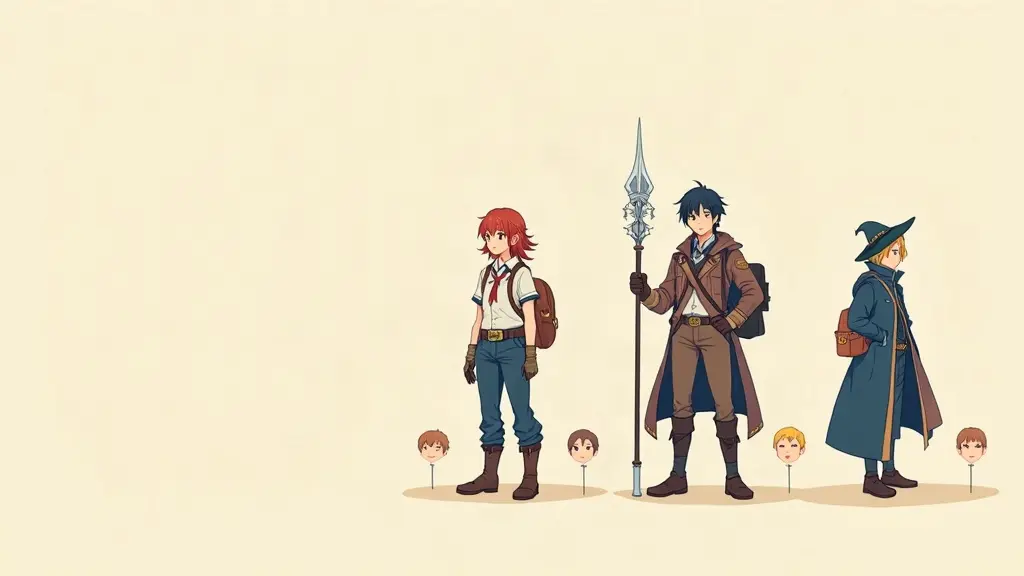
What are character portraits? — How specifications vary between TRPGs, visual novels, and social games, and key points to consider when making a request.
A character portrait is an image depicting a character standing, displayed separately from the background in dialogue or game screens. This guide outlines the specifications, which vary depending on the application (e.g., TRPGs, visual novels, social games), and outlines important points to consider when commissioning character portraits.
Copyright for AI illustrations should be considered in three stages: learning, generation, and use.
The question, "Whose property is an AI-generated image?" appears to be a single question, but it actually involves three separate questions: learning, generation, and use. By referring to Article 30-4 of the Copyright Act, we will distinguish between what is written in the law and what is left to individual judgment.
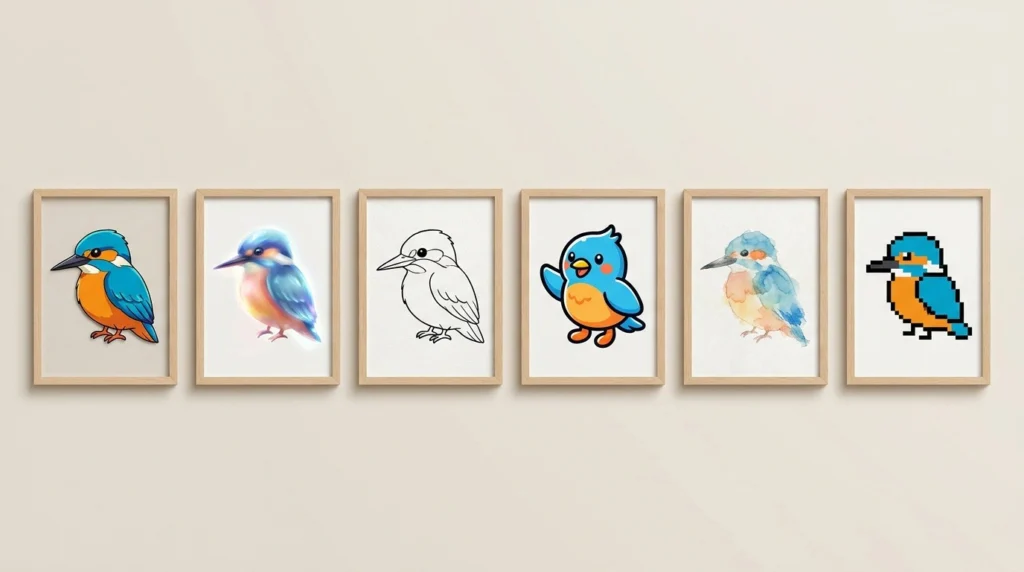
A Dictionary of Art Styles: From Line Drawings to Impasto, Printmaking, and Pixel Art, a Vocabulary of Illustrations Chosen by Purpose
The reason why "cute style" doesn't come across might be due to a lack of vocabulary. This is an illustrated guide that lists major art styles, from line art, flat painting, watercolor, impasto, printmaking, paper cutting, pixel art, and 3D style, along with the "suitable uses" for each style.