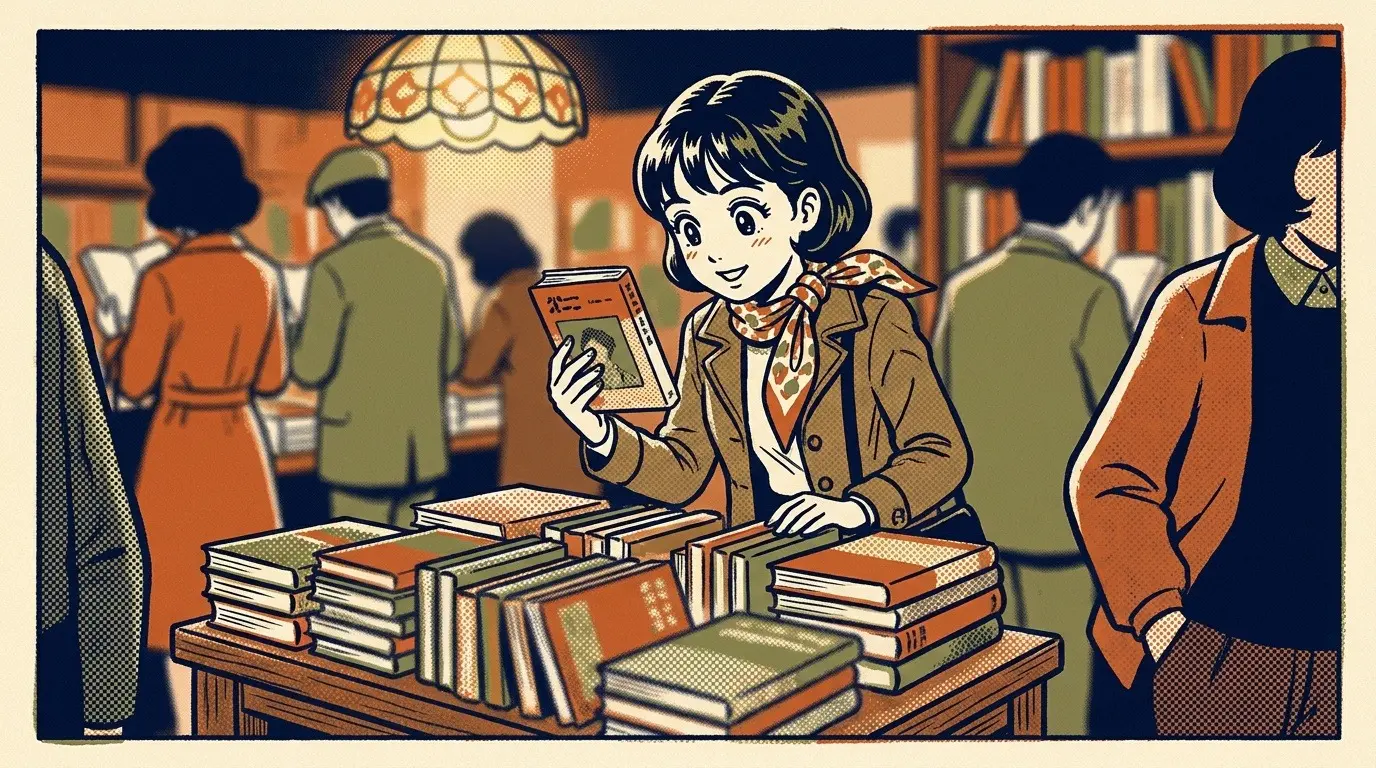
- When commissioning cover art, the first things to decide are the format and how it will be used (paperback or standard format, how much of the dust jacket should be hidden, and whether it should work as an electronic thumbnail).
- Even with the same image, the information that remains when reduced in size changes depending on the format. If the condition is that "the face must be recognizable in the paperback thumbnail," then the level of detail in the drawing is calculated backward from that.
- In a series, the same characters appear across multiple volumes, so it essentially becomes a character design job. The amount of work and the process are completely different from a one-off story.
- Creating the cover illustration takes time from reading the manuscript to actually starting to draw it. I calculate in advance how many days I can allocate for rough drafts, revisions, and final submission, working backward from the release date.
- The cover illustration will be used as the book's image for a long time. Clearly stating the scope of use (book itself, advertising, merchandise, digital) upfront will prevent additional negotiations later.
Book cover illustration is one of the most demanding types of illustration work. Readers spend less than a second looking at a book on a shelf. If the genre, tone, and target audience aren't conveyed during that short time, no matter how carefully the illustration is drawn, it won't work.
Therefore, choosing an illustrator for book covers based solely on personal preference is likely to lead to disappointment. Here, we'll outline the criteria for selection,OSERU IMG. Here, we introduce illustrators who actually create cover art, along with their portfolios.
Three things to decide first when commissioning book cover illustrations
The first factor is the format and how it will be used. Is it a paperback or a standard 4x6 format? How much of the dust jacket should be hidden? Does it need to work as an ebook thumbnail? Even with the same image, the information that remains when reduced in size changes depending on the format. If the condition is that "the face must be recognizable in a paperback thumbnail," then the direction of the detail in the drawing will be determined by working backward from that.
The second point is whether or not to use fixed characters. In a series, the same characters appear across multiple volumes, so it essentially becomes a character design job. The amount of work and the process are different from a one-off story, so letting them know from the beginning will prevent discrepancies in the estimate.
The third point is where the text will be placed. Sharing the margins for the title, author's name, and blurb beforehand will reduce the need for rework later on, such as when the title covers the character's face. The quickest way to do this is to check it with the designer at the rough draft stage.
OSERU IMG. An illustrator who works on cover art and books.
Only those with publicly available work experience are listed here . Clicking on a name will show you examples of their work and their profile.
fuki
Based on publicly available data:
- Cover illustration for the Kodansha Bunko edition of "My Brother and I's Rainbow-Colored Happiness (by Koori Tamagawa)"
- Yotsuya Otsuka Dream Navi (April 2025 issue) cover illustration
- Kaiseisha "If You Feel Like You're Losing to Yourself" Cover and illustrations
fuki View their profile and achievements
Kano Nakajima
Based on publicly available data:
- Cover illustration for "The Cipher Child"
- Ashes and Diamonds, cover and illustrations
- Cover and illustrations for "Particles of Light Fly Up"
Kano Nakajima View their profile and achievements
SANDER STUDIO
Based on publicly available data:
- dancyu "I want to drown in sake" cover
- Town magazine "Ogibon Vol.22" cover
- "A Wonderful Partner! An Introduction to Money" - Cover and Illustrations
SANDER STUDIO View their profile and achievements
IKEDA Saki
Based on publicly available data:
- Illustration for "A Guide to Hangovers for Good Children"
- Cover illustration for the paperback edition of "The Moon Runs, the Horse Runs"
- Illustrations for "Shigeru Kishida String Quartet Works, Volume 1"
IKEDA Saki View their profile and achievements
Nodoka Miyashita
Based on publicly available data:
- OZmagazine cover
- Illustrations for "A Dictionary of Descriptive Words to Hone Your Sensibility."
- Shogakukan, "The Goldilocks Zone in the Classroom" cover illustration
Nodoka Miyashita View their profile and achievements
father
Based on publicly available data:
- Shincho Bunko "Matching!" cover
- Illustrations for the August issue of the Radio English Conversation textbook.
View pai's profile and achievements
Benio
Based on publicly available data:
- "I Saved the World, But I Found a Girl with Amnesia 2"
- "A perennially silver-ranked old man becomes the greatest adventurer in history"
Benio View their profile and achievements
Hatori Kyoka
Based on publicly available data:
- "An exiled magic sword merchant rises to success at his own pace. Using the sales skills he developed in his previous life, he starts his dream shop with his friends."
- "The story of a corporate knight who gets picked up by an S-rank adventurer and becomes his kept man ~A slow life while being supported~"
Hatori Kyoka View their profile and achievements
NAOYOSHI
Based on publicly available data:
- Cover illustration for "Actually Interesting Stories of Classics: 'Classics class? I slept through it!' If you're like me, I want you to read this"
- Free paper "Megru vol.53 Karaful, Pop" cover
NAOYOSHI View their profile and achievements
wataboku
Based on publicly available data:
- Takashi Shirakawa "Pharaoh's Secret Room" (Takarajimasha) cover illustration
- Illustration for "Macbeth" by Ten Furuta (Futabasha)
wataboku View their profile and achievements
Hirotaka Tanaka
Based on publicly available data:
- Illustrations for paperback editions of Keigo Higashino's works
- Cover illustration for SB Bunko's "The Detective Who Lives in Haunted Properties"
Hirotaka Tanaka View their profile and achievements
athéko
Based on publicly available data:
athéko View their profile and achievements
HIDAKA NAOTO
Based on publicly available data:
HIDAKA NAOTO View their profile and achievements
Komori Yuki
Based on publicly available data:
Komori Yuki View their profile and achievements
It's best to decide before making a request.
Creating cover illustrations takes time from reading the manuscript to starting the drawing. If you provide upfront how many days you can allocate for each stage—rough draft, revisions, and final submission—calculating backward from the release date , it will be immediately clear whether or not you can accept the project at the initial inquiry stage.
Furthermore, the cover illustration will be used as the book's image for a long time. If you communicate the scope of use (book itself, advertisements, merchandise, and ebooks) upfront, you can avoid additional negotiations later.
- What's the first thing you decide when commissioning book cover illustrations?
- It's about the format and how it will be used. Whether it's a paperback or a standard 4x6 format, how much of it the dust jacket hides, and whether it needs to work as an ebook thumbnail. The information that remains when reduced changes depending on the format, so the direction of detail in the drawing is determined by working backward from this.
- Does the way you submit a request differ depending on whether it's a series or a one-off story?
- It will be different. In a series, the same characters will appear across multiple volumes, so it will essentially become a character design job. The workload and process will be different from a one-off story, so please let us know from the start if there are plans for a series.
- How should I communicate the schedule?
- Creating cover illustrations takes time from reading the manuscript to starting the drawing. If you provide upfront how many days you can allocate for rough drafts, revisions, and final submission, working backward from the release date, it will be immediately clear whether or not you can accept the project at the initial consultation stage.
- To what extent should I specify the scope of use?
- The cover illustration will be used as the book's image for a long time. Clearly communicating the expected scope of use—including the book itself, advertisements, merchandise, and e-books—upfront will prevent additional negotiations later.
* The illustrations featured in this article are original works created specifically for this media outlet. The copyrights to the works, characters, and product names mentioned in this article belong to their respective owners.
OSERU IMG.
You can consult with us about the content of this article when you're actually working on your project.
OSERU IMG. This is a creative studio comprised of illustrators, character designers, and motiongraphers.Search by style and track record, then contact us directly.Yes, we can. We welcome inquiries even if you're still in the "undecided" stage.



A 0.5-second battle on the shelf. A single label determines the character of the product; it's the blueprint for the package illustration.
To ensure a product is chosen in 0.5 seconds on a shelf, what should be discarded and what should be retained in the packaging illustration? From printing constraints and coexistence with legal labeling to designing a series, this book traces the process of creating a single image that defines the product's character, step by step.

Where can I commission illustrations? – Four options and how to determine which is right for you.
There are four main ways to commission illustrations: crowdsourcing, direct contact via social media, agencies, and production companies. I've organized them based on four key factors—how pricing is determined, who manages the project, how rights are handled, and who can back you up in case of problems—to help you determine which method is best suited to your project.
The illustration chosen in 0.5 seconds—why are light novel cover illustrations entrusted to the character designer first?
Less than a second passes before a book is selected on the shelf. How is the cover art designed for that fleeting moment? From character design to frontispieces, illustrations, and promotional materials, this book unravels the structure of the work that represents a series, including what goes beyond the book itself.