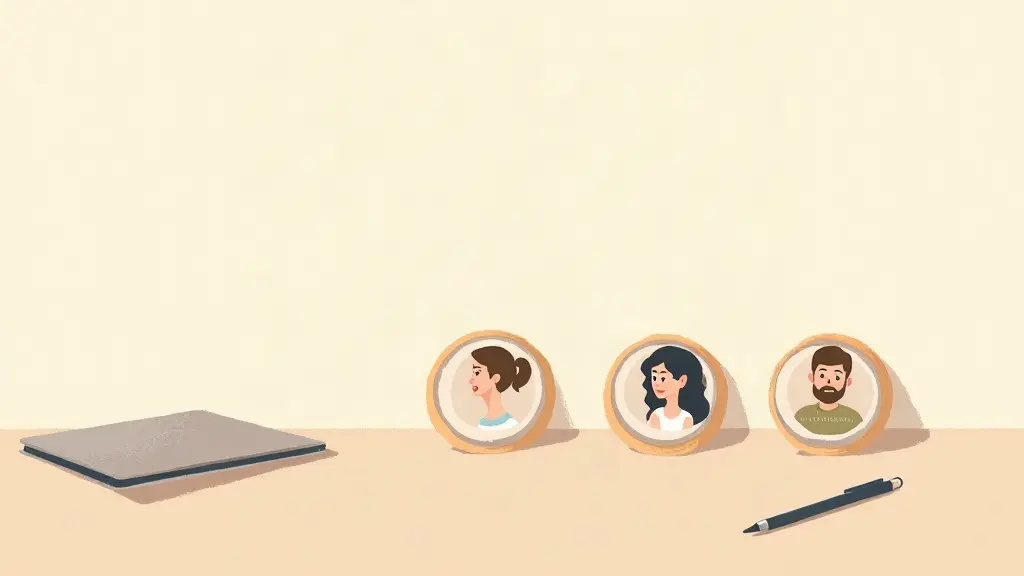
- Icons are small, round, and can be viewed alongside other icons. Distinguishing them when scaled down takes precedence over their original size aesthetics.
- The decisions you need to make differ between personal use and corporate/business accounts. The dividing line is "whether or not you will be using it for business purposes."
- Before making a request, you need to decide on six things: the account to be used, the scope of use, how the background will be handled, the number of colors and brightness, the final delivery size, and the scope of use.
- Assuming the image will be cut into a circular shape, the face and main subject are placed towards the center, while the four corners are designed as blank space that can be cut off.
- If there's a possibility of expanding to business cards, merchandise, or signs, it's ultimately cheaper to communicate that possibility from the start.
The icons are "small, round, and arranged in a row."
Social media icons aren't meant to be viewed as works of art. They're displayed on the left edge of the timeline, occupying only a few dozen pixels, alongside other people's icons, and often cropped into a circle. The ability to recognize someone when they're scaled down is more important than the quality of their appearance at full size.
Therefore, requesting an icon is a little different from requesting a regular illustration. You need to not only tell them the motif you want drawn, but also where and how it will be displayed. If you omit this, you'll end up with a picture that looks nice but becomes illegible when shrunk. This isn't a matter of the artist's skill, but a misunderstanding caused by not providing the conditions.
Icons that hold up well when scaled down share several common characteristics: the main subject is centered; the outlines are clearly defined; there is a large contrast in brightness between the background and the main subject; the number of colors is limited; and information is not relied upon intricate patterns or thin lines. In all these cases, the underlying principle is the same: selecting elements that will remain visible when the icon is reduced in size.
Differences between personal use and corporate/business accounts
The most overlooked aspect of icon requests is this distinction. The dividing line is "whether or not it will be used for business." What needs to be decided will differ depending on whether it will be used for a hobby account or as the face of your work.
When using a personal account
If you're just using it for a hobby account, there aren't many things to decide. The account you'll be using, the size and format of the delivered files, and whether or not you're allowed to modify them – these three points are usually sufficient for most communication.
Even so, please specify "which account you will be using it on." Artists cannot see if an icon you ordered for one use has ended up being used in multiple places. Including a sentence like "I will be using this on my own social media accounts" at the beginning will save you from future problems.
When using a corporate/business account
If you're using it for a company, store, or sole proprietorship account, it will be treated more like an advertisement. Here are some things you should check:
| Decide | Why is it necessary? |
|---|---|
| Scope of accounts to use | Will it only be used for official accounts, or will it also be used for the personal accounts of the staff members? |
| Period | Should there be a deadline, or no deadline? We also need to consider the renewal cycle. |
| Media reach | Will it only be used on social media, or will it also be used in website profile sections, business cards, and documents? |
| Whether or not there is a monopoly | Is it okay to use the same design for other companies? It would be effective if it's to be the face of the brand. |
| Feasibility of processing | Should we create variations such as changing the colors seasonally or adding hats? |
| Credit notation | Should the author's name be included? If so, where and in what format? |
In particular, exclusivity and processing rights are items whose conditions are likely to change if you try to add them later. If you intend to use the image as the face of your business for a long time, it will ultimately be quicker and cheaper to discuss this from the beginning. The concept of rights itself is explained in detail in the section on how far copyright for illustrations can be transferred, so please read that as well.
Six things to decide before making a request
Here's a list of items that will help speed up the initial communication when requesting an icon. If there are any fields that are left unfilled, it's not something you should ask the other person about, but rather something you haven't decided yet on your end.
| Item | Examples of what to write |
|---|---|
| ① Account to use | One social media account you manage / one official company account |
| ② Wide range of applications | Right now, I only use social media. In the future, I might put it on my business card. |
| ③ Handling of the background | I want the background drawn as well / I want only the character with a transparent background. |
| ④ Number of colors and brightness | I want to use 3-4 colors. I want the brightness to be such that it doesn't look washed out even in apps with dark backgrounds. |
| ⑤ Delivery size | A square larger than the display size. A composition that would still work even if cropped into a circle. |
| ⑥ Scope of Use | Non-exclusive. Only resizing is permitted. Credits are listed in the profile section. |
③ The background is often overlooked, but it's a very influential element. Having the background drawn makes it easier to convey the worldview, but it also makes it harder to use for other purposes. If you get just the character with a transparent background, you can change the background color later and place it in a different location. Which is better depends on how far you intend to expand it in ②.
If you're unsure how to describe your art style, it's best to use three axes: line strength, paint thickness, and the presence or absence of texture. For more details, please refer to the "Art Style Guide ."
Designed with the assumption that it will be cut into a round shape.
Many services accept square images and crop them into a circle for display. This means the corners are not visible. If you draw in all four corners without knowing this, the final product may be technically correct, but the actual image on the screen will not have the intended composition.
The basic design principle is to create a square shape, but to make the entire piece work only within the circle. The face or main subject should be placed in the center. If text is included, it should be placed well away from the edge of the circle. The four corners should be treated as "blank space that can be cut off." As long as this premise is shared, the artist will naturally draw it that way.
Also, check how it looks on a dark background. Many apps have a dark mode, and pale icons designed for a white background will blend into the background. This can be solved by slightly sharpening the outline or adding a background color, but this is also something I wanted to mention beforehand.
Check the size and data format.
We decide on the delivery data not only based on where it will be used now, but also with a view to the near future. This is because it's cheaper to receive a larger version upfront than to have to recreate it later.
- Original size data... Larger than the actual displayed size. It can be reduced, but not enlarged.
- Background transparency... Do I need a transparent PNG, or is it okay to include the background?
- Color specification... If you're going to use it for printing as well, treat the colors for the screen and the colors for printing as separate entities.
- Vector data... Consult us if you anticipate using it for signs or large-scale printed materials.
- Derived sizes... If you need cropped versions for header images or thumbnails, count them as the first item.
You might be tempted to just ask for the largest data file you have, but this request will change the scope of work. It's better to specify what you need so that the service provider can create a more accurate estimate.
When you want to expand to business cards or merchandise
Once you like an icon, you'll want to use it in other places right away. Put it on a business card, turn it into a sticker, use it as a promotional item, or put it on a store sign. These are all natural uses, but they may be outside the scope of use you initially decided on.
If there's even a slight possibility of expanding the scope, please mention it when you make your request, saying, "I might use it in this way in the future." Whether you choose to keep the scope broad or discuss it again at that time, the way things proceed will be different depending on whether or not you've mentioned it.
Especially when selling items as merchandise, the key issue is whether the act of selling itself is included in the scope of the discussion. Generally, promotional items distributed internally and items sold with a price tag are treated as separate issues.
Things to include in the request letter
If we were to put the content up to this point directly into the first letter, it would look like this:
Subject: Inquiry about creating an illustration for a social media icon (for a personal account)
Mr./Ms. ◯◯
This is my first time contacting you. My name is △△. I saw your (artwork title) and felt that the softness of the lines and the warmth of the colors were very close to the atmosphere I was looking for, so I decided to contact you.
I would like to request one icon for use on two of my social media accounts. The background should be transparent, showing only the person, with 3-4 colors, and I would like it to be bright enough not to look dull against a dark background. Assuming it will be cropped into a circle, it would be helpful if the main subject could be centered. I would like the final product to be a large, square PNG file. The usage rights are non-exclusive, the only modification allowed is resizing, and I will credit you in my profile. My budget is between ¥◯ and ¥◯, and I am aiming for a deadline of the end of ◯. Please let me know if this is difficult. I would appreciate a reply by ◯/◯.
The structure of the request itself is explained in eight sections using the example and template for illustration requests . For icons, you would add "the assumption that it will be cropped into a circle" and "how the background will be handled" to that.
5 things to review before sending
- Did you specify which account you'll use it with... one account, or multiple accounts?
- Did you specify whether you'll be using it for business or not? The terms and conditions differ between hobbies and work.
- Have you decided how to handle the background...? Is it transparent, or is the background included?
- Did I explain that it would be cut in a circular shape...? The four corners would be hidden.
- Did it convey the potential for future expansion?... The possibilities of business cards, merchandise, and signage.
An icon is not just a single image, but something that will stand in front of people for many years to come. That's why the time spent deciding where and how to use it is just as valuable as the time spent deciding on the content of the image. Once that's decided, the artist can draw the lines with confidence.
Please note that the points discussed here are general considerations that clients should keep in mind. Actual agreements will vary depending on individual circumstances, so if you are unsure about the content of the contract, please consult a professional.
- Can I commission an illustration for my social media profile picture as an individual?
- Yes, it's possible. Whether you're an individual or a corporation doesn't determine whether you'll be refused; the only differences are the contract and billing procedures, and how the scope of use is defined. Specifying in your initial contact whether you'll be using it for a personal hobby account or a business account will help the provider plan the process more effectively.
- Can I use an icon that was drawn for personal use on my work account later?
- It depends on what is written in the terms regarding the scope of use. If you accept a job on the premise of personal use, and then use it for business promotion or product sales, the scope changes, and it is generally necessary to consult again. If there is even a slight possibility of using it for business, it is better to make that premise from the beginning, as this will allow you to predict the procedures and costs.
- Would you prefer the icons to be made in a square or circular shape?
- The basic principle is to create a square image and design it so that it still works even when cropped into a circle. Many services receive square images and crop them into a circle when displaying them, so the design assumes that the four corners will not be visible.
- What data should I specify for delivery?
- The required files vary depending on where you plan to use them. For social media only, a PNG file (with transparency of the background specified) and a full-size file larger than the actual display size will suffice. If there's a possibility of using the files on business cards or printed materials in the future, please consult with us regarding a print-ready resolution or vector data.
- Is it okay if I crop the icon a little or change its color?
- Whether or not modifications are permitted depends on the agreement. Since this relates to the right of integrity, which is a part of the author's moral rights, it is safest to specify the scope of any cropping or color changes from the beginning.
- Is it okay to use the same image on multiple social media platforms?
- Using the same icon on multiple social media platforms is not a problem as long as you include "social media accounts managed by the individual" in the scope of use. In fact, using the same face across different platforms can be effective in helping people remember you. Just make sure the way you define the scope of use is consistent from the beginning.
* The illustrations featured in this article are original works created specifically for this media outlet. The copyrights to the works, characters, and product names mentioned in this article belong to their respective owners.
OSERU IMG.
You can consult with us about the content of this article when you're actually working on your project.
OSERU IMG. This is a creative studio comprised of illustrators, character designers, and motiongraphers.Search by style and track record, then contact us directly.Yes, we can. We welcome inquiries even if you're still in the "undecided" stage.



How far does copyright in illustrations transfer? — The difference between licensing and copyright transfer.
Even when you commission illustrations, the copyright doesn't automatically transfer to the client. This article explains the difference between licensing and copyright transfer, what rights remain with the artist after the transfer, and what items to check in the contract, from the client's perspective. We also provide guidelines for various scenarios and three common problem areas.
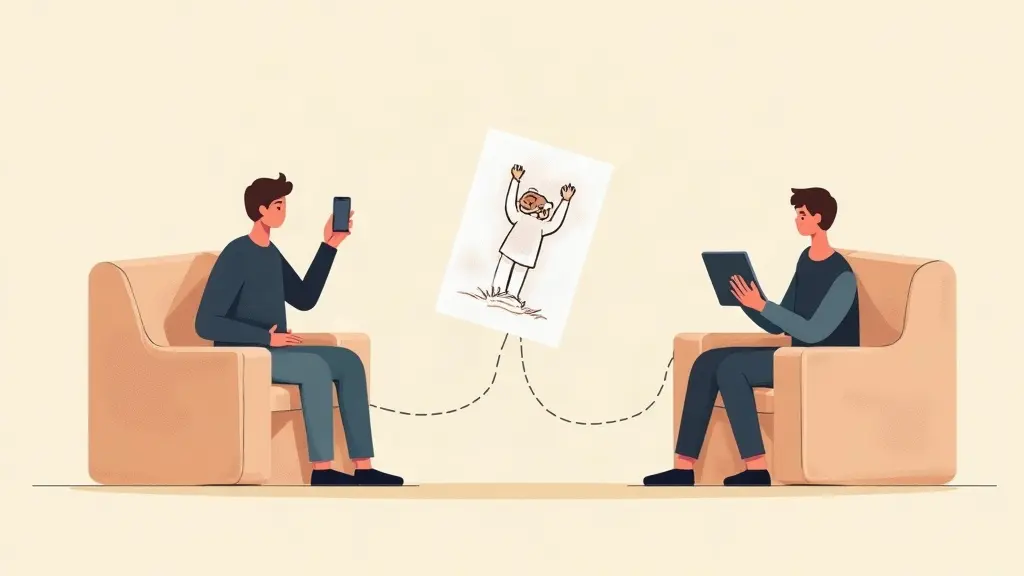
Commissioning Illustrations for a Fee: The Process and Etiquette for a Smooth Process When Asking an Artist Individually
When commissioning an artist to create artwork of your favorite character, your own character, or a social media icon, it's essential to first read the commission details and confirm the intended use and payment procedures to avoid misunderstandings. This guide outlines the commission process, payment, usage, and etiquette while waiting.
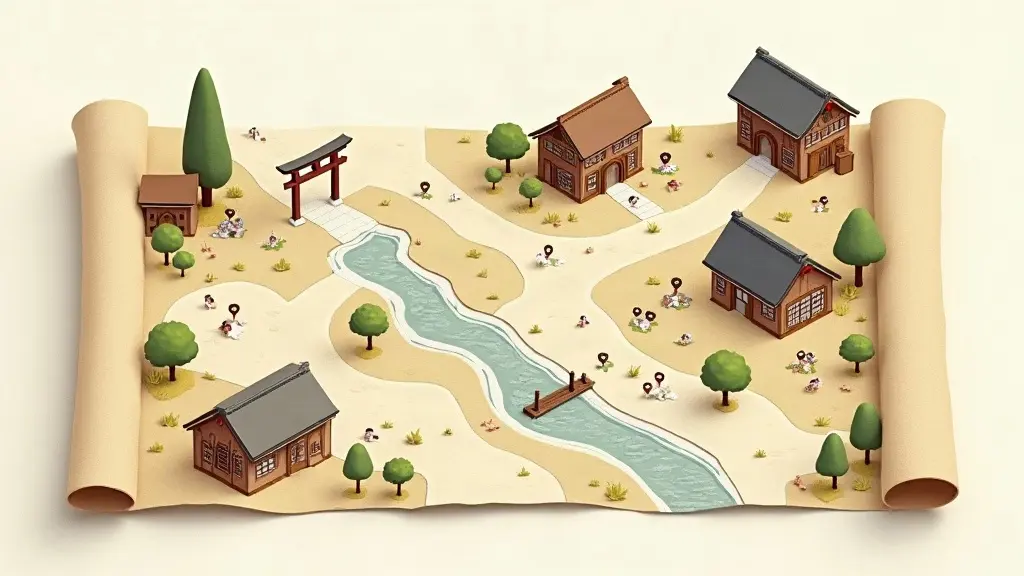
Commissioning the creation of an illustrated map—decide in advance the information to be included, the style of stylization, and the rights involved.
When outsourcing illustrated maps for tourist brochures, shopping streets, campuses, or event venues, it's best to decide who the map is for, what information to include and omit, and the rights to the original map before considering the artwork. We've also organized the reasons why costs vary depending on the conditions and how to proceed.