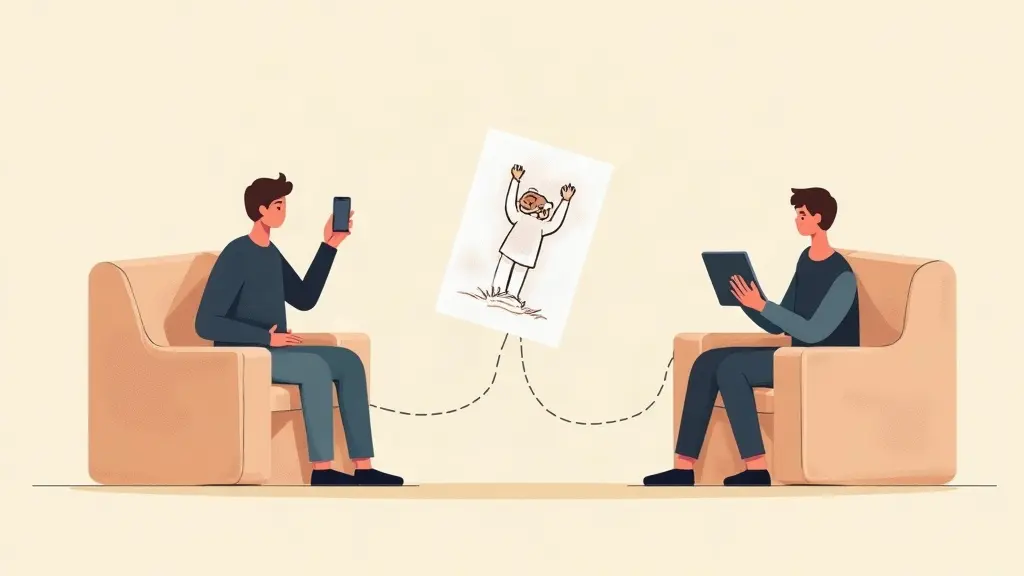
- The starting point for a paid commission is to read the commission requirements published by the artist (acceptance status, types of work that can be done, things that cannot be done, and payment methods).
- The basic process for commissioning an item is: confirmation of receipt → consultation and estimate → payment → rough draft → completion → delivery. The order and timing of payments may vary depending on the artist.
- The price will vary depending on the content and intended use. Rather than trying to haggle, it's more efficient to state your budget first and then discuss what can be done within that range.
- The scope of use will vary depending on whether it's for personal enjoyment or for distribution and sales. Please specify the intended use at the beginning of your request.
- Even if the estimated delivery date has passed, review the requirements and previous communications before sending a reminder. Send all required information at once.
Paid requests are not "requests" but "small transactions."
Drawings of your favorite characters, character portraits of characters you've created yourself, or icons and headers for social media – paying an artist to draw these kinds of pictures is called a "paid commission." With more and more artists accepting commissions on social media and illustration sharing sites, it's no longer unusual for individuals, not companies, to directly commission artists.
However, for first-time paid commissions, many people hesitate before clicking the submit button, unsure of what to communicate, when to pay, or how much they are allowed to use the finished artwork. Unlike requests for artwork out of goodwill, paid commissions are small transactions where both parties agree on the content, estimated deadline, intended use, and payment . Thinking of it as a transaction naturally reveals what needs to be confirmed beforehand.
This article outlines the process of commissioning an artist for a fee as an individual, and the etiquette to ensure a smooth process for both parties. The initial letter and example templates are covered in the illustration request example and template section , and the criteria for determining the price are summarized in the section on understanding the market rate for illustration requests . Here, we will focus on the pre-commission confirmation and post-commission procedures .
Before making a request, please read the author's "request guidelines."
Most artists who accept paid commissions publish their commission guidelines (rules for accepting commissions) in their profiles, pinned posts, or dedicated pages. The first step in making a request is not to send a message, but to read these guidelines to the end. The guidelines may include items such as the following:
| Item | Things I want to confirm |
|---|---|
| Reception status | Are you currently accepting requests? There may be specific application periods or limited slots. |
| Contact for requests | Is it via SNS message, email, or a service like a skills marketplace? |
| What we can do | The scope of what can be drawn (face only, upper body, full body), whether or not a background is included, the number of people, and whether or not copyrighted characters are allowed. |
| NG items | Things that artists refuse to depict, such as subjects they won't draw, processing or tracing their work, or using their work for AI training. |
| Fees and payment | Availability of a price list, payment timing and method. |
| The best way to get rid of the virus | Waiting time before starting work, rough drafts, and a general timeline until completion. |
| Scope of use | Is it limited to personal use, or can it be used for streaming, merchandise, etc., and how will it be handled in those cases? |
| Correction and Cancellation | The stages and number of corrections that can be made, and how cancellations are handled. |
If you send questions that are already covered in the requirements, the artist will have to repeat the same explanation multiple times. Conversely, if you read the requirements and then ask, "Could I just confirm this point?", the conversation will move much faster. If you want to commission an artist whose requirements you can't find, be sure to carefully check whether they are accepting commissions.
It's also important to avoid sending requests to artists who aren't currently accepting commissions . Receiving multiple requests from artists who are not accepting commissions can be a burden. It's better for both parties to either wait for them to reopen their commissions or find an artist who is currently accepting commissions. We cover how to find an artist in our section on choosing an illustrator .
Basic flow of paid requests
The process for paid commissions varies from artist to artist, but the basic framework is the same. The general flow is as follows:
- Check the application status and requirements....Check if it's a suitable time to make a request and if the requested service falls within their scope of work.
- Consultation and estimate...You explain what you want drawn, how it will be used, your desired timeframe, and your budget, and then discuss whether they can accept the request and what the price will be.
- Formal request and payment...Once the terms are agreed upon, the request will be finalized and payment will be made according to the terms and conditions.
- Checking the rough draft...I look at the preliminary sketches of the composition and poses to confirm the overall direction.
- Completion and Delivery...Check the finished product and receive the data.
- Public release and use...Use within the agreed-upon scope. When publishing, follow the rules regarding attribution of the author's name, etc.
In this process, it's especially important to ensure all conditions are agreed upon during the initial consultation . If you finalize a request without a clear understanding of what you want drawn and how it will be used, the conditions may change after the rough sketch is completed, such as "I actually want a background too" or "I want to use it for merchandise," requiring you to redo the discussion about the price and deadline. While it's not inherently bad to request additions, it's essential to communicate everything you know from the beginning.
The rough draft stage is the last major opportunity to make adjustments. This is the time to communicate any concerns you have regarding poses, expressions, accessories, etc. Requesting major changes after the final version has been drawn will only increase the scope of revisions. Examples of how to communicate revision requests are included in the template article mentioned earlier.
The information you should convey should include both "what you want drawn" and "how it will be used."
There are two main things to communicate during the consultation: what you want painted , and how you plan to use the finished artwork . People tend to focus only on the former, but if the latter is overlooked, the artist cannot decide on the price or the style of painting.
Things I'd like you to draw
- Subjects to draw (your own characters, characters from your favorite works, drawings based on yourself or your pets, etc.)
- The area to be drawn (face only, upper body, full body) and the number of people.
- Whether or not to include a background, and desired facial expressions and poses.
- Character reference materials (design sketches, color specifications, features to be emphasized)
- To get a sense of the atmosphere, the most reliable way to convey it is to say which of the author's past works it's similar to.
use
- Is it just for personal viewing and enjoyment?
- Should I use it as my SNS icon or header?
- Will it be used for the stream screen or thumbnail, or will the stream generate revenue?
- Should I make it into merchandise, make that merchandise for myself, or sell it?
Avoid showing other artists' work as a reference and asking them to "make it like this." This is disrespectful to the artist you're commissioning, as it could infringe on the rights of other artists. If you need to provide references, it's best to choose from the artist's own past works .
If you plan to use it as an icon, there are a few things to keep in mind, such as the composition being designed with the assumption that it will be cropped into a circle. Please also refer to our article on commissioning illustrations for social media icons .
Let's talk about money clearly from the start.
The most awkward part of a paid service request is the discussion of money. However, leaving this ambiguous is the biggest cause of problems later on. The principle is to be clear and direct about money from the start, without hesitation.
The cost varies greatly depending on the scope of the drawing, the number of people, the background, the intended use, and the deadline. If the artist has published a price list, that will serve as a guideline. If there is no price list, or if the content does not fit into the price list, explain the conditions and ask for a quote. It will speed up the process if you state your budget upfront . If you ask, "Within this budget, what can you do?", the artist will be more likely to suggest adjustments regarding the scope of the drawing or whether or not to include a background.
On the other hand, avoid haggling over the quoted price. The price is determined by the artist based on the amount of work and the value of their work. If the price doesn't fit your budget, instead of asking for a price reduction, it's proper etiquette to discuss whether the content can be reduced to fit your budget . Often, compromises can be reached by making adjustments such as removing the background or limiting the subject to the upper body.
The timing and method of payment (whether it's paid in advance, after completion, or in installments) are determined by each artist. If it's written in the requirements, follow those; if not, confirm before finalizing the request. Once you've made a payment, letting the artist know will help them confirm it. If you're using a service like a skill marketplace, follow the payment system and terms and conditions of that service.
Please note that if you are commissioning services for business purposes rather than for personal enjoyment, you may be subject to the Freelance and Business-to-Business Transaction Fairness Act, which came into effect in November 2024, and you may be required to provide written documentation of the terms of the transaction. For more details, please check the official information published by the Japan Fair Trade Commission and other relevant organizations.
Usage and Rights – The Difference Between "Personal Enjoyment" and "Using it to Show to Others"
Even if you pay for a painting commissioned for a fee, you can't use it freely just because you paid for it. Generally, the copyright of the painting remains with the artist, and the person who commissioned it is only allowed to use it within the scope of the agreement . While it is possible to have an agreement to transfer the copyright, this requires a separate agreement and is not common in personal commissions.
The things you need to check will vary depending on how you intend to use it.
| use | Things I want to confirm |
|---|---|
| For personal viewing/using as a wallpaper | In most cases, it's for personal use. Is it okay to post it on social media, and are there any rules for posting it? |
| Social media icons and headers | Is it permitted to use it as an icon, and is it necessary to include the artist's name? |
| Streaming screen/thumbnail | Can I use it in a revenue-generating stream? How should I handle editing and cropping? |
| Merchandise (for personal use) | Is it okay to submit the files to a printing company and make a copy for my own use? |
| Merchandise (for sale) / Cover of doujinshi | These are often handled with the intention of being sold. Be sure to mention this at the request stage. |
Also, when you commission an artist to draw a character from your favorite work, the rights to that character itself belong to the original copyright holder. If you intend to use it beyond personal enjoyment, you should also check the guidelines published by the original creator. The basic concepts of copyright are summarized in the illustration copyright guide , and the practical aspects of using illustrations for merchandise are summarized in the article on commissioning illustrations for merchandise .
The most important thing is to communicate all your intended uses at the very beginning of your request . If you later decide you want to expand the intended use, please consult with the artist instead of using it without their permission. Additional arrangements may be necessary.
Etiquette while waiting—frequency of contact and how to communicate when you're having trouble.
Once you've confirmed your request and made the payment, all that's left is waiting. How you spend this time is also an important factor in ensuring a smooth and satisfying completion of your paid request.
- Delivery dates are often just estimates....Individual artists often work on their projects alongside their main job, health issues, and other commissions. Please do not take the deadlines listed as "estimates" in the requirements as guaranteed deadlines.
- Please consolidate your requests and contact us all at once....If you send your ideas in small increments, the writer will have to stop working each time to check them.
- Don't ask about the progress repeatedly....If there is an agreement for communication regarding the progress, we will follow that; otherwise, we will wait until the estimated time.
- If there is a deadline, then first...If there are any dates that cannot be changed, such as birthdays or events, please let us know at the time of the request and make sure we can meet the deadline.
If you haven't heard from them by the expected timeframe, first review the terms and conditions and your previous correspondence to confirm the agreement. Then, avoid accusatory language and send a polite message asking, "How is the progress?" to inquire about the situation. How to think about waiting for a reply is also covered in the frequently asked questions section of the template article .
Cancellations due to a change of heart will also follow the artist's terms and conditions. Cancellations during the work process often involve predetermined procedures for handling work already completed, so it's best to discuss the situation as soon as you understand it.
What you can do after delivery
Upon receiving the delivered artwork, I first check to ensure it conforms to the agreed-upon specifications (size, data format, presence or absence of a background, etc.). If there are any concerns, I promptly communicate them within the scope of the agreed-upon revisions.
Then, be sure to let the artist know that you received the artwork and share your thoughts. For the artist, knowing that the person who commissioned it is happy is the greatest reward. When sharing on social media, follow the artist's rules regarding attribution and linking. If there are any specific rules regarding when or if it is permitted to share the artwork, respect those as well.
A paid commission is a transaction, but it's also an act of sharing the artist's time and skills. Read the requirements carefully, agree on the conditions from the start, clarify the payment beforehand, and respect the artist's pace while you wait. If you keep these four points in mind, you won't stumble too much, even with your first commission.
Checklist before making a request
Finally, here's a summary of things you should check before submitting a paid request.
- Have you checked if the author is accepting commissions?
- Have you read the request details to the end? (Conditions not accepted, payment terms, estimated delivery date, scope of use)
- Have you written down what you want drawn (subject, area, number of people, background, expressions and poses)?
- Have you prepared character reference materials?
- Did you choose the atmosphere from the author's own past works?
- Have you written down all the planned uses (icons, streaming, merchandise, sales, etc.)?
- Are you ready to set a budget and communicate it?
- Have you confirmed the payment timing and method?
- If there are any dates that cannot be changed, are you prepared to tell them first?
- Have you confirmed how corrections and cancellations are handled?
Please note that the information provided here is general advice for individuals commissioning artwork. If you are unsure about rights agreements or contracts, please consult a professional. If you are commissioning an artist as a company or organization, please also refer to our complete guide to commissioning illustrations .
- What is the difference between a paid request and a free request?
- A paid commission is a transaction where you pay an artist to create something for you. Unlike a request, where the artist has the freedom to choose whether or not to draw it, the process proceeds only after both parties have agreed on the content, estimated deadline, intended use, and payment. Therefore, the person making the request needs to carefully read the requirements and clearly communicate their conditions.
- What is the going rate for paid requests?
- It's difficult to give a fixed price, as it varies greatly depending on the scope of the drawing (face only or full body), whether or not there's a background, the number of people, the intended use, and the deadline. If the artist has published a price list, that will serve as a guideline. If not, the most reliable way is to tell them your budget and requirements and ask for a quote.
- Is payment due before or after?
- It varies depending on the artist. The payment schedule and method are often written in the commission details, so please check there first. If it's not written, it's best to confirm when and how payment will be made during the initial consultation stage of the commission to be on the safe side.
- Is it okay if I use the picture you drew for me as my social media icon or in my live streams?
- It depends on the intended use you specify in your request and the scope permitted by the artist's terms and conditions. Whether it's for personal enjoyment or for revenue-generating streaming or merchandise sales may affect how it's handled. Please communicate all your planned uses at the beginning of your request.
- What should I do if I haven't received any contact even though the estimated delivery date has passed?
- First, review the requirements and previous correspondence to determine if the deadline was merely an "estimate" and whether there was an agreement for communication regarding progress. Then, it is appropriate to send a message to inquire about the situation, avoiding any accusatory tone. How to wait for a response is also covered in the request letter template article.
* The illustrations featured in this article are original works created specifically for this media outlet. The copyrights to the works, characters, and product names mentioned in this article belong to their respective owners.
OSERU IMG.
You can consult with us about the content of this article when you're actually working on your project.
OSERU IMG. This is a creative studio comprised of illustrators, character designers, and motiongraphers.Search by style and track record, then contact us directly.Yes, we can. We welcome inquiries even if you're still in the "undecided" stage.


Commissioning illustrations for social media icons—things to decide beforehand that differ between individuals and corporations.
When commissioning an illustrator to create a social media icon, the things you need to decide will differ depending on whether it will be for personal use or for a corporate/business account. We've organized the information in a practical order, from designing it assuming it will be cropped into a circle, to the required size and data format, and the agreement on the scope of use.

Commissioning illustrations for merchandise—decide on the submission data, colors, and rights beforehand.
When commissioning illustrations for merchandise such as acrylic stands, badges, and T-shirts, it's best to decide on the type of merchandise, the format of the print data, the desired color reproduction, and whether or not the items will be sold before discussing the artwork itself. This guide outlines the practical steps involved for the client.
Commissioning LINE sticker creation—things to decide beforehand, as they differ between personal and corporate use.
When commissioning an artist to create original LINE stickers, it's helpful to decide beforehand who will be the seller, what situations the stickers will be used in, and how the character rights will be handled, before even considering the artwork. We've outlined the differences between personal and corporate use, as well as the production process.